Acting
No biography available.
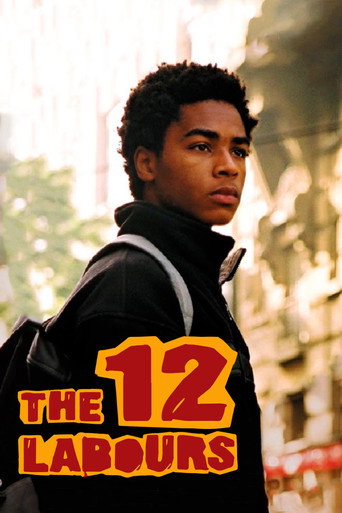
The story of a young black man, Héracles, who after being released from a juvenile institution, tries to apply for his first honest job as a motorcycle delivery boy. To get the job, he has to perform 12 hard tasks in São Paulo.
Helen lives in a cortiço with her grandmother, Mrs. Graça, who supports the family with informal jobs, such as selling skewers. Still very naive, her biggest concern is buying her grandmother a birthday present: a makeup kit. The girl is going to bend over backwards to get the money and her search will reveal the daily life of those living in tenements, outlining a collective story from the network of relations that the girl establishes.
Year 2006. There are riots in São Paulo. In the middle of the violent situation, widow Lucia is trying to get her young son Rafael from prison.
Three siblings devise a plan to get their divorced parents to spend Christmas together.
To fulfill his mother’s dying wish and avoid being removed from her will, an inflexible bachelor hires an actress to play his fiancée.
In São Paulo, the black part of the elite, while whites take over the periphery. In this scenario, a lawyer has to deliver cell in a prison, but on the way he is robbed. Without the devices, the man begins to be threatened by the leaders of the prison, which still planning an attack in the city.
A sheltered teenager discovers she's actually a princess from another country — and she could be in grave danger. Based on Paula Pimenta's novel.
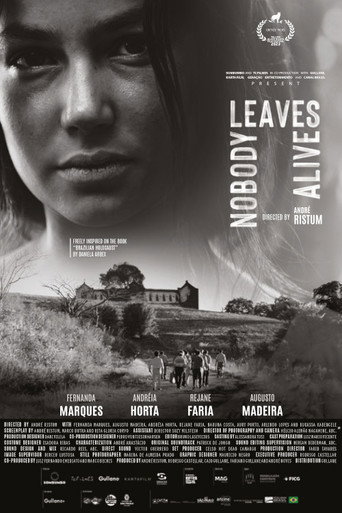
“Nobody Leaves Alive” by André Ristum is shot in beautiful but also distancing black and white. Looking at the Venice line-up, this seems to be a trend this year among the maestros of cinema. The film is inspired by true events that took place in the last century in the “Colonia” hospital in Brazil. Whoever didn’t fit the standards of society, or their family’s perception of it, was locked away, tortured, and killed. There were altogether more than 60,000 victims. Hope dies last, and some of the inmates don’t give up the fight. We’re reminded of film classics such as “One Flew Over the Cookoo’s Nest” or “Alcatraz”.
During Carnival in São Paulo, a young man and young woman who knew each other as children meet again after many years and the social barriers that have kept them apart. Bad decisions lead the boy to hide with the girl inside a whale float.
Marcelo leaves his family and moves to Mato Grosso do Sul, where he learns how to fly airplanes by himself watching the pilots. One day, he responds the call of a drug dealer and uses his boss' plane to help the man to transport his cargo. He is hired by the drug lord to work transporting drugs in his airplanes. When he is arrested by the Federal Police, he does not rat his gang and the leader of the cartel gives a large amount of money as a bonus and asks him to leave the gang since he is known by the police. Marcelo uses the money to promote a party in the Carnival of Recife pretending to be the son of the owner of the Gol (a Brazilian air flight company). He lures the high-society, including the television presenter Amaury Jr. Marcelo is arrested again and is sent to prison. During a rebellion, he uses his leadership to present the claims of the prisoners and help to control the situation.
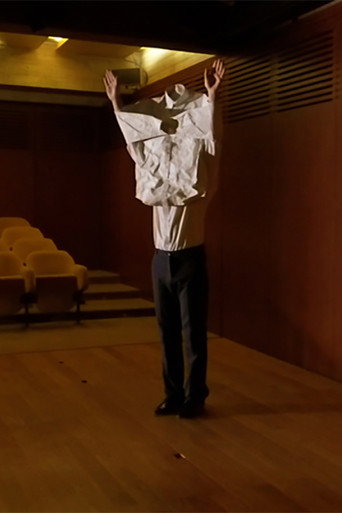
Holding in her mind Dorothea Tanning’s painting Some Roses and their Phantoms (1952) and its sickening presentation of objects as between states of being, Wardill made a film that also hovers between definitions. The architecture of the Gulbenkian auditorium in Lisbon, its colors and sense of being lost in time accompany us through a loop where a man wanders the building at night, followed by something that is not human. Through the care and paranoia with which she approaches the digital image, the artist investigates the past’s haunting of the present and the remnants of textures longing to be touched. Wardill’s work takes an interest in the appropriation of models to express ideas and the way in which fixed scenarios become exemplary. She explores the opacity of communication to deconstruct the way in which materials or the implication of the material are used to elucidate ideas.