Paula Heredia Movies, TV Shows, and Filmography

Paula Heredia
Editing
Biography
Paula Patricia Heredia Suarez is a filmmaker, writer and photographer born in El Salvador, based in New York City. She studied fine arts at the University of Costa Rica and filmmaking at NYU and has an Arts and Film degree from the State University of New York Empire State College.
Filmography Movies
Production
Colorado Cowboy: The Bruce Ford Story
The story of rodeo bronco rider Bruce Ford, a five-time world champion and a legend in the sport.
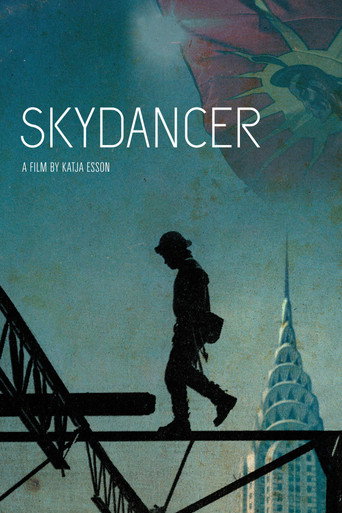
Skydancer
For more than 120 years, Mohawk ironworkers have raised America’s modern cityscapes. They are called 'sky walkers' because they walk fearlessly atop steel beams just a foot wide, high above the city. In this nuanced portrait of modern Native Americans' double lives, Jerry McDonald Thundercloud and his colleague Sky shuttle between the hard-drinking Brooklyn lodging houses they call home during the week and their rural reservation, a grueling drive six hours north, where a family weekend awaits. While the men are away working, their wives often struggle to keep their children away from the illegal temptations of an economically deprived area.
La pájara Pinta
A book opens to tell the story of a village in the smallest country of the America Continent, where the magical legend of Pinta the Bird beckons a boy and a girl and makes their dream come true.

Banking on Bitcoin
Not since the invention of the Internet has there been such a disruptive technology as Bitcoin. Bitcoin's early pioneers sought to blur the lines of sovereignty and the financial status quo. After years of underground development Bitcoin grabbed the attention of a curious public, and the ire of the regulators the technology had subverted. After landmark arrests of prominent cyber criminals Bitcoin faces its most severe adversary yet, the very banks it was built to destroy.
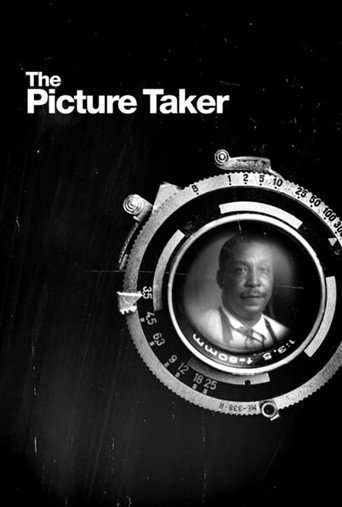
The Picture Taker
From his Memphis studio, Ernest Withers’ nearly 2 million images were a treasured record of Black history but his legacy was complicated by decades of secret FBI service revealed only after his death. Was he a friend of the civil rights community, or enemy—or both?
Jacques d'Amboise in China: The Other Side of the World
When Jacques d'Amboise took a group of dancers and members of his teaching staff to China, they worked with acclaimed dancer Dou Dou Huang and more than a hundred Chinese children. Their goal: to create a special performance using a variety of dance styles - including hip-hop, freestyle jazz and traditional Chinese folk dance - that would premiere at the Shanghai Grand Theatre in honor of the 2007 Shanghai Special Olympics World Games. Part of a month-long cultural exchange between d'Amboise's National Dance Institute and several Chinese troupes, featuring some of that country's most talented young dancers, the collaboration underscored the power of dance to transcend obstacles of culture and language.
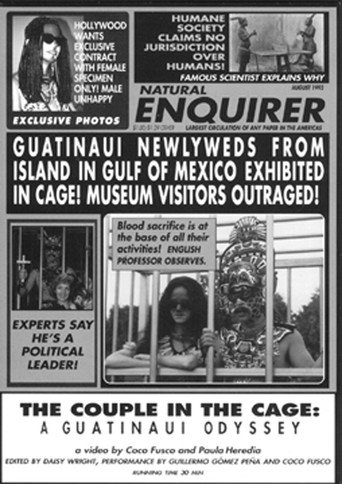
The Couple in the Cage
A witty satire about cultural stereotyping. In a series of 1992 performances, Coco Fusco and performance co-creator Guillermo Gómez-Peña decked themselves out in primitive costumes and appeared before the public as "undiscovered AmerIndians" locked in a golden cage - an exercise in faux anthropology based on racist images of natives. Presented eight times in four different countries, these simple performances evoked various responses, the most startling being the huge numbers of people who didn't find the idea of "natives" locked in a cage objectionable. This provocative video, directed and produced by Coco Fusco and Paula Heredia, suggests that the "primitive" is nothing more than a construction of the West, and uses comic fiction to address historical truths and tragedies.
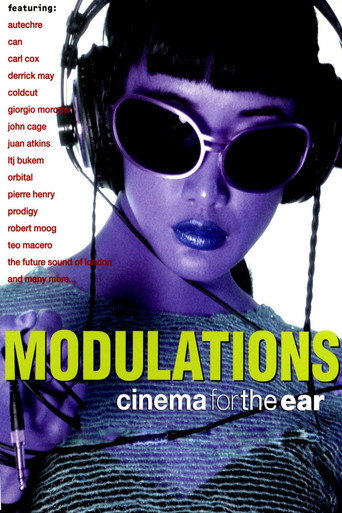
Modulations
Less a documentary than a primer on all electronic music. Featuring interviews with nearly every major player past and present, as well as a few energetic live clips, Modulations delves into one of electronica's forgotten facets: the human element. Lee travels the globe from the American Midwest to Europe to Japan to try to express the appeal of music often dismissed as soulless. Modulations shows that behind even the most foreign or alien electronic composition lies a real human being, and Lee lets many of these Frankenstein-like creators express and expound upon their personal philosophies and tech-heavy theories. Lee understands that a cultural movement as massive and diverse as dance music can't be contained.
The Couple in the Cage
A witty satire about cultural stereotyping. In a series of 1992 performances, Coco Fusco and performance co-creator Guillermo Gómez-Peña decked themselves out in primitive costumes and appeared before the public as "undiscovered AmerIndians" locked in a golden cage - an exercise in faux anthropology based on racist images of natives. Presented eight times in four different countries, these simple performances evoked various responses, the most startling being the huge numbers of people who didn't find the idea of "natives" locked in a cage objectionable. This provocative video, directed and produced by Coco Fusco and Paula Heredia, suggests that the "primitive" is nothing more than a construction of the West, and uses comic fiction to address historical truths and tragedies.
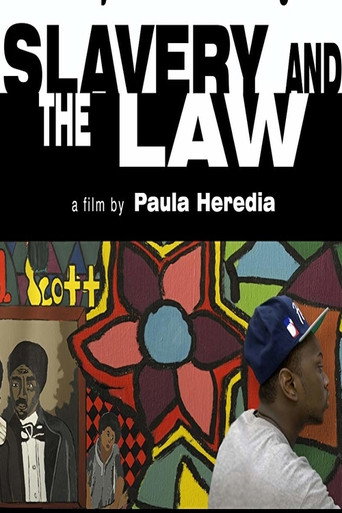
Slavery and the Law
Follows a group of Brooklyn youth as they work to create a wall mural that commemorates the shift from enslavement to the Civil Rights Movement. The youth seen in the film are participants in the Youth and Congregations in Partnership (YCP), and Gender-Responsive Re-Entry Assistance Support Program (GRASP), under the office of the Kings County District Attorney. The history of slaves is discussed by distinguished professors and historians, beginning with the development of Colonial America and the slave trade. As the title suggests, the legal system is introduced in the film as the youth and professors explore the laws imposed on slaves.
Gallery