Paul Wong Movies, TV Shows, and Filmography
Paul Wong
Directing
Biography
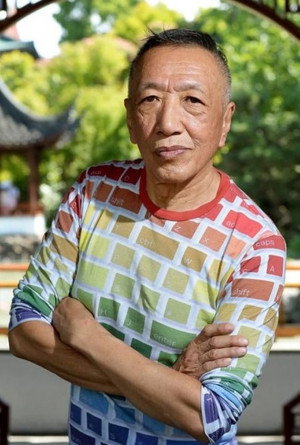
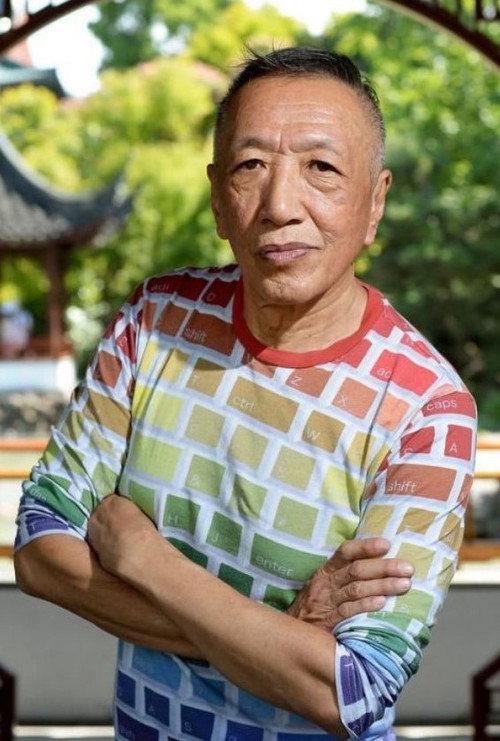
Paul Wong is a media-maestro making art for site-specific spaces and screens of all sizes. He is an award winning artist and curator who is known for pioneering early visual and media art in Canada, founding several artist-run groups, leading public arts policy, and organizing events, festivals, conferences and public interventions since the 1970s. Writing, publishing and teaching have been an important part of his praxis. With a career spanning four decades he has been instrumental proponent to contemporary art.
Filmography Movies
Acting
Say Cheese for a Trans-Canadian Look
Luc Bourdon, Marc Paradis and Simon B. Robert are curators for a selection of Canadian video to be presented within the context of the 13th Montréal International Festival of New Cinema and Video. This tape relates their experiences and research which occurs during their journey across Canada. This document is less a documentation of the trip than a logical suite to the questions raised in a previous work, Scheme vidéo. Focusing on the displacement of the three curators, the tape reflects their perceptions through the random capture of images. With Paul Wong, Grant Poier, Nida Home Doherty, Jerry Kissel, John Greyson and Collin Campbell.
Mainstreeters: Taking Advantage 1972-1982
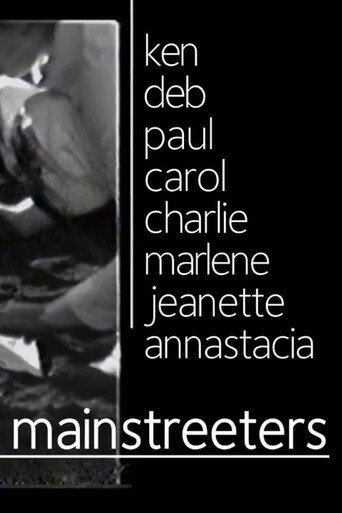
MAINSTREETERS: Taking Advantage, 1972-1982 surveys the history of a gang of Vancouver artists who lived and worked together in drama, excess, friendship and grief. From 1972 until roughly 1982, they lived along Main Street, the traditional dividing line between the city's working-class immigrant eastside and its more affluent westside. Core members––Kenneth Fletcher, Deborah Fong, Carol Hackett, Marlene MacGregor, Annastacia McDonald, Charles Rea, Jeanette Reinhardt and Paul Wong––engaged in ambitious collaborative media and performance work that charts the rapidly shifting social terrain of the city.
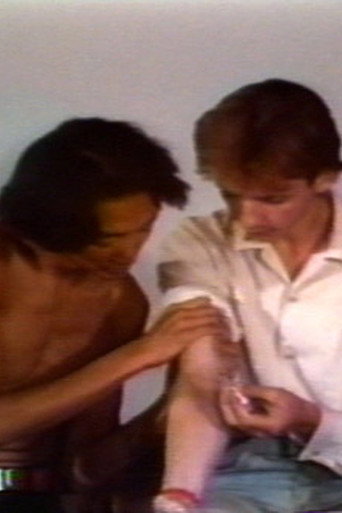
60 Unit; Bruise
Wong's first colour videotape bears the influence of several artistic genres popular in the 1970s, including performance and body art. We see Kenneth Fletcher draw several millilitres of blood from his arm and inject the contents of the syringe into Paul Wong's back, just under the skin. The camera closes in on this, observing the slow response of the immune system as the skin turns red and purple. What was originally intended as a sort of ritual uniting the young men as blood brothers, with implicit reference to drug use, has become a disturbing and dangerous act, when AIDS evokes our deepest fears and anxieties.
![Confused [The Videotape] movie poster](https://watchedthis.com/api/image-proxy/?url=https%3A%2F%2Fimage.tmdb.org%2Ft%2Fp%2Fw342%2F9dH8kmIh9sdFieX0f8pZtnCk574.jpg)
Confused [The Videotape]
A visual/aural non-linear narrative. A layering of ideas, facts, opinions, prejudices, fears, and styles. The story is based upon the innuendoes and interrelationships of four main characters – Gary, Gina, Jeanette and Paul. Distinct video forms are used to build the narrative and to handle the complex range of information and technical styles. The video’s intent is to develop a broader understanding and tolerance by its viewers towards a new sexual attitude.
Rock Garden
A two-channel installation from the Modern Television Loop series. Rock Garden shows two continuous shots of stone piles. On one monitor we see a close-up of hands grasping stones off the pile and tossing them off until the pile dwindles. The second monitor is a long shot of tossing stones to yet another pile.
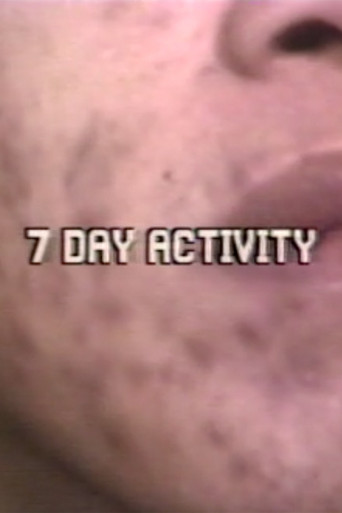
7 Day Activity
Early colour video recorded on ½ in. Part of The Mainstreet Tapes (1976-1980) a series of autobiographic tapes documenting Wong & friends “youth & angst”. 7 day Activity – 7 days of facial treatments for acne. Mirror, mirror on the wall, who is the vainest of them all. 1970′s body/art. Digitally Re-Mastered & Re-Edited in 2008, the process of restoring the picture & sound elements included shortening the work from the original length of 13 minutes to 8.5 minutes.
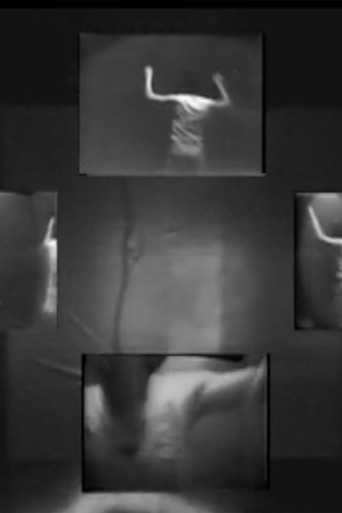
in ten sity
"The VAG exhibition space was staged with a four walled cube, 8’X 8’ which was padded internally. The four walls and the open ceiling were monitored by video cameras. Wong entered the gallery, climbed a ladder and disappeared into the blue cube. Personally I was very uneasy about the work at this time. Knowing that [Kenneth] Fletcher was a close friend of Wong’s who had only months before committed suicide. I felt perhaps Wong would attempt his own cathartic self-mutilation as we all watched. As Wong’s slow pacing and wall assaulting became more intense the audience picked up the momentum of his energies. The intensity of the performance became overpowering. Not knowing how far Wong has planned his own movements, one began to wonder if he was indeed going to bash himself into unconsciousness as some observers had predicted." - Arthur Perry, Vanguard Magazine 1979
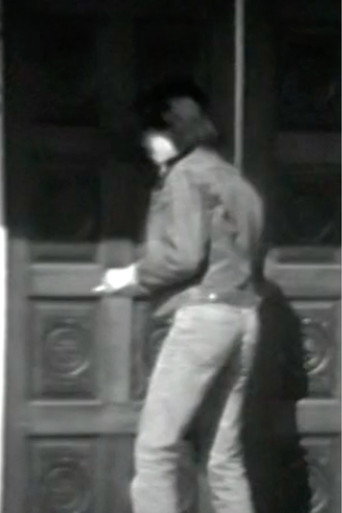
On Becoming a Man
On the occasion of his 21st birthday, Paul Wong walks southwest from his mother’s house at St. Catherines St. to the Quebec St. home of Kenneth Fletcher. Most remarkable about this video is not its careful camera work (shot entirely from a moving vehicle), but the driving that allowed for it – a feat that brings to mind the complementary (and collaborative) relationship between the shooter and the driver. On Becoming a Man was also the title of Paul’s 1995 solo exhibition at the National Gallery of Canada.
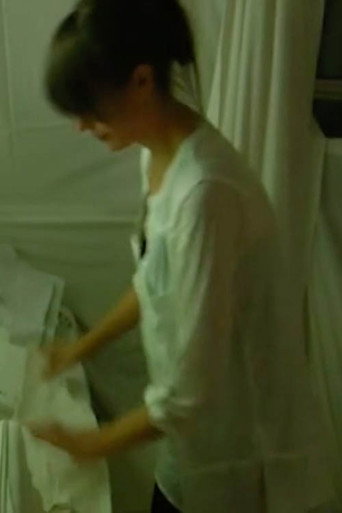
The Hotel
The Hotel featured 12 site-specific performances and art installations created by Wong, which wowed the thousands who attended. This 17-minute video is both document of and art which captures the manic beauty and chaos of Wong’s mise en scène event.
Diamondback
A couple of bumbling guys on a dark road in Nicaragua spot a snake. They bound after the serpent that has slitered into the tall grass. Using bare hands they seize the Diamondback Rattler.
Production
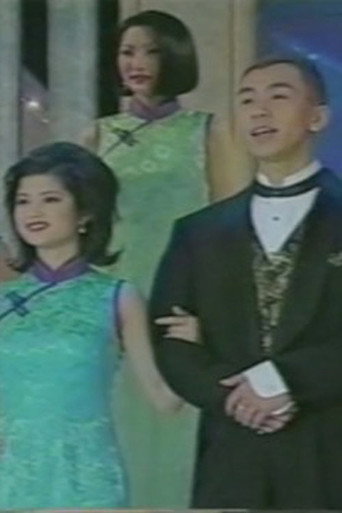
Miss Chinatown
Miss Chinatown juxtaposes the views of eight subjects against the background image of a beauty pageant: the Miss Chinese-Vancouver 1996. The subjects are all full or part ethnic Chinese, together they represent a diverse face of the Chinese-Canadian community, they present different perspectives on identity, home, sex and race. The contestants are seen going through the paces in the cheong-san (traditional side slit dress) segment of the live television spectacle.
60 Unit; Bruise
Wong's first colour videotape bears the influence of several artistic genres popular in the 1970s, including performance and body art. We see Kenneth Fletcher draw several millilitres of blood from his arm and inject the contents of the syringe into Paul Wong's back, just under the skin. The camera closes in on this, observing the slow response of the immune system as the skin turns red and purple. What was originally intended as a sort of ritual uniting the young men as blood brothers, with implicit reference to drug use, has become a disturbing and dangerous act, when AIDS evokes our deepest fears and anxieties.
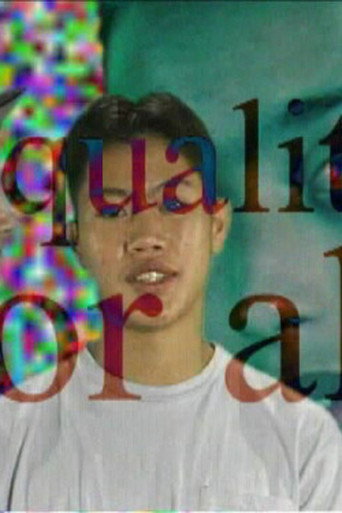
Refugee Class of 2000
Refugee Class of 2000 is a series of three TV ads produced as part of the Unite Against Racism campaign mounted by the Canadian Race Relations Foundation. These ads started airing nationally on Jan. 15, 2000. The central subjects are thirty four Grade 12 students from the graduating class of 2000 of Sir Charles Tupper Secondary School. Tupper is in a working class culturally diverse neighbourhood in Vancouver. Many of the students are first generation born Canadians. Grad students were chosen as the demographic group, they straddle two centuries, the violent racist past and representing the hopes and dreams of a better future in the new multicultural world.
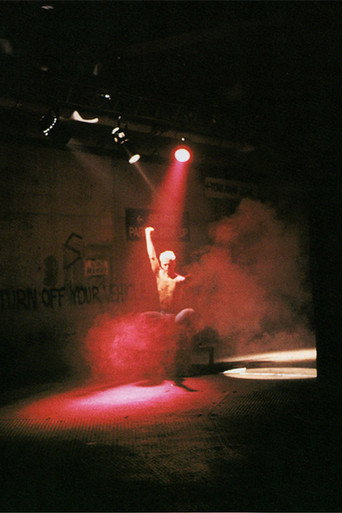
Body Fluid
A skillful, sensual rendering of an intriguing performance orchestrated by the artist. Through a fog-laden atmosphere, iconic figures emerge to perform on a huge turntable. Our look at this garishly lit spectacle is mediated by the gaze of a female Red Guard. All flesh and brilliance, this tape appears to critique popular culture by robbing it of any ostensible content. Hollywood proverb says, beneath the surface of fake tinsel lies only the real tinsel – the detritus of our times.
Confused [The Videotape]
A visual/aural non-linear narrative. A layering of ideas, facts, opinions, prejudices, fears, and styles. The story is based upon the innuendoes and interrelationships of four main characters – Gary, Gina, Jeanette and Paul. Distinct video forms are used to build the narrative and to handle the complex range of information and technical styles. The video’s intent is to develop a broader understanding and tolerance by its viewers towards a new sexual attitude.
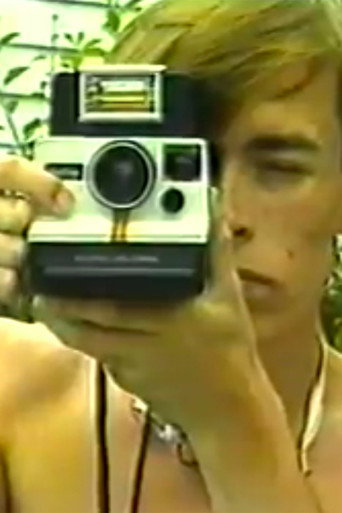
Prime Cuts
"For those who came of age in the 1960s and 70s, glamour received its highest expression in fashion magazines like Vogue, where the representation of lives and those who lived them achieved perfection on every page. Prime Cuts is a work premised on the notion that the lives of magazine models are real (much like another Vancouver artist, Ken Lum, who as a child believed that the bedroom suites in the furniture store flyers that landed on his doorstep were real bedrooms). In exploring the lives of models (some of whom the Mainstreeters worked with through commercial projects), Prime Cuts does not so much imagine what these models get up to both before and after the lights, camera and action of the photo shoot casts them in amber, but extends the fantasy." – Allison Collins & Michael Turner, Mainstreeters: Taking Advantage, 1972-1982, Satellite Gallery, 2015
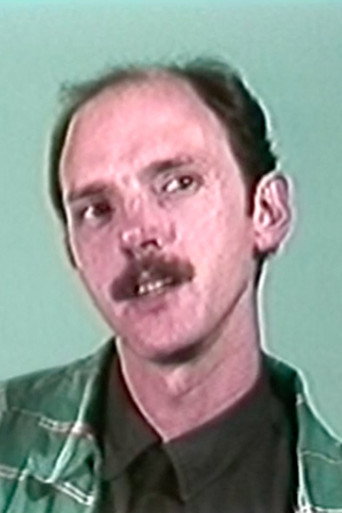
Confused: Sexual Views
The installation Confused: Sexual Views was part of a three-phase project that also included Confused [the videotape] and Confused [the performance]. It was produced just before AIDS had reached epidemic proportions. Twenty-seven individuals face the camera head-on as they speak about bisexuality, especially its more complex and engaging aspects, such as the relationship between sexuality, love, and friendship. Without mincing words, they challenge the conventions of behaviour and human relations conveyed by commercial film and television, and refute the myths surrounding the notion of romantic love. The intent here is to question the constrictive mores that sanction only one style of love, and to examine the many forms of desire and sexuality experienced in our culture, approaching them from a variety of perspectives.
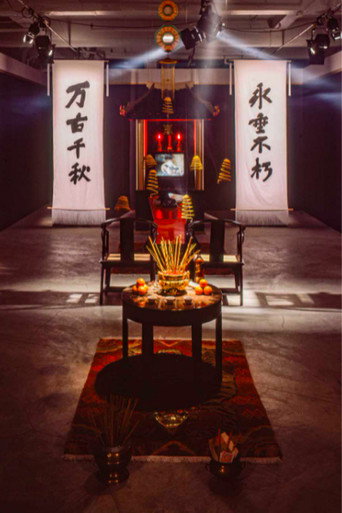
Chinaman's Peak: Walking the Mountain
The images seem to suggest a traditional Chinese funeral ceremony associated with ancestor worship, though Wong has remarked they do not represent any particular ritual. The work deals with death, remembrance, and history, and was conceived as a memorial to the Chinese workers who died building the Canadian railway through the Rocky Mountains. It is also dedicated to the artist’s father, Hoy Ming Wong, and to two friends and collaborators who committed suicide, Ken Fletcher (1954-1978) and Paul Speed (1967-1991). Wong created the work while artist-in-residence at the Banff Centre for the Arts in Alberta. Chinaman’s Peak is the name of a mountain near Banff where, according to legend, a Chinese worker killed himself. The work was first performed at Tunnel Mountain, Banff in 1992, before being exhibited as an installation at the Contemporary Art Gallery in Vancouver, for the Chinese New Year, in 1993.
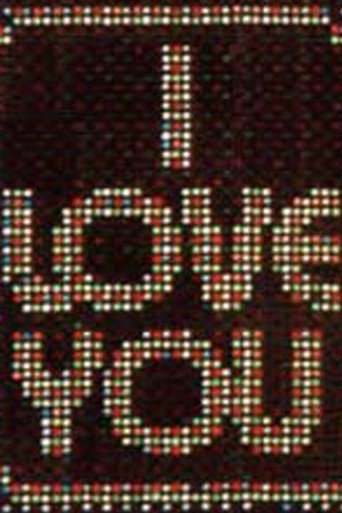
I Love You
This was a site-specific work for spectra-board urban screen located at BC Place stadium in Vancouver. This Day Without Art project, curated by Scott Watson, was launched on Dec. 1, 1993 as part of AIDS Awareness Day. I Love You appeared in four languages: English, French, Chinese, and Coast-Salish. The two spectra-boards on the exterior of the stadium is visible to commuters on two bridges and surrounding streets and buildings in downtown Vancouver.
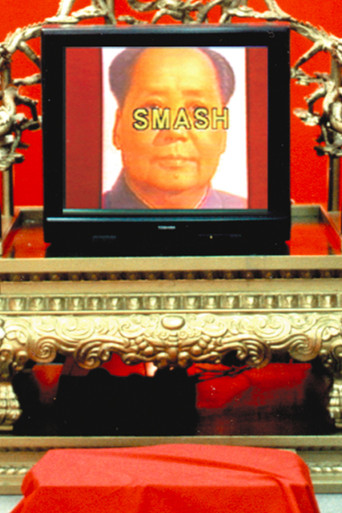
Ordinary Shadows, Chinese Shade
Wong uses his second generation Chinese-Canadian perspective to frame the Chinese here in the new world, Canada, and in the motherland, China. This is an intimate, personal view. Through his own “family network” and several trips to the People’s Republic of China, the artist gained access to the everyday, non-exotic world of the Chinese. A picture emerges of displaced cultures and traditions in transitions.
Gallery