Paul Leclér Movies, TV Shows, and Filmography
Paul Leclér
Acting
Biography
No biography available.
Filmography Movies
Acting
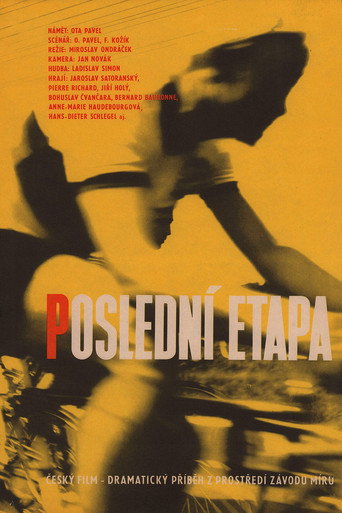
Poslední etapa
An international cycling race requires the full commitment of all forces, there is not only rivalry between the competitors, but also a willingness to help each other.
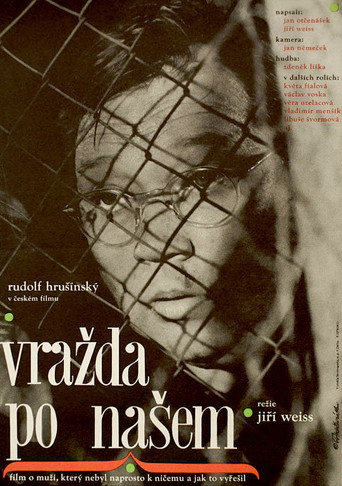
Murder Czech Style
The protagonist (Rudolf Hrusinsky) is a dull, fat, shy government clerk indulging in voyuerism and ego fantasies. In love with another clerk (Kveta Fiolova), he is urged on in his pursuit by a commiserate executive. The story is told in a flashback sequence as the cuckolded Hrusinsky attempts suicide by gassing himself in his bathtub. The "Murder" of the title is not a murder as such, rather the murder that Hrusinsky remembers planning upon discovering his wife's unfaithfulness with his supposed friend and advisor. Both plots failing in his mind, he loses himself in fantastic reveries of his funeral and of hypocritical mourners. ' Deciding (perhaps) that this is not the way out either, he gives up the attempt and imagines a life of reconciliation and eventual affluence.
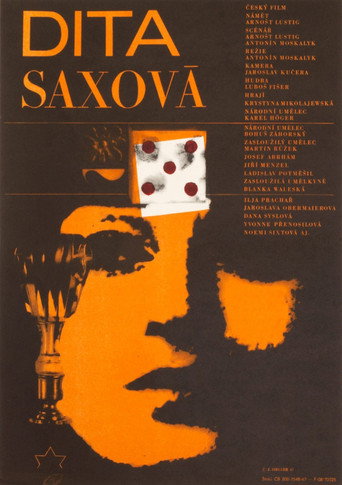
Dita Saxová
In 1947 Prague, Holocaust survivor Dita lives in a hostel for orphans, acting as a protective mentor to a younger girl while failing to fix her own shattered life. Unable to form lasting bonds or find a place in a society that has moved on, she drifts through emotional isolation.
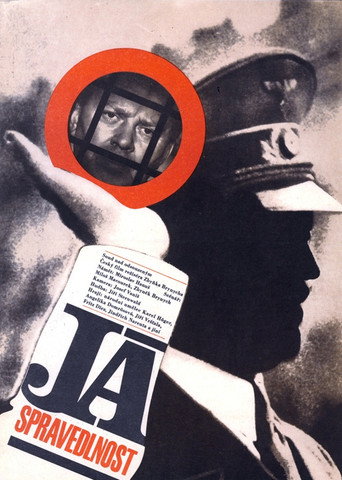
I, Justice
At the year 1946, the time of the Nuremberg Process. One of the main actors of the Second World War, who reportedly committed suicide, Adolf Hitler is, however, missing. The Czech doctor Herman (Karel Höger) is kidnapped from Prague and driven to the sanatorium of Professor Rolf Harting (Jirí Vrstála). The sanatorium is a disguised military stronghold, most probably occupied by a Nazi garrison, with prison cells and an execution chamber in the basement. At night, Herman is taken to a patient in whom he, to his horror, recognizes Hitler (Fritz Diez).
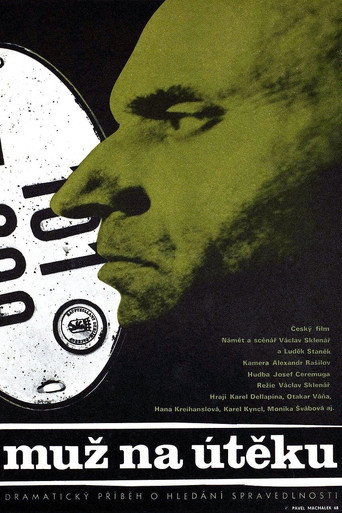
A Man on the Run
More than twenty years after the Second World War, a mining engineer named Fischer is revealed as a former member of the Gestapo, Karel Kraus. He is sentenced for murder to eight years in prison and now works with other prisoners on the renovation of the Convent of St Agnes of Bohemia in Prague. Then a car with a foreign registration begins to park regularly close to the construction site. Its crew, a man and a woman, contact the construction foreman, who probably would not reject a bribe offer to perform some service. The prisoner Bicík is appointed to work with Kraus; Bicík gives him a message from Kraus' brother Bert, who lives abroad, that he wants to help him escape.
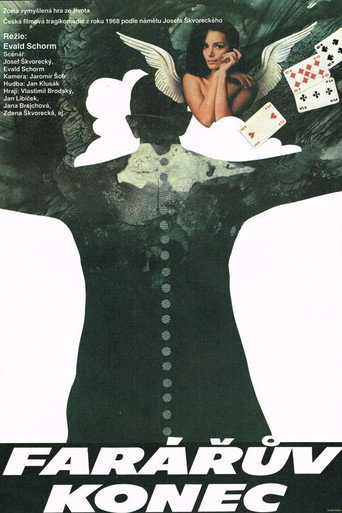
The End of a Priest
A verger, who likes to dress as a priest, is invited, by one of the villagers, to be the pastor at a vacant church. The atheist teacher resents the pastor, and tries to embarrass him in various ways, including being caught with the local girl, Majka.
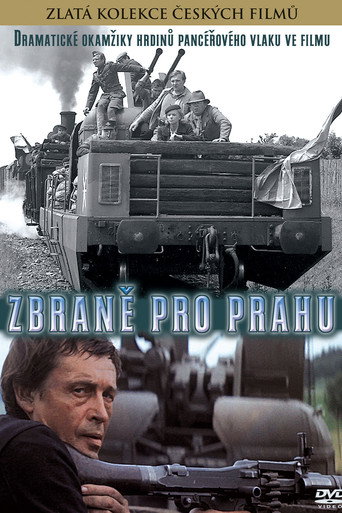
Zbraně pro Prahu
In May 1945, Czech revolutionaries used several armoured trains in the fighting - partly captured, partly assembled from whatever the railway brought. One of them was commanded by the shunter Jan Chýň, who managed to bring weapons from the ammunition depot in Libčice to help the fighting in Prague.