Sound
No biography available.
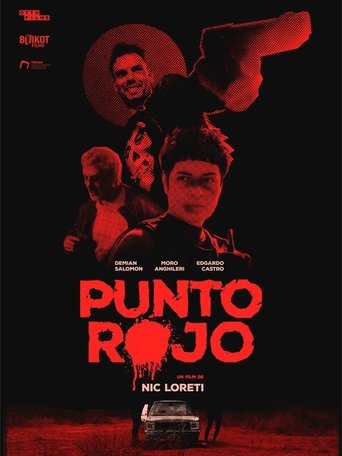
In some vacant area in the Buenos Aires province, Diego is taking part in a radio contest that consists of answering a series of questions about his beloved team Racing Club. Meanwhile, in the blink of an eye, a man falls from the sky on the hood of his car, another man ends up gagged in the trunk, a secret agent shows up weapon in hand and a plane crashes just meters away.
The Tupac Amaru neighborhood organization, led by Milagro Sala, carried out impressive construction, cultural, educational, healthcare, and dignified projects for vulnerable sectors of the Jujuy Province. On January 16, 2016, Milagro was arrested because her actions affected the economic and political interests of the Jujuy ruling class. Many cooperative members who participated in this epic plot were gradually arrested. In a trial riddled with irregularities, they were convicted.
Nesquick has a guy in the trunk. The other, Diego, tries to convince him to open it because he is drowning, but Nesquick doubts that it could be a death trap.
Nestor is extremely superstitious. This year, his team plays the ascent in Mendoza and prepares to travel with Rafa, his friend. But Fabian appears, a mufa. The ascent is in danger, unless they can prevent Fabian from reaching the stadium.
Following the death of a musician under suspicious circumstances, a researcher and a music fan examine why rock stars often die at 27.
An exercise of memory about the work of Enrique Carreras, the Argentine director of ninety-five films, which explores the relationship he had with his collaborators, producers and critics, in search of an answer to the question that continues to be asked throughout time—how was he able to shoot almost a hundred films that were box-office successes and a great source of employment? Beyond the sentimental and emotional value of Carreras’ films in the collective imagination, said productions are documents that explain certain processes of social transformation and behavioral patterns, a reflection of different decades, with their own social and political circumstances.
In several popular neighborhoods of Buenos Aires, opera seduces young people to revitalize themselves with new talents. Mailen is a music teacher who intends to add children and adolescents to the world of music and particularly to the lyrical genre. She thus strives every day to help young people discover a new universe and overcome the enormous obstacles in which they are immersed in their daily lives, while breaking social myths around opera. A story of overcoming through art.