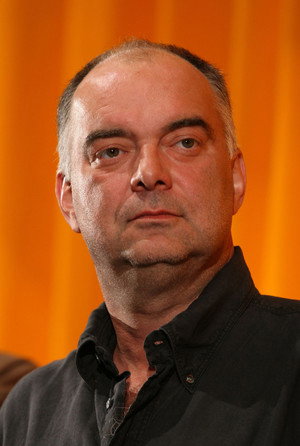
Ondřej Trojan Movies, TV Shows, and Filmography
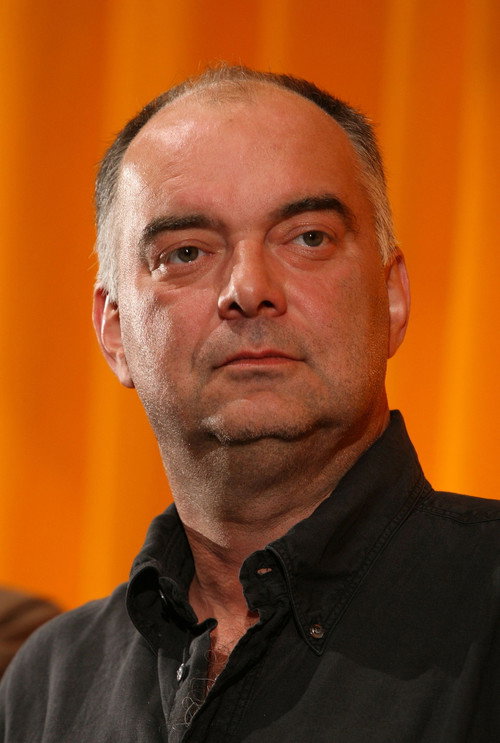
Ondřej Trojan
Production
Biography
Ondřej Trojan (born 31 December 1959 in Prague) is a Czech film and theater actor, director and producer. He comes from an artistic family, father Ladislav Trojan and younger brother Ivan are Czech actors. After graduating from the FAMU in Prague in 1991, he made his debut with the film Let's Sing a Song by screenwriters Jan Hřebejko and Petr Jarchovský. The second feature film was the very successful film Želary based on the short story by Jozova Hanula by Květa Legátová, which was nominated eleven times for the Czech Lion Award as well as the American Academy of Motion Picture Arts and Sciences Oscar. In 2010, Trojan directed and produced his third film, an Identity Card. In 2018, he released his fourth film, Toman, in cinemas. He focuses on theater directing and acting in the legendary Prague Theater Sklep. Together with Tomáš Hanák and Jiří Fero Burda, they founded their own production and trading company Total HelpArt T.H.A. In 1994, he directed a television recording of the cellar adaptation of Václav Havel and Karel Brynda's play Life Before Himself, which the Sklep Theater presented in an adapted version called Mlýny. He also played several small roles in the films Journey from the City, Elf, Farm Manager, Gympl and The Decadent Visitor. As a producer, he collaborates mainly with director Jan Hřebejk. Together they prepared the films Pelíšky, We Must Help Ourselves, Pupendo, Up and Down, Beauty in Trouble, Teddy Bear and Good to Me.
Filmography Movies
Acting
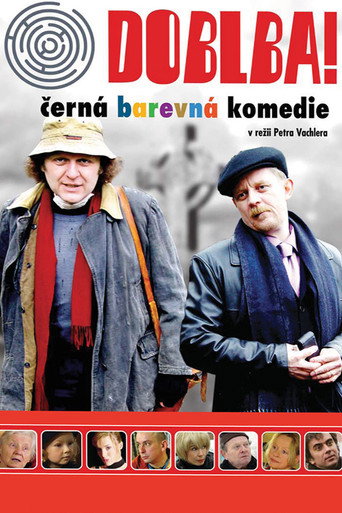
Doblba!
The story of the black Christmas comedy Doblba! takes place in the extended Muk family. The main character is Karel Muk, a simple man with simple dreams, living a somewhat stereotypical married life with Tereza, the stepmother of Karel's daughter Valinka. In the words of the script: ... Karel worked for many years as a cemetery caretaker and liked to say: "Only death is certain," but he never admitted that it could affect him in any way. There wasn't much to praise him for. His brother Robert Muk, on the other hand, is a confident and practical businessman, and the youngest, Pavel, seems unable to decide whether to find meaning in life in protecting the Šumava forests or in erotic games with secretaries. One day, shortly before Christmas, the Muk family receives an unexpected inheritance.
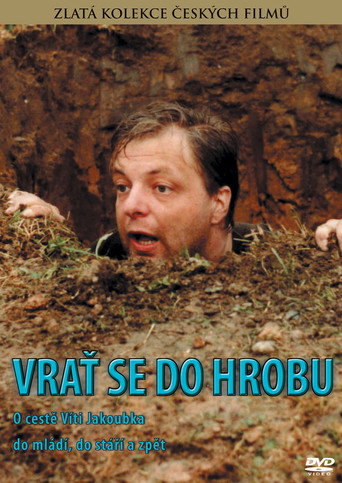
Ready for the Grave
Vita Jamie already exceeded thirty, working as a poorly paid sociologist, husband, tired father of two children. In the sociological institute involved in research attitudes of secondary school students. To better understand the target group, issued to the student daily and sits in his high school benches. Suddenly, as if they came back in time, they feel young and carefree again, she saw a lot of promises. Real life is but a fool can not log on early for their rights and duties of ...
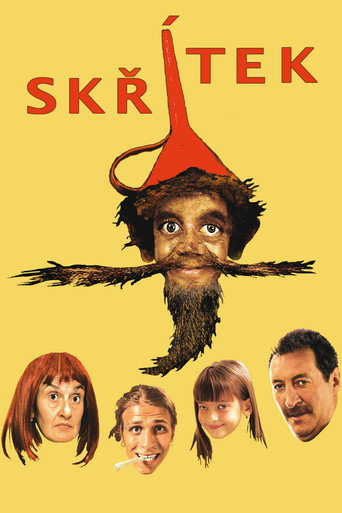
The Gnome
A tragicomedy full of slapstick and vignettes, and even an unexpected shootout. A family of villagers moves up in the world - to the county seat. Dad works as a butcher at a meatpacking plant, mom is a checker at a supermarket. The daughter is at odds with her homeroom teacher, while the son - a vegetarian, anarchist, and avid pothead - is apprenticing as a butcher to please his father. The kid's in hot water with both his forewoman and the police. But dad isn't much of an example, letting himself be tempted by the charms of a lovely young butcher. However much mom tries - visiting the beauty parlor, her psychologist, or even the confessional - her husband shows his interest by moving out. Mom plots revenge. And somehow an imp gets mixed up in it all
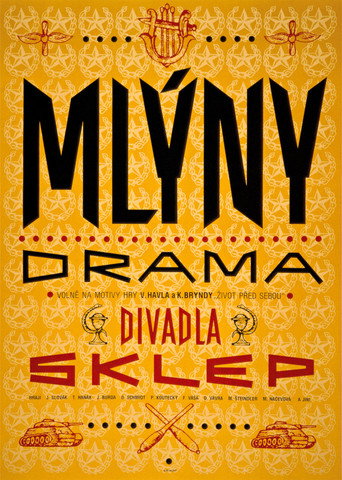
Mlýny
Správce statku
Just as good music can be played by a large symphony orchestra or a single blues musician with an old guitar, a good film can be made by large production companies or at minimal cost. Cameraman Martin Duba chose the latter path. He took his wife, children, animals, and friends, and together they shot a pleasant feature film on a literally family budget. Martin Duba's family plays Mr. Kuba's family, and their friends play their friends. The Kubas live on a farm during the summer, where they run a pub and breed horses. The father is an entrepreneur, but he is clearly not doing well. The farm is falling into disrepair. It is only with the arrival of the mysterious young man František that everything takes a turn for the better, and the story continues in an atmosphere that allows for miracles every day.
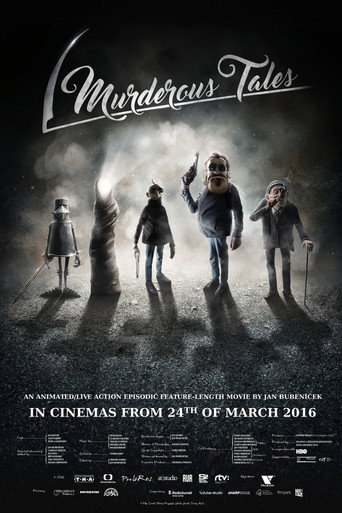
Murderous Tales
MURDEROUS TALES is a special effect animated feature film combining live actors with 3D/2D animation, puppets and back projection. It contains three stories: Antonio Cacto, Lighthouse and The Big Man, plus three ultra-short films called Charge the Dragon. Each episode uses different production technology and is in a different genre, but both their form and their content are related. All the episodes are about double standards and the topics of heroism and death. Something very small meets something very big (a tiny knight meets a huge dragon, an old Mexican goblin meets a man, a tiny Professor meets real-life cows, two mobsters meet the Big Man). All these meetings result in the heroic death of the small principal characters. Each script sees heroism and death differently.
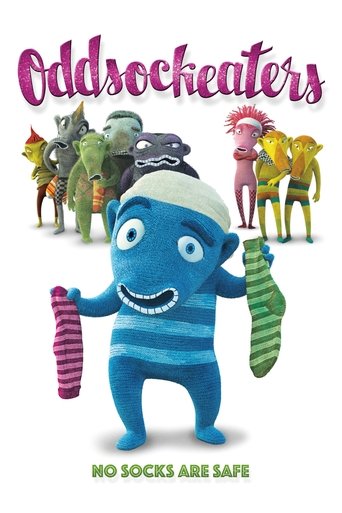
The Oddsockeaters
Oddsockeaters are small invisible creatures, responsible for socks that go missing when we only have one left from a pair. But unlike them, Seed’s gang wants to have a pair. In the end, they began their fight between two sets of values.
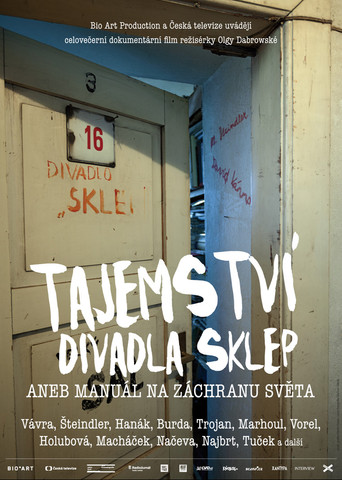
Tajemství Divadla Sklep aneb Manuál na záchranu světa
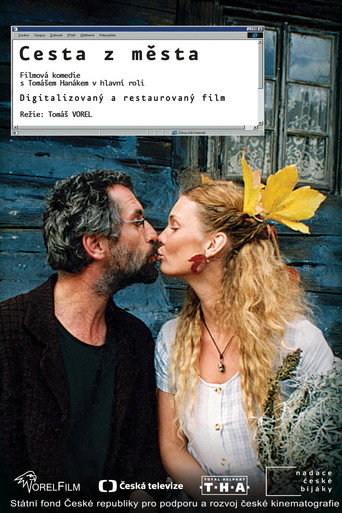
Out of the City
A computer programmer and his son are going out of the city for vacation.
Pumelice lesní moudrosti
A series of theater performances in the basement.
Production
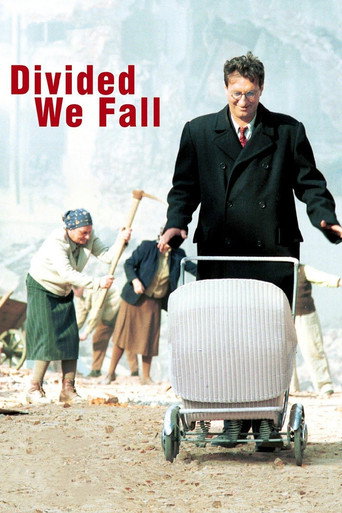
Divided We Fall
In 1943, a childless couple, the Čížeks, decide to hide a Jewish refugee, David Wiener, the son of Čížek's former employer, in the secret pantry of their apartment. Čížek is aware of the danger into which he has brought his household and his neighbours, but he takes helping his fellow man in need for granted. But at the same time, as a largely unheroic hero, he is dying of fear. His personal situation is greatly complicated by the approaching end of the war, when he faces danger from both the Germans and his "honest" fellow Czechs...
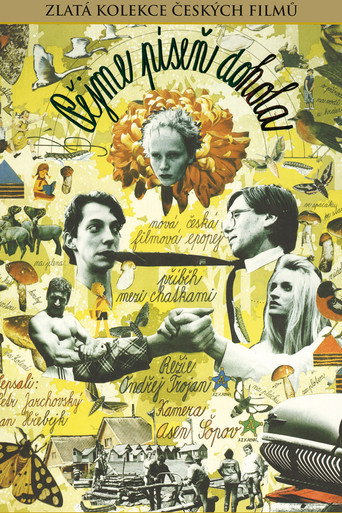
Let's All Sing Around
A comedy on a typical children summer camp from the socialist time, telling the truth about it: combination of strange cynical leaders, absent-minded young assistants with complexes, teenage girls desperately in love with them etc. What a pioneer camp pretended to be and what it really was about. All this produces many embarrassing situations.
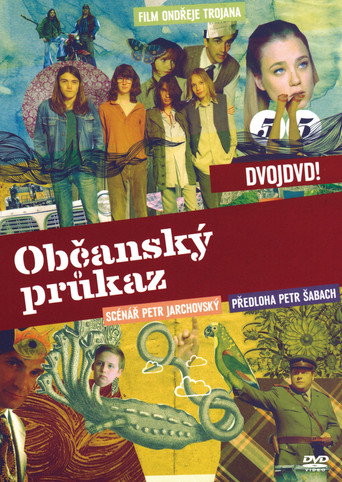
Identity Card
Bittersweet comedy about four teenage boys, their friends, parents, lovers - from the moment when they are 15 to moment when they are 18. Story is set in 1970s, when is Czechoslovakia occupied by Russians.
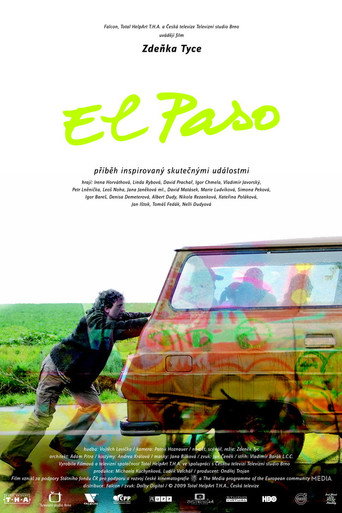
El Paso
The Horváth family is a Romani family with seven children, and the story begins with the tragic death of the father. His wife, Vera, is suddenly in a fight with the authorities, determined to keep her large family together at all costs, but she is hopelessly ill-prepared for the task. They are evicted from their home and her case-Vera versus the city-finds its way to a young, ambitious lawyer. She doesn't know the world of the Romani, nor is she particularly interested in it. Initially she takes the case as a springboard for her career. Despite her prejudices, incomprehension and sometimes Vera herself, she doesn't abandon the case. Luckily she is not the only one who sides with the family. There is a social worker whose attempts to help the Horváths are also motivated by his entirely private interest in the attractive lawyer.
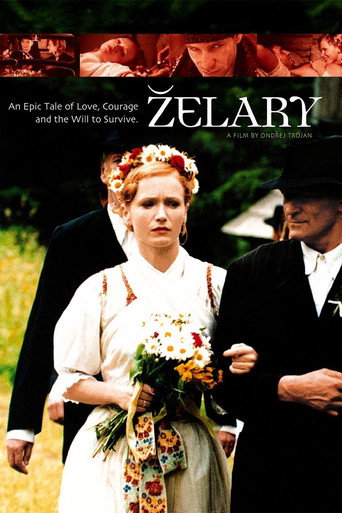
Zelary
A nurse and her surgeon-lover are part of a resistance movement in 1940s Czechoslovakia. When they are discovered, her lover flees and she must find a place to hide. A patient whose life she saved, a man from a remote mountain village where time stopped 150 years ago, agrees to hide her as his wife.
Zelary
A nurse and her surgeon-lover are part of a resistance movement in 1940s Czechoslovakia. When they are discovered, her lover flees and she must find a place to hide. A patient whose life she saved, a man from a remote mountain village where time stopped 150 years ago, agrees to hide her as his wife.

Beauty in Trouble
Marcela can't bear Jarda any longer, so she threatens divorce and takes the kids to her mom's, whose husband is a creep. While Marcela is there, Jarda is jailed, because he is part of a gang steeling cars and they get caught in the act. Benes, the urbane man whose car got stolen by Jarda and his gang, befriends Marcela. Soon she feels drawn to Benes and all of a sudden she must make up her mind: Jarda is still sexually attractive to her, but Benes offers security, and her own body and mind may not pull at the same strand.
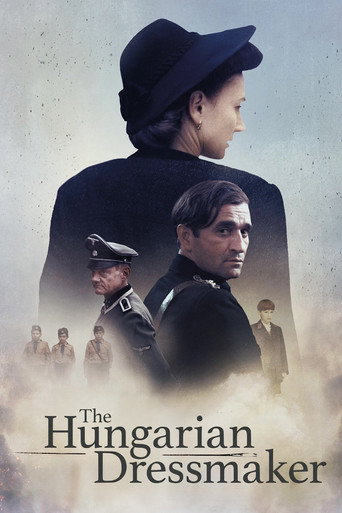
The Hungarian Dressmaker
Ema & Death’s-Head deals with the precarious border between humanism and the protection of one’s own life in situations when one excludes the other. Marika Sándorfi is hiding a Jewish boy during the dramatic era of the First Slovak State on the Slovak-Hungarian border. Šimon Holan, the boy in hiding, has a special ability to survive thanks to dreaming and a child’s fantasy.
The Seven
A parody of the film The Magnificent Seven about seven transport company inspectors who bravely fight a gang of stowaways.
Gallery