Writing
Olle Häger (19 September 1935 – 1 November 2014) was a Swedish journalist, television producer, writer and historian. Häger produced, often accompanied by historian Hans Villius, a large number of historical documentaries.
Swedish documentary from 1977. The film is about the last starvation year in Sweden, the emergency year 1867 in Ångermanland. It is a story about people who are hurting, but also about efforts from the outside world to help the developing country Sweden out of the crisis. SVT's documentary filmmaker Olle Häger passed away in November 2014. We remember him by showing some of his appreciated films during the summer.
Olle Häger interviews former Army General Bo Westin who shares his thought during all the crises in the sixties.
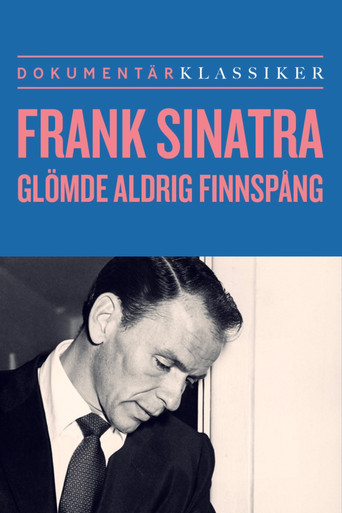
Frank Sinatra was at rock bottom as far as his career in Hollywood was concerned, but made his way back to the spotlight via Finspångs Folkets park in 1953 in front of 537 local fans. Hollywood no longer wanted to know about Frank Sinatra, he divorced his wife Nancy in 1951 to marry the actress Ava Gardner, "the most beautiful woman in the world" and he went to Las Vegas to get his career going again. But in 1952 he was fired from Columbia Pictures.. A year later he was in Sweden on tour and performed in Finspång. Only 537 turned up.The ticket was a whopping SEK 4 against the normal 1:50. The arrangement backfired.
Ingmar Bergman tells Olle Häger about "The Seventh Seal" and "Wild Strawberries". 1957 was one of Ingmar Bergman's great years. Then both "The Seventh Seal" and "Wild Strawberries" had their theatrical premieres. In an interview, which was conducted at Fårö the summer of 2006, the then 87-year-old director talks about what he considers the happiest years of his professional life.
"A voice from the past: a program about the explorer and politician Sven Hedin (1865-1952)" - based on his own statements and writings. Takes us through expeditions in Asia, Olympic Games in Stockholm and Berlin, two world wars, and a Swedish political conflict during the 1930s when the pro-Nazi Swedish party Sweden's National Federation aspired to power.
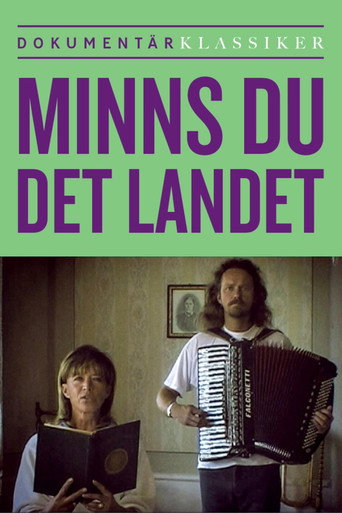
A story between accordion and dynamite. Filmmaker Olle Häger returns to his childhood villages in Hälsingland.
"He who is not with us - Sweden in the Cold War" - During the post-war period, the Nordic countries adapted their foreign policy to the prevailing political situation. Sweden officially balanced its foreign policy between the two great powers of the Cold War - USA and Soviet Union - in the same way as during WWII and described itself as neutral.
1953 - this is the year when Frank Sinatra tours Sweden and Stockholm celebrates 700 years with the entire air force in the air. The American way of life spreads in bottle form, when Coca-Cola makes its entrance. And there will be documentary film in color. The world is troubled with wars in Korea and Indochina. The US participates in both and Sweden has both doctors and nurses in Korea. Sweden becomes world champion in ice hockey for the first time.
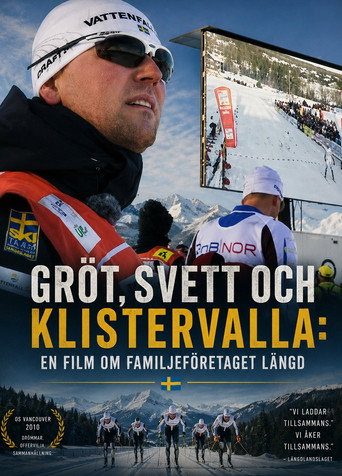
We follow the Swedish national cross-country team for a year. The sport has come a long way from the quiet lumberjack types of the old days to Charlotte Kalla's infectious winning smile.
About the Siemens Geheimschreiber - G printer - a crypto machine that Hitler's engineers designed in the 30's. The mathematician Arne Beurling at Uppsala University revealed the G-printer's secret.
A documentary that tells the history of Sweden through the eyes of the people and showing their living conditions for the past 1000 years.
At dawn on June 22, 1941, Germany invaded the Soviet Union. On the same morning, Germany demanded permission from the Swedish government to transport 18,000 German soldiers from Norway to Finland across Sweden by railway. This was a difficult problem for the Swedish government. On one hand remaining friendly with Germany at the height of its power, on the other maintaining a strict neutrality. The Swedish cabinet meet in Stockholm to decide upon the best reply to the German demands.
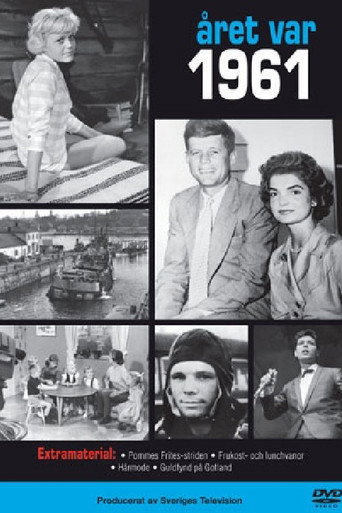
1961 - the year when Swedish UN soldiers are in the crisis-ridden Congo and Secretary General Dag Hammarskjöld dies in a plane crash. Swedish film's biggest hit, "Are there angels?", has its premiere with Christina Schollin in one of the roles. Yuri Gagarin becomes the first man in space and the Volvo P 1800 appears on the roads. Ewy Rosqvist is a rally ace and in April the regal ship Vasa is lifted up after 333 years at the bottom of Stockholm's stream. In August, the Berlin Wall is built and outside the Stockholm archipelago, Radio Nord broadcasts music and news.
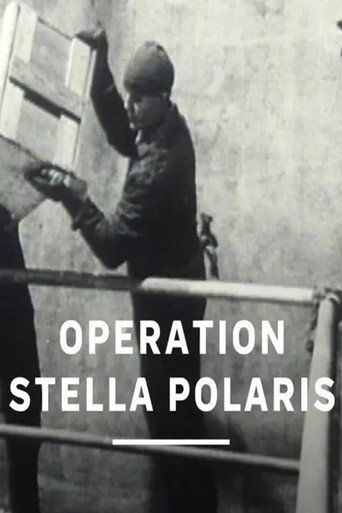
In the fall of 1944, four ships sailed out of Finnish ports and headed west. On board were not only the core group of Finnish intelligence, but also hundreds of boxes of top-secret material on the Soviet military, as well as technical equipment for advanced signals intelligence. The intention was to seek sanctuary in Sweden for continued intelligence service. Several of the people involved in Operation Stella Polaris are still alive. One of them is Stig Axelsson, Swedish liaison specialist, occasionally active in Finland, in Finnish uniform. Now he and others tell about the strange turns of the operation, which ended with the secret boxes being burned at the Löfsta waste station in December 1960.