Olia Lazaridou Movies, TV Shows, and Filmography

Olia Lazaridou
Acting
Biography
Olia Lazaridou (Athens, 13 March 1954) is a Greek actress and director. Her father was a radio producer and advertiser. She studied acting at the Drama School of the Art Theatre where she performed, as an actress, in tragedies and in the play Servant of Two Masters by Carlo Goldoni, directed by Giorgos Lazanis. In 1986 she went to France where she attended classes at the school of Antoine Vitez. Lazaridou became known to the general public through her frequent film appearances in the 1980s. Her first film appearance was in a small role in Nikos Koundouros' film 1922 in 1978. She has starred in a total of 17 films and has twice won the Best Actress award at the Thessaloniki Greek Film Festival for the films The Stigma in 1982 and Terirem in 1987 while in the same year she also won the Best Supporting Actress award for the film Archangel of Passion. In 2005 she was awarded for her entire body of work. The 46th Thessaloniki Film Festival featured special screenings in her honor of the films The Rags Still Sing by Nikos Nikolaidis, Invincible Lovers by Stavros Tsiolis, The Stigma by Pavlos Tassios, and The Nostalgist by Eleni Alexandraki. Lazaridou herself maintains an ambivalent attitude towards her film appearances.
Filmography Movies
Acting
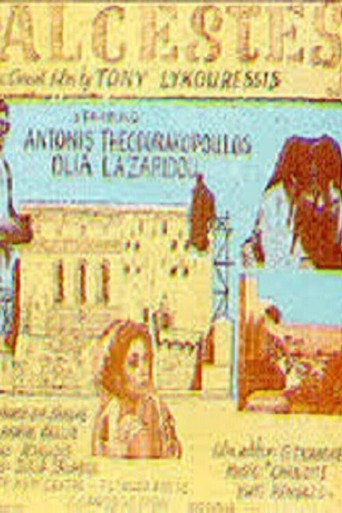
Άλκηστη
A writer goes to his hometown, looking for the girl he was in love,when he was young.
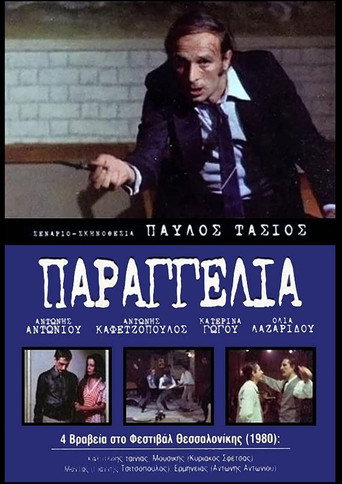
Parangelia!
The true story of Nikos Koemtzis, a man who stabbed three men to death in 1973 Athens for disrespecting his brother Demos' zeibekiko, a traditional Greek dance.

The Wretches Are Still Singing
Five friends (representatives of the Fifties generation) now in their forties, get together after many years of silence. One shows up from jail, where he has been entering and exiting for years, the other comes from a series of "accidental" murders, another leaves his wife and kids, the fourth one is a wonderer, and the last one, the girl of the gang, comes from a lunatic asylum where she has been hiding for years... All of them are outcasts, tortured from barren love affairs, wounded from the deaths of their beloved friends and betrayed by the politics of their times. They hopelessly try to reconstruct the gang of their puberty, but the revolution is lost... Now, each in his own way, will progress into a journey of death, thus opening a new chapter in the history of their generation.

Olga Robards
In this highly stylized and enigmatic story, Olga uses her cello case as a weapons cache. When she isn’t using her sharpshooting skills to knock off eminent Arab visitors to Athens, she vamps around lightly clad on the terrace of her penthouse, entertaining one man after another.
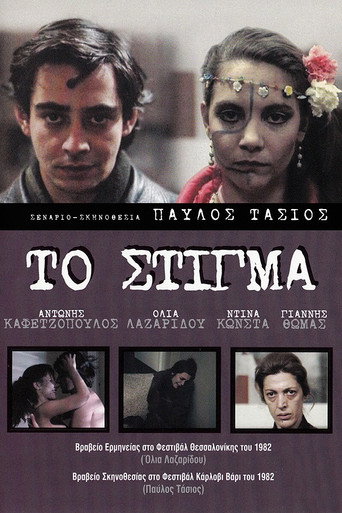
Stigma
A young couple (Antonis Kafetzopoulos and Olia Lazaridou) have a baby affected with the Down Syndrome. In order to avoid the difficulties entailed in bringing a child that will never live a normal life, they decided to put an end to its life.
Invincible Lovers
Twelve-year-old Vasilis escapes the orphanage, wanders a while in the capital and then takes the train for his hometown, Tripolis. As he wanders through the mountains of Arcadia, he meets a girl whose car has broken down. They become friends and spend the summer together, until Vasilis returns to his grandmother's house, which he finds abandoned and in ruin. The girl disappears, and Vasilis, deserted and alone, takes the road to Tripolis, where, in order to make ends meet, he performs odd jobs. On the day celebrating his patron saint, however, he abandons the city and takes the road back to his village.
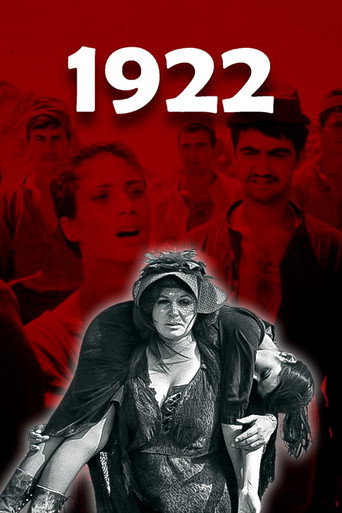
1922
Based on the book by Ilias Venezis "The Number 31328", the film by Nikos Koundouros unfolds through the personal tragedies of three characters, the Asia Minor Disaster and the agonizing travails of the Asia Minor Greeks who had been arrested and led to death by Kemal's troops and armed groups of Muslims. The wife of a merchant, a teacher and a seventeen-year old boy try to survive, following the column of prisoners into the depths of Asia Minor.
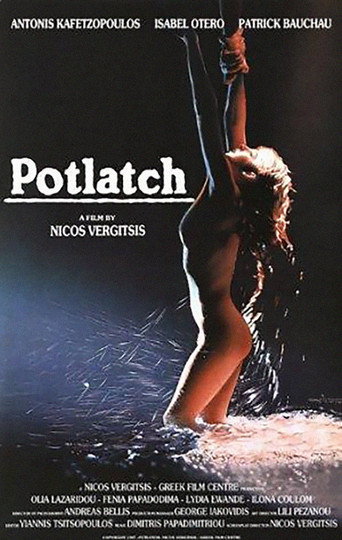
Potlatch
Arhangelos tou pathous: In anticipation of hearing a single word by midnight on his coming birthday, a self-destructive symphonic composer makes an out of bounds and dangerous bet on himself.
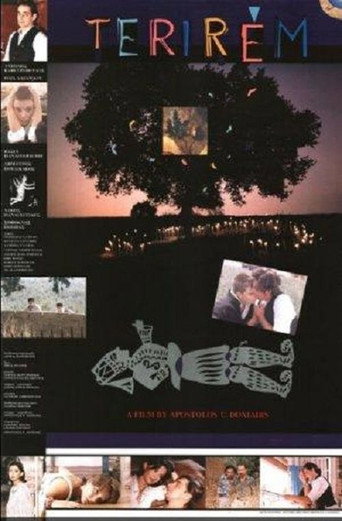
Terirem
The mute wife (Olia Lazaridou) of a shadow-theater player (Antonis Kafetzopoulos) is suffering from cancer. An old woman, guided by her visions, discovers a Byzantine religious icon buried in a field. Her nephew sells the find to a thief, who then murders the old woman, without knowing that she had told the village priest about the holy icon she found. Two priests arrive in the village together with the puppeteer and his ailing wife, and there the wife sees a vision of the icon and where it was located in the field, which leads to the discovery of the bones of a saint. The wife sleeps on the spot where the holy relics were discovered and, upon awaking the following morning, regains her speech.
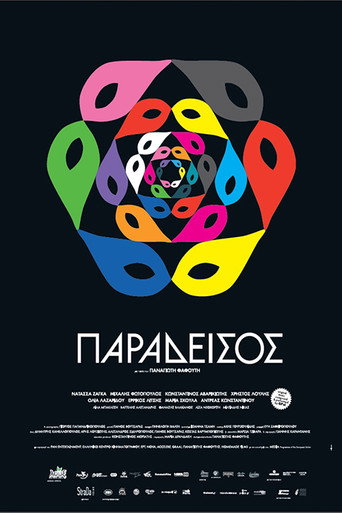
Paradise
Marianna returns to Greece on a whim to surprise her boyfriend, secretly plotting to stay with him forever, while Nikos is using the carnival as an excuse to confess his love to his unsuspecting boss. Eugenia hesitates to tell her daughter about her secret romance with the much younger carnival crew leader, while Ilias has no qualms about begging his estranged wife to come home. Four couples, each one desperately trying to either rescue or escape their relationship, lose themselves in the intoxicating atmosphere of the carnival before they finally reveal their true colors, hidden behind the masks. In the midst of carnival madness, four duets are staking their claim on their own personal Paradise…
Gallery