Acting
No biography available.
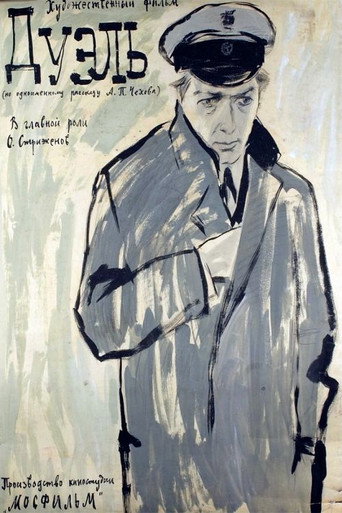
Tormented by the worthlessness and boredom of life, the official Laevsky longs to break the vicious circle of his existence at any cost. His moral antipode, the naturalist Von Koren, is convinced that people like Laevsky are worthy of destruction. But, contrary to the wishes and will of the heroes, providence decides their fates in its own way.
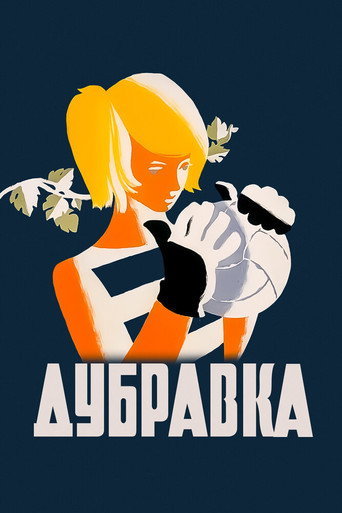
In the Crimea, on the shore of the Black Sea lives a girl nicknamed Dubravka. The girl plays soccer, swims in the sea, runs with boys in a race and often becomes a participant of any adventure. But the time comes - and Dubravka begins to grow up. She is as if in a “suspended” state: she is no longer interested in playing with boys, and older boys and girls do not pay much attention to her or perceive her as a child. In the house Dubravka settles vacationer Valentina Grigorievna. The girl likes her so much that Dubravka even “fell in love” with her. Dubravka's neighbor, the lonely father Peter Petrovich, and Valentina sympathize with each other, and Dubravka becomes very jealous of her. The girl does not know where to go from the contradictions simmering in her.
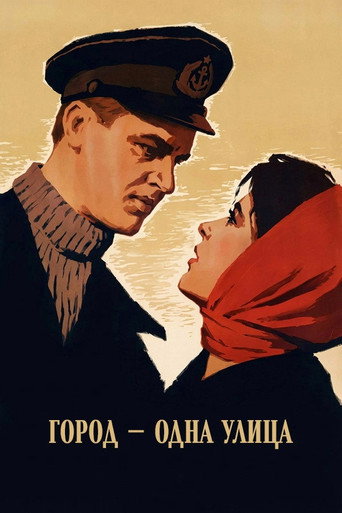
About spiritual sensitivity and human solidarity. A graduate of a medical school is assigned to a fishing collective farm in Glubokoe town.
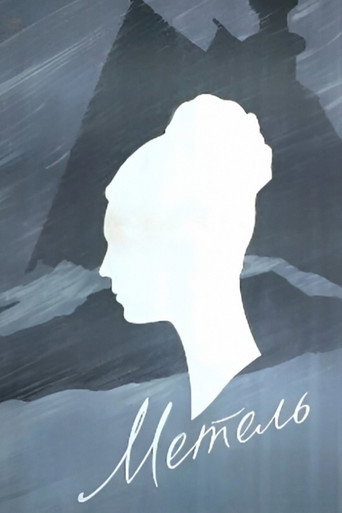
In the early 19th century a seventeen-year-old girl falls in love with a young officer and, despite her parents’ disapproval, decides to elope with him and beg their forgiveness once the deed is done. Based on the Pushkin short story.
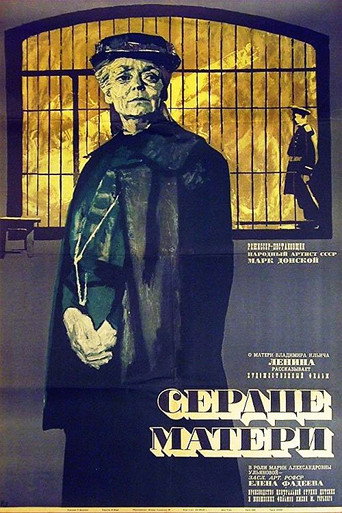
Family drama centering on the childhood of Vladimir Lenin, then Vladimir Ilich Ulyanov, in the city of Simbirsk, and his relationship with his mother.
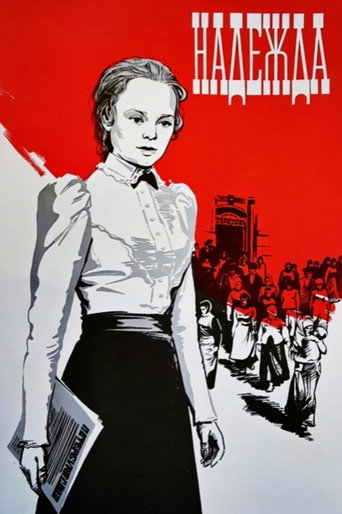
The film tells about the childhood and youth of the wife, friend and military ally of the founder of the country of the Soviets Nadezhda Konstantinovna Krupskaya. The main attention in the film is paid to the participation of a young revolutionary in the organization of the struggle of the workers of St. Petersburg for their rights, against the autocracy.
Matvey Pestsov, an employee of the District Party Committee, proposes to introduce collective contracting in one of the collective farms. The administration and the chairman of the collective farm Volgin are against the experiment. But Pestsov does not give up.
According to M. Saltykov-Shchedrin's novel "Poshekhonskaya Starina. The Life of Nikanor Zatrapezny, a Poshekhonsky Nobleman." The author of the notes, Nikanor Zatrapezny, presents a whole gallery of portraits of his family members. These include elderly lodgers who are kicked out of the house, aunties who are known for their self-indulgence, and ugly sisters who are unable to find suitable matches. The multitude of images and facts that arise in Nikanor's memory has a profound impact on him. After describing his childhood visions, he doubts that he will be able to continue writing.