Acting
No biography available.
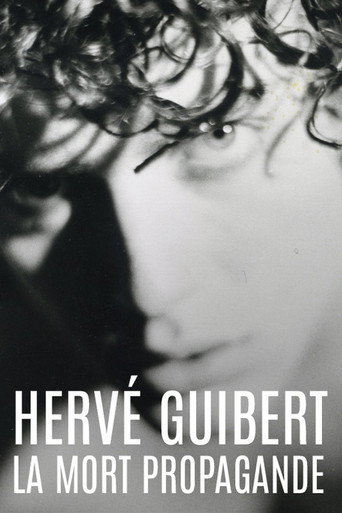
From this "inexorable disease", Hervé Guibert did not recover. The miracle he had so much hoped for did not happen. But, before his death in 1991, three years after learning of his HIV-positive status, he engraved in his literary and photographic work "the places of [his] suffering", "the stations of [his] way of the cross". With his thin body and sunken cheeks, the handsome man with curly hair that he was, the one whose clear gaze radiated from the seaside photos, fought a fierce battle against AIDS. A fight of every moment against the decay of the body, observed and commented with a methodical care in his autobiographical novels, in particular "To the Friend Who Did Not Save My Life" (1990) and "The Compassionate Protocol" (1991), and of which he testified on television on the set of "Apostrophes"...
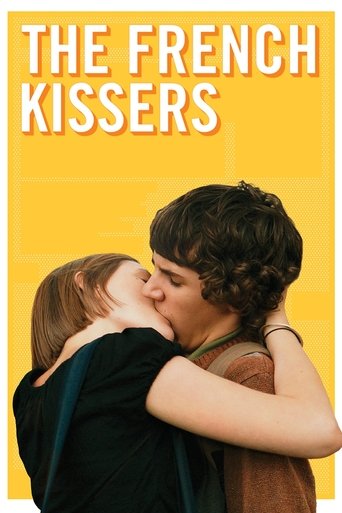
An awkward adolescent boy and his angst-ridden friends try their best to fit in amongst a cast of varied characters.
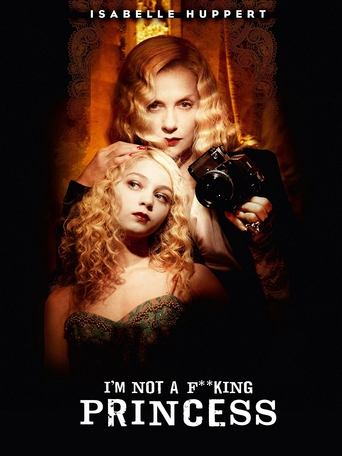
Young Violetta and her mother Hannah are a peculiar couple. Ten-year-old Violetta lives a quiet life with her grandmother, while her mother Hannah is an unpredictable photographer who lives off of the generosity of others. When Hannah forces her daughter to pose as a model, Violetta finds her life with her loving grandmother turned upside down.The resulting pictures quickly become a sensation for the trendy 70's Paris art scene, and Violetta finds herself caught in between her new stature as an art muse and her dull childhood.
Around midnight, a young couple and their transvestite maid prepare for an orgy. Their guests will be The Slut, The Star, The Stud and The Teen.
Truffaut au présent is a film divided in three shorts; throughout "Acteurs", "Actrices" and "Couples" we explore François Truffaut's legacy and influence on contemporary French cinema.
1968 and 1969 in Paris: during and after the student and trade union revolt. François is 20, a poet, dodging military service. He takes to the barricades, but won't throw a Molotov cocktail at the police. He smokes opium and talks about revolution with his friend, Antoine, who has an inheritance and a flat where François can stay. François meets Lilie, a sculptor who works at a foundry to support herself. They fall in love. A year passes; François continues to write, talk, smoke, and be with Lilie. Opportunities come to Lilie: what will she and François do?
A psychologist discovers troubling links between Nazism and modern-day big business.
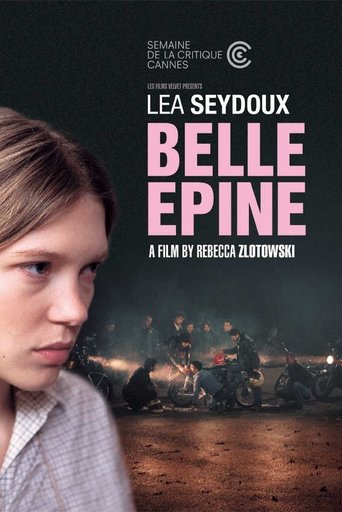
After the death of her mother, 17-year-old Prudence finds herself living alone in her Paris apartment. Then she meets Maryline, a rebel of her own age, who introduces her to the thrills of motorcycle racing on the biker circuit at Rungis. Prudence’s newfound lease of freedom becomes complicated when she falls for a boy Franck who wastes no time in taking advantage of her naivety...
The French Trilogy showcases a series of 62 photographs taken by Philippe Terrier-Hermann with 25 actors in 6 French regions echoing his previous project, The American Tetralogy. Questioning the relationship between cinema, landscapes and representations, this project features a song by Edward Barrow and was visible in public space in France during the summer of 2013, through a distribution system borrowing from advertising strategies.
Jérémie, a young man reaching a breaking point on all fronts, decides to leave behind Paris and return to Limosin, to the home of his intrusive mother.