Directing
Nicky Hamlyn studied fine arts at the University of Reading. He is a professor in experimental films and a filmmaker.
Avant-garde appeal on behalf of and made by the adventurous leftist London cinema, The Other Cinema, using the facilities provided by the BBC community programme unit.
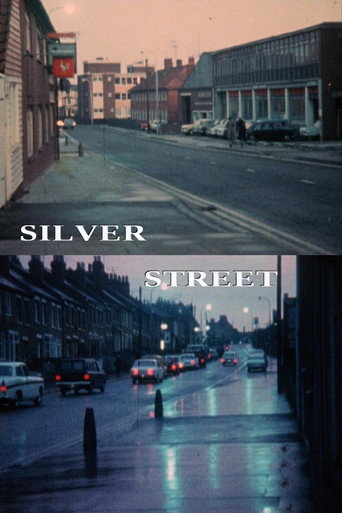
Silver Street was shot in a single day from my student house in Reading, Berkshire, where I studied Fine Art. Shots were made indoors and outdoors every hour. I adopted a shooting system using consistent framings, interspersed with variations. The film contrasts the interior personal space with the noisy street outside. - Nicky Hamlyn
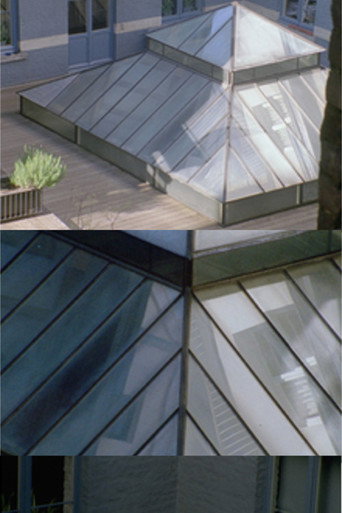
A chronological study of the view from a single window onto the skylight of Passaporta, a bookshop in Brussels. Shot over eighteen months and making extensive use of time-lapse filming. The work is underpinned by Siegfried Kracauer's assertion that we can never exhaust the field of view.
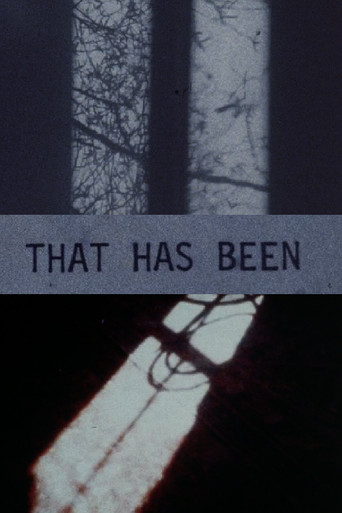
That Has Been is the last in a series of longer works made in the first half of the 1980s. The film was shot in two adjacent rooms. Outside views are seen in reflection via an aluminum photographic lamp, while some of the imagery is generated from photographs taken in the same spaces. The occasional voice over explores the relationship between places and dreams and that between memories and the physical events that can trigger them.
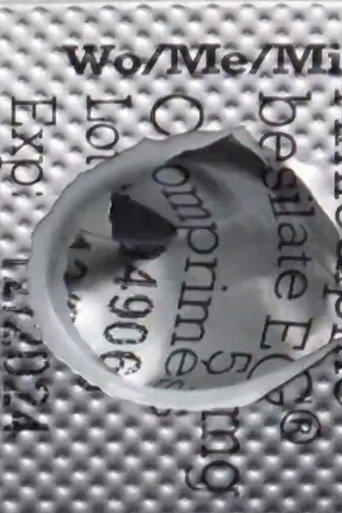
The work is constructed from shots of tidal seawater running over rippled sand and the blister pack for Amlodipine, a blood-pressure reducing drug.
Ghost stories opens with a sequence of polemical shots: a mysterious shadow, an ambiguous advertisement which has deeper ambiguities unknown even to itself, and a lengthy quotation from Roland Barthes on the nature of autobiography. These opening shots outline the context in which I hope the bulk of the film will be seen: as a critique on so-called visual literacy, which is frequently based on a complacent mis-reading of images, and also as a rejection of film-biography, whose efficacy depends on such visual complacency. The body of the film consists of fragmentary views of the interior of a house, in which desultory activity occasionally takes place, sometimes in front of the camera, sometimes not. A ghost story is told, firewood is sorted.
This film revisits the same location – a room in my house – as an earlier work, Ghost Stories (1983), and is in fact prefaced with a sequence from that film. “A house that has been experienced is not an inert box. Inhabited space transcends geometrical space.” – Gaston Bachelard, The Poetics of Space. Architectural, poetic and personal conceptions of space are counterposed and various techniques – multiple dissolves, superimpositions and extreme close-ups – are employed to this end. In revisiting, redescribing and reconstructing the room in the above terms my aim is to elaborate Bachelard’s apothegm: – N.H.
The film takes place entirely in one room and is based on a series of six repetitive shots. These shots establish a schema, a set of expectations which are then undermined. The film favours image rather than sound, in contrast to most narrative film, and the sound, where it occurs, serves only to confound or displace any meaning that is established. There are people, activities, a location and a hint of story. The film, however, cannot be mentally reassembled into anything like what it hints at in its depiction of bits of mundane domestic activity. On the contrary, it intends to confound any such attempt at a coherent reconstruction, preferring instead to leave the viewer with a lingering sense of doubt. – N.H.
Series of films produced during an artist’s residency at the Art Gallery of Windsor Ontario and Media City Festival. All the sequences were shot in and around the gallery on colour negative and Agfa B&W sound recording film.All the B&W sequences were hand processed and printed using a Bolex camera as a printer.
'Within a personal framework I have juxtaposed adverts and pornography with some domestic events to try and elucidate and undercut the way sex and the response to it occurs in cinema and advertising.' - N.H.
Double Fence was shot from the balcony of a B&B in Porto Potenza Picena , on the Adriatic coast near Ancona . The work explores the changes that occur with slight shifts in framings of the same scene, and the dramatic alterations in light, colour , space and movement between early morning and late afternoon. The work is the third in a series that records spontaneously occurring moiré patterns and related phenomena. The multifarious birdsong emanates from a nearby animal and bird sanctuary.
A short shot made from a train traveling from south to north through East Croydon station is cut into three-frame sections, each of which is looped for ten seconds. Each loop advances by one one frame at a time. The looping process generates complex artifacts and kinetic illusions in the image.