Sound
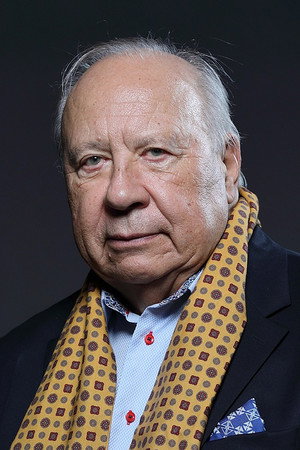
Neeme Järvi (Estonian pronunciation: [ˈneːme ˈjærʋi]; born June 7, 1937) is an Estonian American conductor.
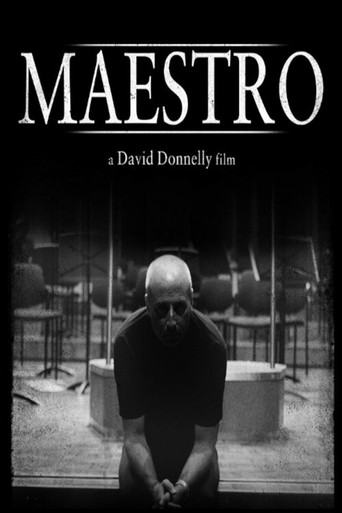
Maestro follows Grammy award-winning conductor Paavo Järvi and an array of brilliant musicians as they perform to sold-out music halls across the world.
“What is this life—and this death?” Gustav Mahler famously asked when composing his second symphony. Does consciousness “continue” on a higher cosmic level, he wondered, or is it “only an empty dream?” Narrated by renowned baritone Thomas Hampson, this film explores the musical, biographical, and philosophical background of the monumental work. Viewers are treated to beautifully produced historical reenactments as well as interviews with many of the world’s most respected Mahler scholars and biographers, including Henry-Louis de La Grange, Donald Mitchell, Morten Solvik, and others. Philosopher Martha Nussbaum and theologians Catherine Keller and Neil Gillman also add their insights. Woven throughout is a critically acclaimed performance of the symphony featuring members of the New York Philharmonic and the Philadelphia Orchestra under the direction of maestro Neeme Järvi.
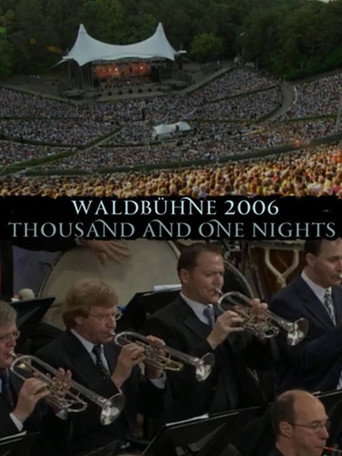
The Waldbühne in Berlin, one of the most appealing outdoor amphitheatres on the European continent, is the home of the Berliner Philharmoniker's summer concerts. With over 22.000 in attendance, they are some of the most popular classical music concerts in the world. This year the outstanding orchestra under the baton of Neeme Järvi take us on a trip to arabian "Thousand and One Nights", with soloist Janine Jansen, a rising star who quickly gained the reputation of one of the foremost young violinists on the international concert stages.
Esteemed maestro Neeme Järvi conducts the Hague Philharmonic in a majestic performance of "An Alpine Symphony" -- Richard Strauss's epic tone poem that portrays the experience of a day spent climbing an Alpine mountain. The program also includes Strauss's Oboe Concerto, featuring oboist Pauline Oostenrijk, and Eduard Reeser's Symphonic Suite, an arrangement of Alphons Diepenbrock's score for the play "Elektra."
For the Verbier Festival's 18th edition, the rising piano star Khatia Buniatishvili gained the attention of the audience. The first concert she performed at the Festival was Rachmaninov's Piano concerto No. 3. Some days later, in the Church of Verbier, she gave a recital including works by Frédéric Chopin and Franz Liszt. This film presents her best at Verbier Festival 2011.
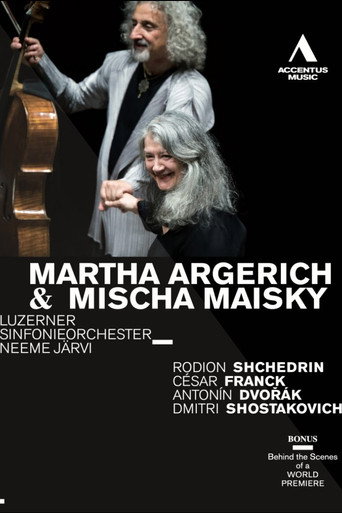
At one of her rare appearances with orchestra, Martha Argerich, the grande dame of the piano, joined forces with world-famous cellist Mischa Maisky and the fabulous Lucerne Symphony Orchestra for the world premiere of a newly commissioned work by Russian composer Rodion Shchedrin – “Romantic Offering”, a double concerto for piano, cello and orchestra dedicated to its very first soloists. The programme was rounded off by late-Romantic masterpieces by César Franck, Antonín Dvo?ák and Dmitri Shostakovich’s Ninth Symphony under the baton of renowned maestro Neeme Järvi.
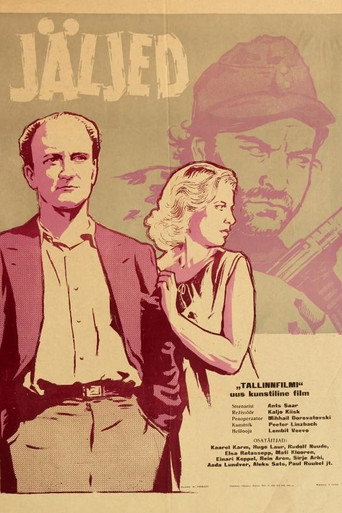
Heino Raagen and his war comrades begin a new battle while arriving at their home village - establishing a collective farm. The sufferings and fears of the war have exhausted people; nevertheless, they still stick together and protect their close ones. Heino's girlfriend Valve hides the plans of her brother Robert hiding in the forest from him; as a result, their relationship will fall apart. Life goes on, but disappointment and anger will take their toll even when years have gone by.
The end of the Great Patriotic War. Soviet troops arrive in a city abandoned by the fascists. Two women from the operational group find shelter in a house that, apparently, had been recently occupied by a German officer. Among the abandoned belongings is a lady's pink hat. The next morning, after leaving the house, one of the women decides to return for the hat and dies: the beautiful pink hat was booby-trapped.
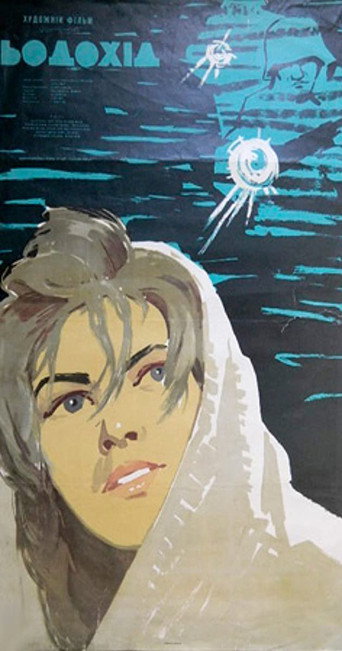
Two proud fisherman families live on a very small island in Estonia. The two fishermen have always bore a grudge against each other. Their stubbornness and disobedience to German occupiers leads to dramatic events where staying alive is worse than death. Since it is impossible to escape public contempt, they have to decide how to redeem themselves.
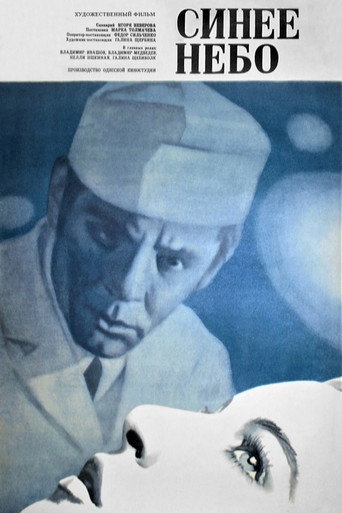
The film is dedicated to those who return the blue sky and all the colors of the earth to those who have lost their sight - ophthalmologists, their bold experiments and scientific research. The action takes place within the walls of the scientific Institute of Eye Diseases named after V.P. Filatov. The protagonist, who had already lost hope of seeing something, saw the blue sky again.