Directing
No biography available.
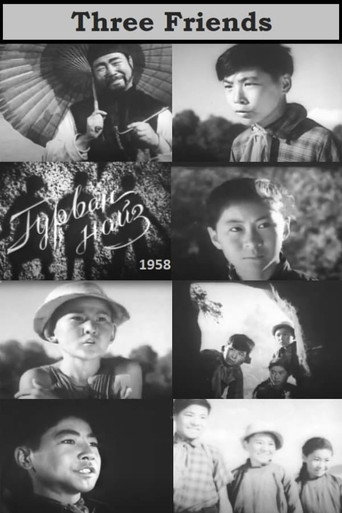
Narankhüu and Sarantuya, who study in a school in the city, go out to the country during their summer vacation and meet Balbar, a shepherd boy. They tell the story of their childhood from the local old man Dandar. However, accidentally attacking a group of thieves hiding there, Erdene reveals the secret of the lover's tank.
The work tells about the difficulties encountered in the lives of young people who went on a campaign to acquire vast land, and how they overcome them in an exaggerated comic tone. The plot of the film is highlighted by the fact that the empty dreamer and pride of the main character Cuckoo leads him to funny events.
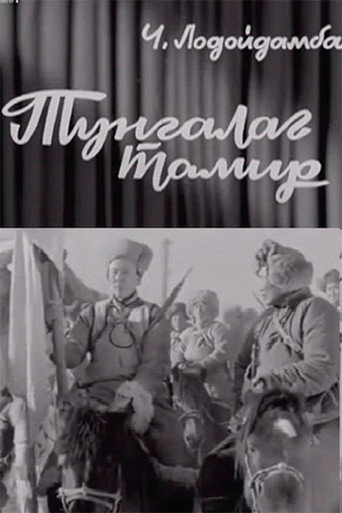
The image of the Mongolian countryside, the struggle for freedom, and the changes in the minds of the people of the new social relations are reflected in the form of an epic. The main characters of the film are the well-known characters such as Erdene, his wife Dolgor, the rich Itgum, and Timur, a good glass man called "silicon", and the complex events of their lives. appears.
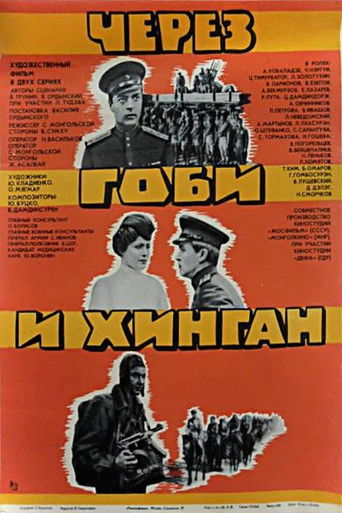
About the events of the final stage of the Second World War — the defeat by Soviet and Mongolian troops of the selected Kwantung army. Bacteriological weapons were created in the laboratory of Japanese General Ishii Shiro. Experiments were conducted on prisoners of war and political prisoners. Epidemiologist Dmitry Sokolov was assigned to solve the mystery of this laboratory. At the cost of his own life, he completed the task. The march of Soviet and Mongolian formations through the Gobi sands and the Khingan spurs was not only a brilliant military operation, but also a warning of the use of bacteriological weapons by Japan.
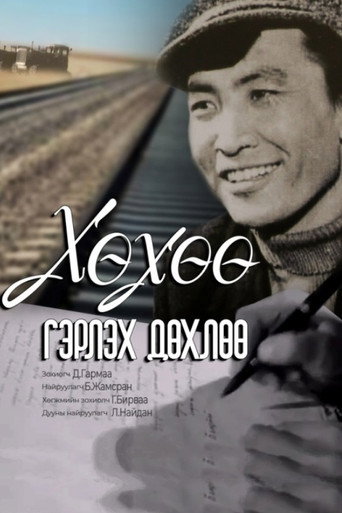
It is a film about love, hard work, dreams, justice and human nature of young workers in the 1980s.
The film consists of two parts, the first part is about the warm relationship between mother, father and son, the son's heroic merits for the country, and the second part is about his son in the war. It tells about the lost mother, who was named "Tall Mother" in honor of the mother's love for many drivers who have the same profession as her son.
In Mongolia. After the death of the reincarnation of the Dalai Lama, monks are looking for a replacement. A little boy, Monchetenger, would like to be this happy chosen one, in order to relieve his widowed and destitute mother. But the monks pass by without paying attention to him. He runs in pursuit of them and at the end of his strength, ends up collapsing and sinks into madness. Desperate, his mother decides to end her life and those of her son.
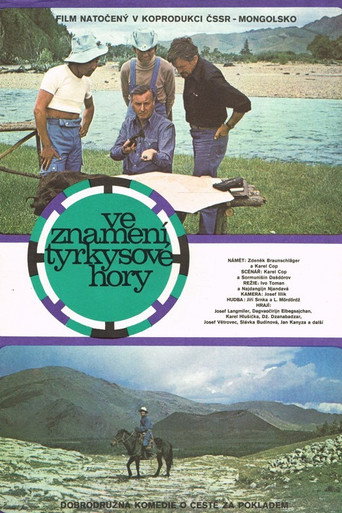
It tells about the collaboration of Mongolian-Czech geologists who are discovering treasure deposits in Mongolia, and shows the events that happen to them in a humorous tone.
This movie, created on the theme of mythology, the tradition of believing in and admiring myths, expresses the absurdity of a thought and the instinctive absurdity of a thought in the form of horror.
Showed children's kindness and desire to love animals. The second picture shows a little boy creating a piece for his mother and expressing his love.
This movie is a movie about the friendship between boys and girls. Tulgaa, who was on vacation at the camp, was accused and expelled from the camp for a crime he did not commit. It tells about how his girlfriend, after suffering a lot, decided to confess all the crimes in front of the crowd, revealing the truth and proving Tulgaa's innocence.
"I wish I could have a horse" shows how the lives of the main characters have changed after 30 years in a humorous tone. The plot of the plot shows how a cunning merchant man Gonchig gets rich as a young woman and becomes a company director, while the horseman Dondog and the driver Yanjmaa get married and settle down in the countryside. the colors of their lives are highlighted.
It tells about young children from the city and the countryside making friends, getting to know each other, and actively participating in the protection of the environment.
This movie is "Foal". "I'm not a millionaire" consists of two parts. In the first part, rural life is more interesting to Sukhbold boy than urban life and opens a new world for him. In the second part, his grandfather, who works at the museum, brings home a reed trumpet and repairs it, because he heard the story that in the olden days, reed trumpets were made from the bone marrow of an eighteen-year-old woman. In his opinion, the child's naive but generous love for people, and his desire to know the world's phenomena are highlighted.
He talked about the "Worship between Man and Nature" to make the next generation aware that it is our responsibility to protect and protect the environment, wildlife, beautiful land, mountains and water.