Monique Rutler Movies, TV Shows, and Filmography
Monique Rutler
Editing
Biography
Living in Portugal since 1952, she stayed with her aunt in Paris during the long term holidays while she was a schoolgirl. It was then she got started in watching, and loving movies, at the Cinémathèque de Paris, where her aunt was deputy director. She was married twice, and had children from her first husband. In April 25, 1974, she came to the streets armed with a movie camera, and filmed the happiness of the people during the first hours of liberation from the Portuguese oppressive political regime. She was a film editor for several years, work she considered very intense and demanding, and which she loved. She was also assistant director to several movie directors, until she made her directorial debut with Velhos São os Trapos (1981).
Filmography Movies
Production
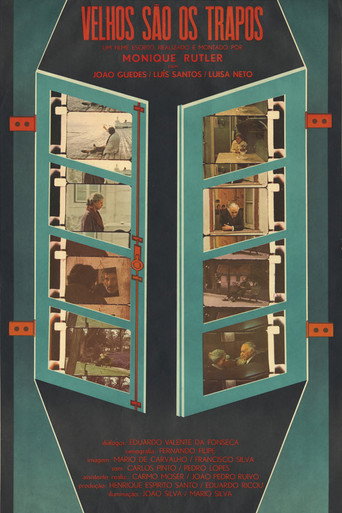
Velhos são os Trapos
Old people tend to be kept apart, even humiliated by the new generations. The stories and different destinies of three old persons are linked together, and the realism of it imposes itself on us.
Velhos são os Trapos
Old people tend to be kept apart, even humiliated by the new generations. The stories and different destinies of three old persons are linked together, and the realism of it imposes itself on us.
Velhos são os Trapos
Old people tend to be kept apart, even humiliated by the new generations. The stories and different destinies of three old persons are linked together, and the realism of it imposes itself on us.
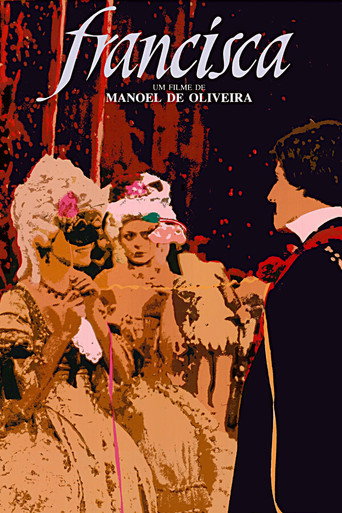
Francisca
The life of a young man, son of an English officer who lets himself become a prisoner of love resulting in fatalism and disgrace.
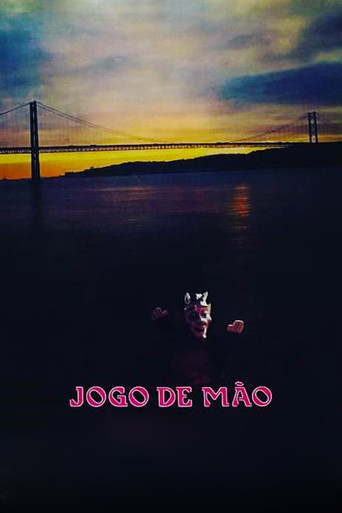
Jogo de Mão
In a unique approach to what amounts to four pseudo-morality plays, director Monique Rutler has a street entertainer with hand puppets summarize the characters and idea of each story. The first sketch is about a young man who shines shoes for a living, and tries to keep up a relationship with two women while convincing each she is his only true love. The next story is about a man who beats up his wife when he is drunk, and sells furs for a living. One day, as she is riding in the back of his truck with the furs, he hits a bad patch and she and some furs fall out. The question is, will the woman be enterprising and leave the jerk - or not? The third tale concerns a woman looking into how much control a prostitute has over her clients, and to really find out, she becomes a prostitute herself for awhile - leading to some quite unexpected situations. The last segment handles the uglier side of the life styles of the rich and famous.
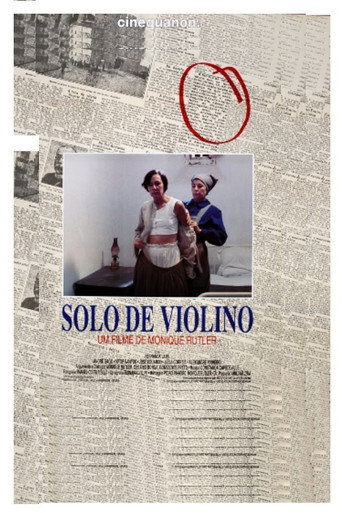
Solo de Violino
Adelaide Coelho da Cunha, daughter of the founder of the newspaper "Diário de Notícias", married to Alfredo da Cunha, then director of this newspaper, and mother of José, who is 20. This educated, cultured woman, falls in love with the chauffeur, who is youger than her and from a different social background. This passion leads to confronting the established order of things and the standards of social behaviour of a wife and mother. She may at the same time be heroine and victim of her own courage in deciding to make a final break from the whole family status and run off with the chauffeur. When his wife runs off with the chauffeur, Alfredo da Cunha with the aid of some of the eminent doctors of the day, has her declared irresponsible and incapable of administering her assets, and on this pretext he has her inprisoned in a mental hospital.
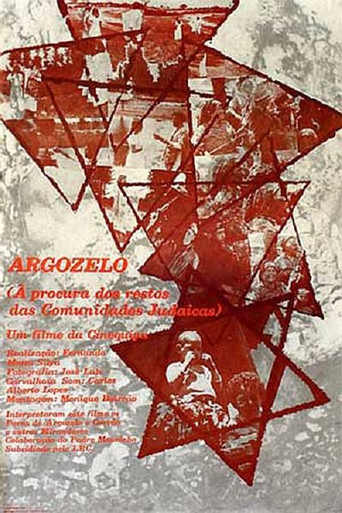
Argozelo

O Aborto Não É um Crime
Polemical short documentary, produced by Cinequipe.
Jogo de Mão
In a unique approach to what amounts to four pseudo-morality plays, director Monique Rutler has a street entertainer with hand puppets summarize the characters and idea of each story. The first sketch is about a young man who shines shoes for a living, and tries to keep up a relationship with two women while convincing each she is his only true love. The next story is about a man who beats up his wife when he is drunk, and sells furs for a living. One day, as she is riding in the back of his truck with the furs, he hits a bad patch and she and some furs fall out. The question is, will the woman be enterprising and leave the jerk - or not? The third tale concerns a woman looking into how much control a prostitute has over her clients, and to really find out, she becomes a prostitute herself for awhile - leading to some quite unexpected situations. The last segment handles the uglier side of the life styles of the rich and famous.
Jogo de Mão
In a unique approach to what amounts to four pseudo-morality plays, director Monique Rutler has a street entertainer with hand puppets summarize the characters and idea of each story. The first sketch is about a young man who shines shoes for a living, and tries to keep up a relationship with two women while convincing each she is his only true love. The next story is about a man who beats up his wife when he is drunk, and sells furs for a living. One day, as she is riding in the back of his truck with the furs, he hits a bad patch and she and some furs fall out. The question is, will the woman be enterprising and leave the jerk - or not? The third tale concerns a woman looking into how much control a prostitute has over her clients, and to really find out, she becomes a prostitute herself for awhile - leading to some quite unexpected situations. The last segment handles the uglier side of the life styles of the rich and famous.