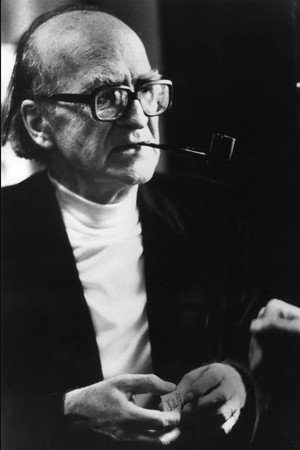
Mircea Eliade Movies, TV Shows, and Filmography
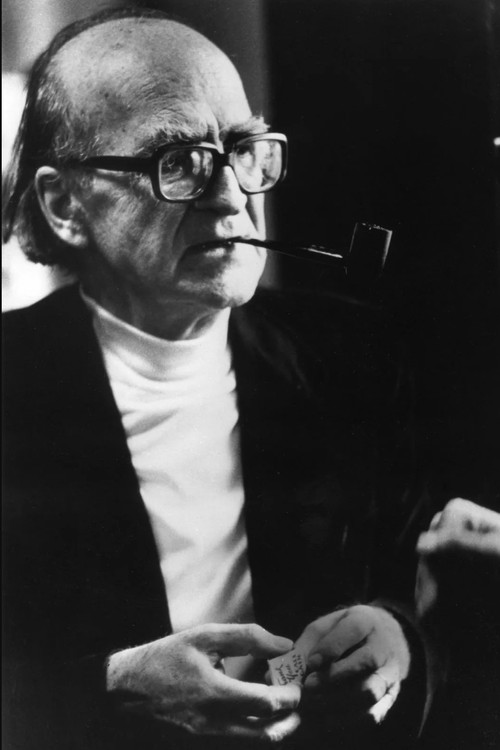
Mircea Eliade
Writing
Biography
Mircea Eliade (Romanian: [ˈmirtʃe̯a eliˈade]; March 13 [O.S. February 28] 1907 – April 22, 1986) was a Romanian historian of religion, fiction writer, philosopher, and professor at the University of Chicago. One of the most influential scholars of religion of the 20th century and interpreter of religious experience, he established paradigms in religious studies that persist to this day. His theory that hierophanies form the basis of religion, splitting the human experience of reality into sacred and profane space and time, has proved influential.[2] One of his most instrumental contributions to religious studies was his theory of eternal return, which holds that myths and rituals do not simply commemorate hierophanies, but (at least in the minds of the religious) actually participate in them. Eliade's literary works belong to the fantastic and autobiographical genres. The best known are the novels Maitreyi ('La Nuit Bengali' or 'Bengal Nights', 1933), Noaptea de Sânziene ('The Forbidden Forest', 1955), Isabel și apele diavolului ('Isabel and the Devil's Waters'), and Romanul Adolescentului Miop ('Novel of the Nearsighted Adolescent', 1989); the novellas Domnișoara Christina ('Miss Christina', 1936) and Tinerețe fără tinerețe ('Youth Without Youth', 1976); and the short stories Secretul doctorului Honigberger ('The Secret of Dr. Honigberger', 1940) and La Țigănci ('With the Gypsy Girls', 1963). Early in his life, Eliade was a journalist and essayist, a disciple of Romanian philosopher and journalist Nae Ionescu, and a member of the literary society Criterion. In the 1940s, he served as cultural attaché of the Kingdom of Romania to the United Kingdom and Portugal. Several times during the late 1930s, Eliade publicly expressed his support for the Iron Guard, a Romanian Christian fascist organization. His involvement with fascism at the time, as well as his other far-right connections, came under frequent criticism after World War II. Noted for his vast erudition, Eliade had fluent command of five languages (Romanian, French, German, Italian, and English) and a reading knowledge of three others (Hebrew, Persian, and Sanskrit). In 1990 he was elected a posthumous member of the Romanian Academy. Description above from the Wikipedia article Mircea Eliade, licensed under CC-BY-SA, full list of contributors on Wikipedia.
Filmography Movies

Production
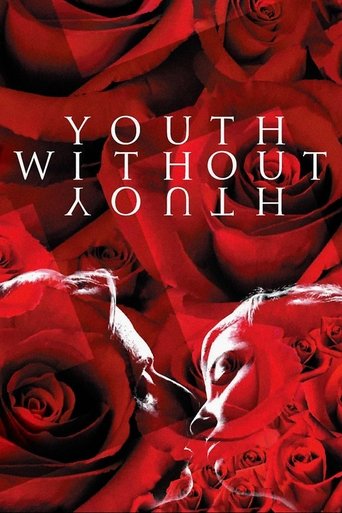
Youth Without Youth
Professor of language and philosophy Dominic Matei is struck by lightning and ages backwards from 70 to 40 in a week, attracting the world and the Nazis. While on the run, the professor meets a young woman who has her own experience with a lightning storm. Not only does Dominic find love again, but her new abilities hold the key to his research.
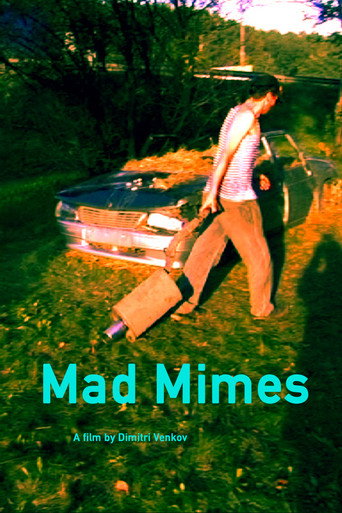
Mad Mimes
An anthropological study of a cargo cult in a fictitious self-marginalized commune, which existed next to the Moscow Ring Road - a highway that marks the boundaries of the Russian capital - and survived mainly on roadside trash. Although the road provided for their basic needs, the existence of the commune was extremely precarious and highly dependent on the roadway's fluctuations. This dependency led them to develop a cargo cult of the road.
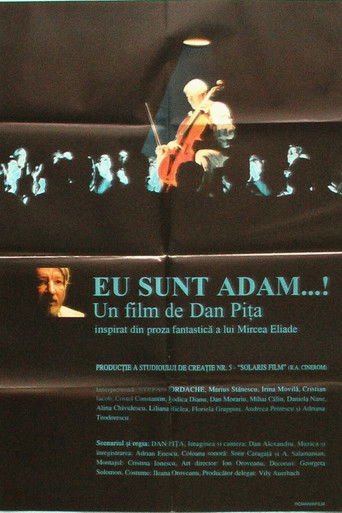
I Am Adam
A poetic journey through the fantasy short stories of Mircea Eliade.

The Bengali Night
Allan is an engineer working in 1930s Calcutta. He is invited to stay with the family of his boss, Narendra Sen which includes his wife, Indira and daughter Gayatri. Gayatri and Allan become romantically involved leading to tragedy.
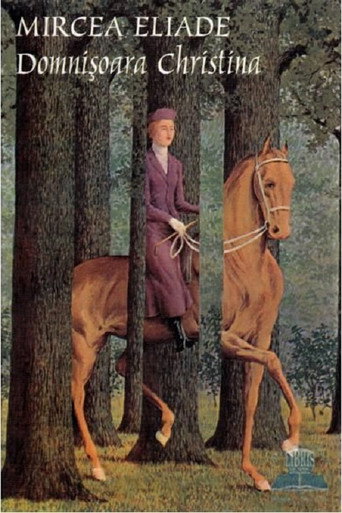
Miss Christina
Christina's ghost haunts the mansion where she was born.
Gallery