Mircea Daneliuc Movies, TV Shows, and Filmography

Mircea Daneliuc
Directing
Biography
Mircea Daneliuc (Romanian pronunciation: [ˈmirtʃe̯a daneˈljuk]; born 7 April 1943) is a Romanian film director, screenwriter and actor. He has directed 19 films since 1975. In 1993 his film The Conjugal Bed was entered into the 43rd Berlin International Film Festival. Two years later, his film The Snails' Senator was entered into the 1995 Cannes Film Festival. As one of the most prominent Romanian film directors of the 1980s, his films mixed realism and parables, enabling him to convey uncensored criticism towards the communist regime.
Filmography Movies
Acting
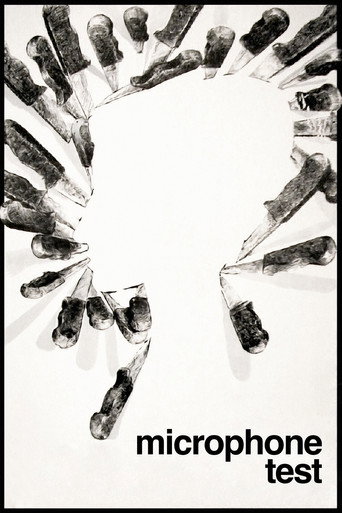
Microphone Test
A television cameraman and his subject find themselves in the middle of an intertwined professional and personal dilemma.
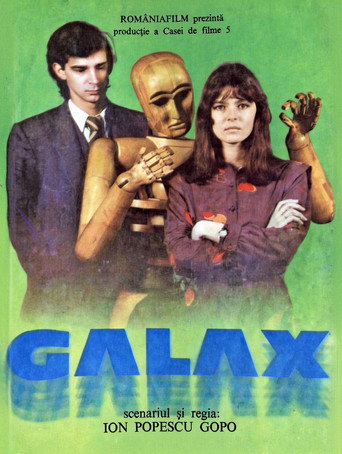
Galax Man-Doll
The story of Galax, a robotic 'man-doll', artificially created out of wood and computer circuitry, Appearing to come to life, it becomes a rival for the affections of Marie, a young student and an issue for university authorities.
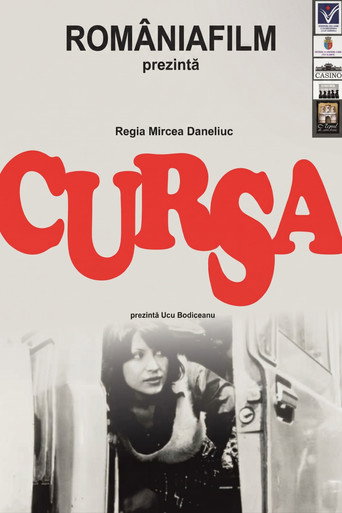
The Long Drive
Savu and Panait, two drivers working for a firm of construction and assembly must ensure the movement of a giant machine. Along the way, she meets Miriam, a young gone to meet his fiance even transport your destination. Identity documents and stolen his train ticket. The two drivers decide to give her journey. After a night in a motel, drivers have an argument that is not foreign to the presence of Mary. For their silence, Savu decides to disembark. Not long after, overcome by remorse, turn back looking for her and thus reach his village which had left years ago. Here, Maria discovers drama of the human soul, wounded by an unhappy marriage. Arriving at your destination, are the husband of Mary is already married two months. Two men and a woman on the road to return, beyond sadness after a ravishing experience.
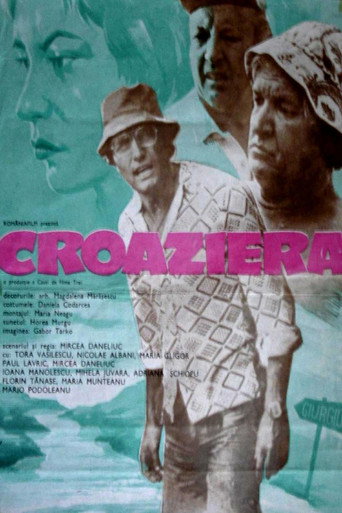
The Cruise
The best workers from various factories in the communist system are rewarded a cruise on the Danube. The people in charge fight for bureaucratic reasons while the young ones are looking for adventure.
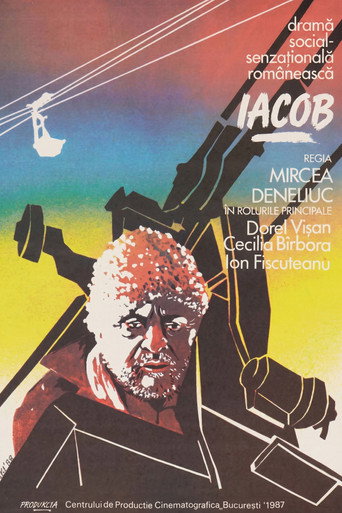
Jacob
Jacob (Dorel Visan) is a gold miner who risks his life daily to support his wife, mother-in-law, and four children in this socio-political drama. Under the rule of an oppressive monarchy backed by military force, the miners often resort to stealing gold to compensate for their meager wages. Workers are subjected to strip searches and are forced to take laxatives by the often brutal guards and inspectors as they look for stolen gold, and Jacob raises his vocal objections over the treatment of his fellow workers.
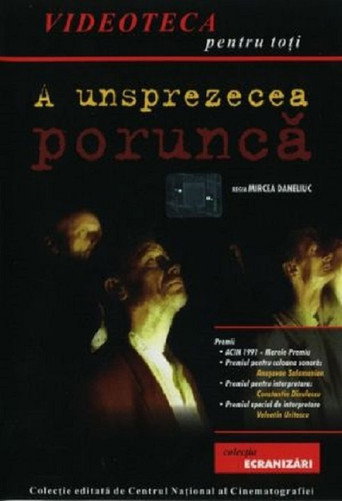
The Eleventh Commandment
Free adaptation of the book "The Pitesti phenomenon" by Paul Goma. The last days of World War II. All people resembling Adolf Hitler, Eva Braun, Goebbels, Bormann and other Nazi leaders are arrested and taken to a camp so that the real fascist criminals can be discovered and punished. Thus begins the long nightmare of these characters, who will suffer for unproven crimes. For a year they will live in total isolation from the rest of the world, living a hellish existence.
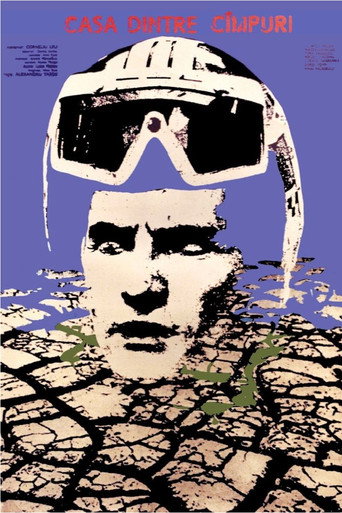
The House Between the Fields
Fresh out of university, agricultural engineer Voica Teodorescu returns to her native village where she joins a local team of engineers in the planning of a dam and an irrigation mega project.Although Voica is engaged to be married to Ilarie she also is romantically attracted to local engineer Radu. Radu doesn't agree with local boss Vasile Axente's management style and deems Vasile incompetent.Therefore, Radu tries to form an alliance with the village vice-mayor Dumitru Vardaru but when a large sum of money from the public works budget goes missing Radu is investigated by authorities for embezzlement of public funds.His relationship with Voica and the villagers gets sourly tested.
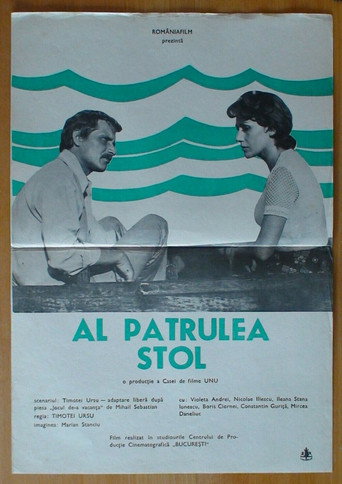
The Fourth Flock
Film based on a play by Mihail Sebastian. Three guys all fall in love with the same girl. For a month they all forget about the real world, but it all comes to an end.
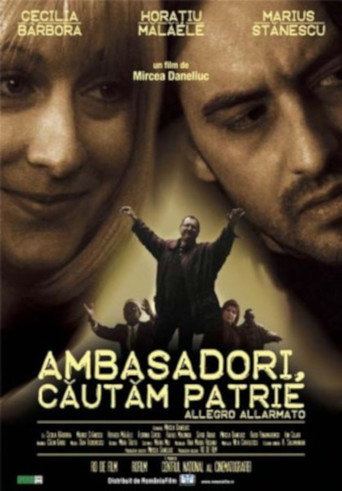
Ambassadors Seek Country
Titi and Marius, two friends who fought together during the revolution of 1989, follow very different social and political paths in its aftermath.
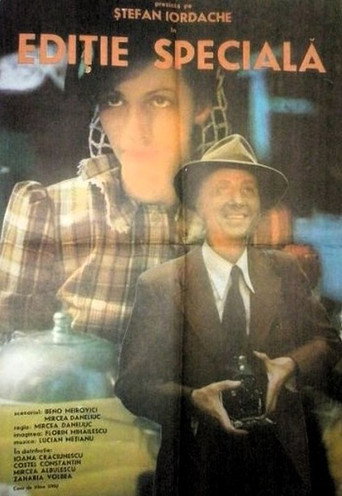
Special Edition
A journalist in a Bucharest publication, is the accidental witness of the street arrest of a communist. It intervenes in the defense of the young man, who manages to escape, and is arrested. He is obliged to look for the missing woman.
Production
The Nervous System
In order to make a living, old Nica turns her country house into an anemic, bankrupt "pension". Her only joys are her dog's chirping and the TV news program. Out of loneliness, she sometimes imagines herself the heroine of a soap opera: secretly, Nica is in love with the news anchor Paul. The old woman decides to take a trip to Bucharest, where her daughter, Tuta, a nurse, lives with her concubine, Jenel, and Marilena, her 15-year-old daughter. In the capital, her passion for Paul takes paroxysmal forms. Nica monopolizes the remote control to stay on the same TV channel for which Paul presents the news, which will attract the family's irony. She even goes so far as to look for her "beggar" at the TV station, writes to him, exposing herself to humiliation and mockery. But she resists until illness and shame bring her down. Everything culminates in the old woman's attempt to commit suicide...
Jacob
Jacob (Dorel Visan) is a gold miner who risks his life daily to support his wife, mother-in-law, and four children in this socio-political drama. Under the rule of an oppressive monarchy backed by military force, the miners often resort to stealing gold to compensate for their meager wages. Workers are subjected to strip searches and are forced to take laxatives by the often brutal guards and inspectors as they look for stolen gold, and Jacob raises his vocal objections over the treatment of his fellow workers.
Jacob
Jacob (Dorel Visan) is a gold miner who risks his life daily to support his wife, mother-in-law, and four children in this socio-political drama. Under the rule of an oppressive monarchy backed by military force, the miners often resort to stealing gold to compensate for their meager wages. Workers are subjected to strip searches and are forced to take laxatives by the often brutal guards and inspectors as they look for stolen gold, and Jacob raises his vocal objections over the treatment of his fellow workers.
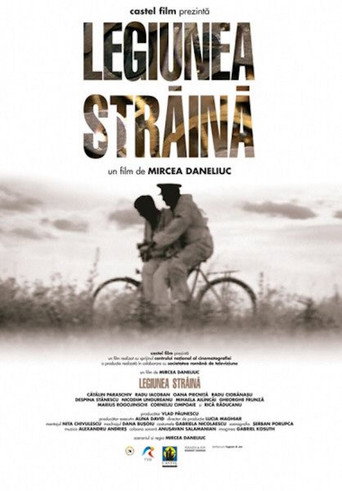
The Foreign Legion
For many years, three Romanian village boys, Stelica, Aurel and Mitu, have remained the closest of friends. In their youths, they planned to pursue careers as shepherds, but in time their individual paths diverged - leading Mitu into the military, Stelica into the local police force and Aurel into the employ of Maricel, a wealthy resident of the community. The men's worlds change forever when a newcomer arrives in the hamlet - a young woman named Lilica, accompanied by Maricel. She's toting two trucks full of Dutch chickens with her, which inadvertently spreads the bird flu to much of the local populace. The boys, however, soon realize how they can ingeniously turn this potential crisis into a solid profit-making venture for themselves.
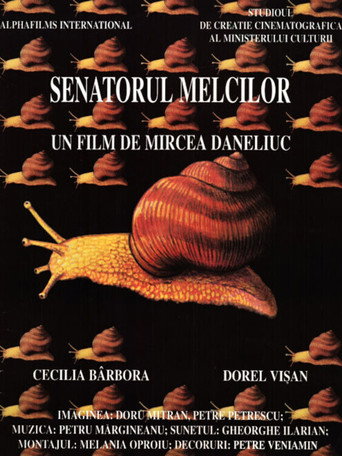
The Snails' Senator
This Romanian dramatic comedy offers metaphorical commentary on life after Ceausescu's reign as it tells the story of a rural community turned topsy-turvy in their mad quest for the snails a prominent senator has requested for his dinner. The trouble begins when a rather imposing, pompous senator comes to visit a small rural Romanian town for a ribbon-cutting ceremony for their new hydro-electric dam. After he finishes his speech, the senator is accosted by a Swiss film crew eager to interview him. The senator is inordinately concerned with presenting a positive image of Romania to the world at large and so when he learns that he and the journalists are to stay at the same villa, does everything he came to make sure that they see nothing scandalous.
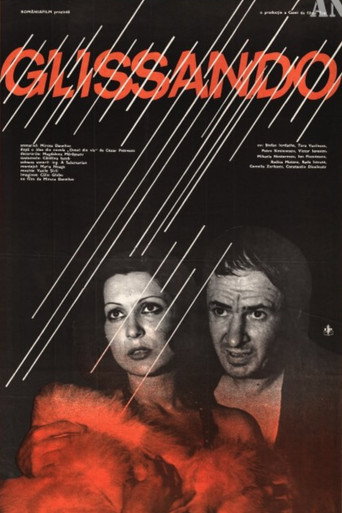
Glissando
In a devastating story rife with visual metaphors, Romanian director Mircea Daneliuc traces the slow mental disintegration of a confirmed gambler, using his disorder as an allusion to a greater national and social disorder. Set in the 1930s, the middle-class gambler meets an elderly man who seems to bring him good luck at the gaming tables. Rather than treasure his friendship and the good fortune it brings, the gambler takes advantage of his friend, and by his actions drives the man to suicide. Unable to reconcile his own mental demons, the gambler wanders through the house of his dead friend, and his experiences there only serve to unsettle his mind more and more and more. In the last reels of the film, the fantasies of the hero's deranged mind take over.
Microphone Test
A television cameraman and his subject find themselves in the middle of an intertwined professional and personal dilemma.
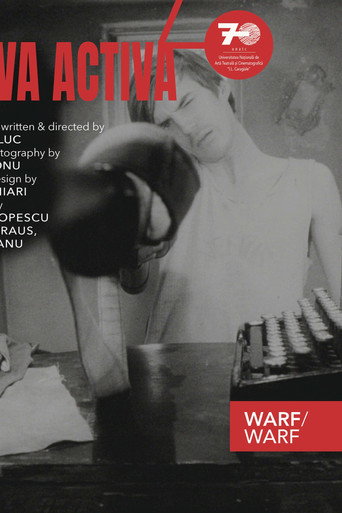
WARF
During World War II, several young people capture a German soldier on the roof of the building they defend and in which they most probably live. One of them ends up staying in the same room with the man for a longer time, keeping an eye on him at gunpoint. The relationship that develops between them, in spite of the language barrier, is suddenly halted by another gun(shot), one that comes from outside the room.
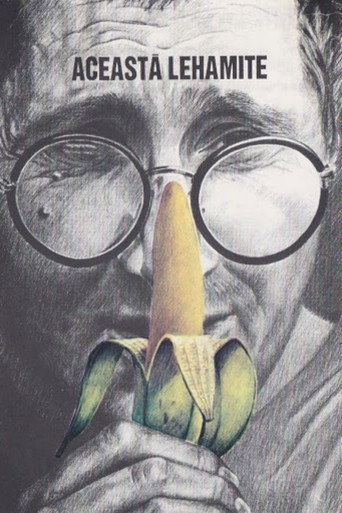
Fed Up
Young Doina has a car accident. In intensive care, the doctor, Vali, calls her time of death but discovers that the child she was carrying is still alive. Wishing to save its life, the doctor puts the mother on artificial life support. Just then, Bebe, the supposed father of the unborn child, enters the scene. A former teacher and mountain climber, Bebe will soon fall in love with the doctor...
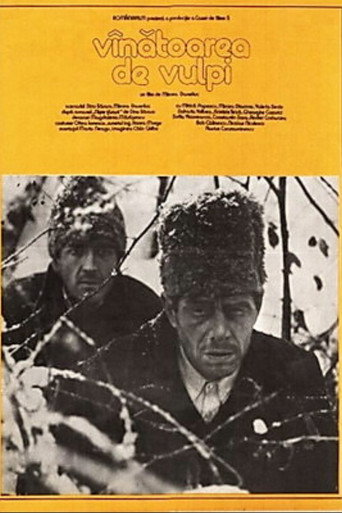
Fox Hunting
A Romanian village in the 50s. Năiţă Lucean, a cunning and stubborn peasant, opposes the collectivization process using all possible artifice. He instinctively feels that signing his land and cattle over to the state can only bring bad times for him. His only certainty is the ownership of this insufficient and barren plot of land. Although he strongly opposes it, the idea of the collective good is forcibly enforced.
Gallery