Camera
No biography available.
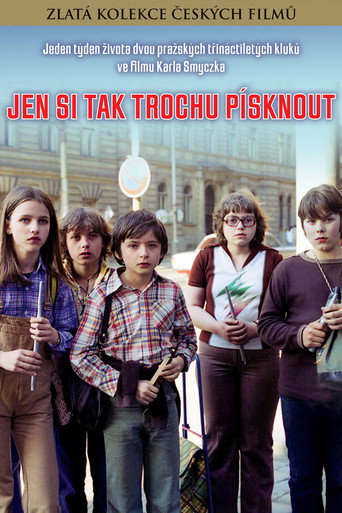
Several big-city teenagers are falsely accused of vandalizing a valuable organ, casting light on the hypocrisy of the adult world.
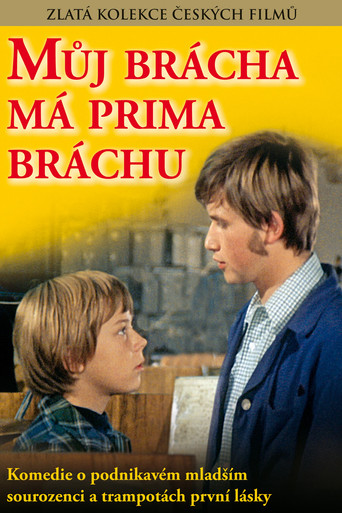
Honza Pavelka (Jan Hrusínský) wins the junior motorbike speed races. His thirteen-year-old brother Martin (Roman Cada), his assistant and biggest fan, answers the questions of his schoolfriend Pavlína in a superior tone. Student Zuzana (Libuse Safránková), who gave her scarf to Honza to wear around his neck for the races as a talisman is Honza's girlfriend. He met her when he came to her parent's home to repair the TV set. Honza declines an invitation to celebration with his friends. He goes off with Zuzana instead, but she refuses his intimate advances. The offended young man, who is about to serve his two years in the army, tries to blackmail her emotionally and the couple breaks up. Martin tries various schemes to bring them together again.
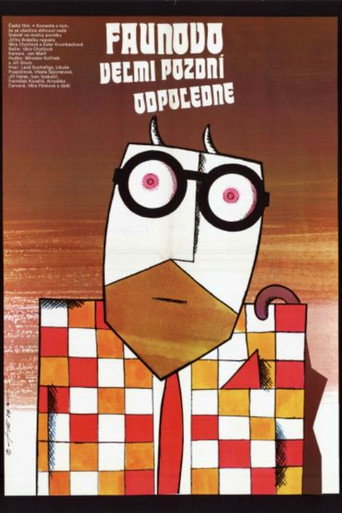
A bachelor named Faun with a Don Juan complex, seized with a hypochondriac's fear of the ineluctable approach of death, enters a race against time's passage. Faun's sexual love is imbued with the narcissistic vanity of a self-satisfied bacchant who even towards old age can't manage to forgo his lifelong pose as an irresistable seducer of women. He desperately searches for meaning in superficial, fleeting sex.
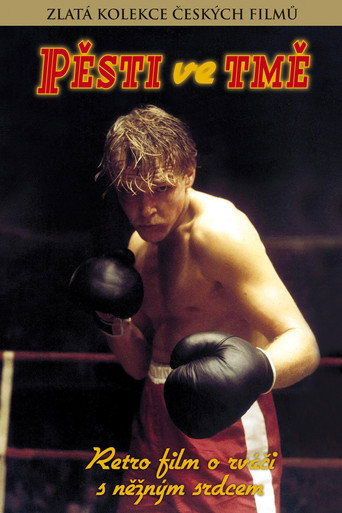
The year is 1936, the nervous atmosphere of the Nazi threat penetrates into the sport. Upgrade boxe Vilda Jakub will compete with German Kurt Schaller. The Nazis decisions are used in order to win his master even the dirtiest means. Vilda inspect their game and focus on the preparation of environmental events. The story culminates in the victory of one of the two lovers, between which Vilda tense moments in the decision.
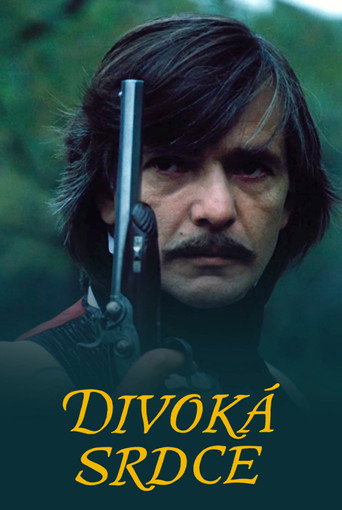
The common theme of the short story film is the famous duels between two important historical figures: Pushkin and Casanova. Pushkin's tragic duel, which ended his life prematurely, is portrayed in connection with the creation of his short story "The Dirty Shot", while Casanova's story is conceived in a rather ironic and humorous way. The point is that the famous seducer never actually seduced, on the contrary, all his life he was in a constant battle with female seductions.
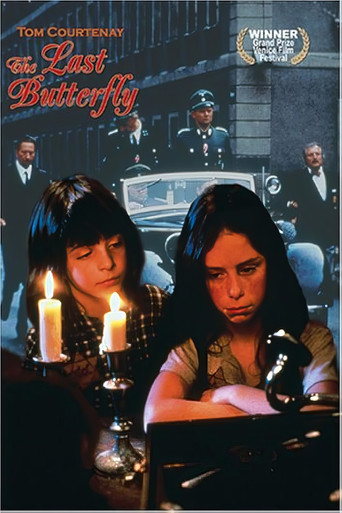
Stage mime Antoine Moreau is compelled by the Gestapo to put on a performance for the children of Terezin, a "model" concentration camp, to convince the Red Cross observers that the camp is truly what it seems. Reluctant at first, Moreau slowly learns the true nature of the camp, including the meaning of the "transports" on which people leave. With a world-class orchestra (made up of people interned in the camp) and a cast of children, Moreau stages a show to end all shows.
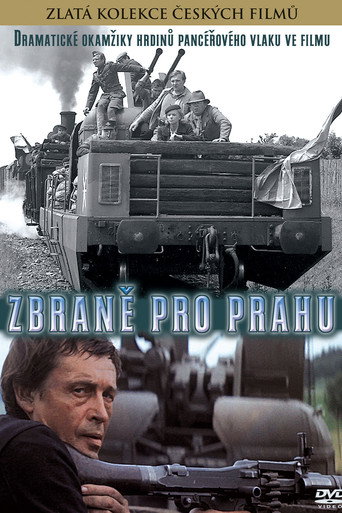
In May 1945, Czech revolutionaries used several armoured trains in the fighting - partly captured, partly assembled from whatever the railway brought. One of them was commanded by the shunter Jan Chýň, who managed to bring weapons from the ammunition depot in Libčice to help the fighting in Prague.
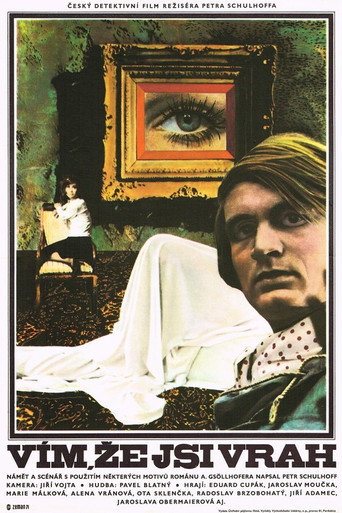
Dana Martinová, a young woman of loose morals, dies at the hands of a mentally unstable young man, Pavel Zach. In a fit of jealousy, he could not restrain himself and killed the girl with a blow to the head. The police find the corpse thanks to Dana's friend Eva Simonova. And it's Eva who becomes Pavel's second victim. The young man, afraid of being found out, attacks the girl and drowns her in the bathtub. Lieutenant Zeman, a criminal investigator, is put in charge of the double murder as his first case, assisted by his more experienced colleague Suchánek. However, the investigation initially goes nowhere. While Pavel's father tries to have his mentally ill son committed to a psychiatric hospital, Pavel commits another murder out of fear. Neither he nor the investigators know that Pavel has been a mere tool in the hands of someone else for some time...
Experienced StB investigators in the 1950s dismantle a terrorist action against the collectivisation of a village in the foothill village of Mezilesí. The screenwriter returned to the schemes that were common in our countries in the 1950s.
A psychological film about the sense of self-fulfillment of a divorced couple over 30 who feel that life is slipping through their fingers. While she, a nurse by profession, is adapting better, he, unreliable and always improvising, is searching in vain for his clue and even tries to get back to his ex-wife.
During World War II, dogs were trained in special centres for guard duty in concentration camps. However, one of the prisoners domesticates a female German Shepherd, which saves his life during his escape.
In May 1945, a woman in Marienbad reports a murder - committed in 1933 against the German emigrant Professor Lessing. She also names the murderer. Against the wishes of his superior, who does not feel responsible for this case - it was a fascist femicide - Inspector Šedý picks up the trail and arrests the murderer, the German Eckert. Eckert was a fugitive at the trial in 1933, and now the evidence is no longer available. Nevertheless, Šedý does everything he can to convict him. He finds witnesses who support him - anti-fascists, but also former collaborators who want to clear themselves. Reconstructing the case at the crime scene, Šedý is able to prove that Eckert was at least an accessory. He is convicted. After his release from prison, Eckert goes to West Germany, where he demands compensation from his former clients.
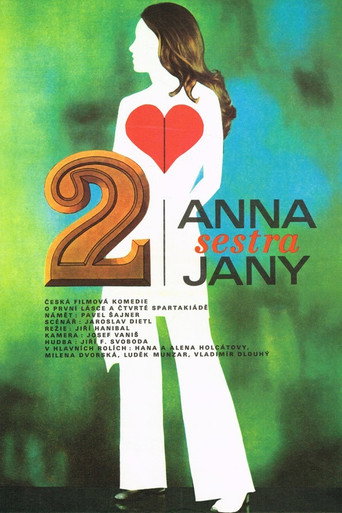
Energetic Jana comes from Děčín to the metropolis for the Spartakiada, but her shy sister Anna is secretly going with her, looking for an opportunity to apologize to her boy Ondrej.
The economic crisis in the early 1930s also affected the inhabitants of the distinctive Moravian-Slovak countryside. The protagonist and his family returned to their native cottage from the city because he could not find work anywhere. But his younger brother does not welcome him with open arms...
Children's games will affect the lives of two young women years later.