Acting
No biography available.
About Performance Art and its historical origins including its links with folk customs. The film includes extracts from the work of many different performance artists from England and abroad collected from 1979 to 1983, amongst them: Tibor Hajas (Hungary), Rasa Todosijevic (Yugoslavia), Iain Robertson (Scotland), Zbigniew Warpechowski (Poland), Milan Knizak (Czechoslovakia), Natalia LL (Poland), Ewa Partum (Poland), Jan Mlcoch (Czechoslovakia), Sonia Knox (Northern Ireland), Jerzy Beres (Poland) and Stuart Brisley (England). The film also records the Haxey Hood and Padstow Hobbyhorse folk dances from Lincolnshire and Cornwall respectively.
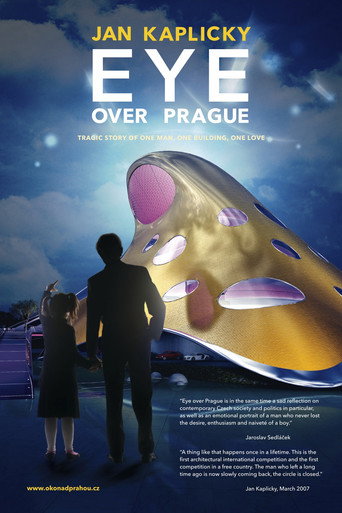
A personal and political biography of the Octopus, or the Prague National Library project, but also a biography of the last years of the life of the author of this design, Jan Kaplický, who wrote in his diary in 1998: to win the competition and have one love. With this entry, read by Eliška Kaplicky at the beginning of the film, it is as if the world-class Czech architect wrote not only the "script" for the final decade of his life, but also for a film that follows the dramatic social story of creative imagination and the intimate relationship between a man and a woman.
A labyrinthine portrait of Czech culture on the brink of a new millennium. Egon Bondy prophesies a capitalist inferno, Jim Čert admits to collaborating with the secret police, Jaroslav Foglar can’t find a bottle-opener, and Ivan Diviš makes observations about his own funeral. This is the Czech Republic in the late 90s, as detailed in Karel Vachek’s documentary.
A threefold portrait, presenting the reality within the limits of a subjective view, puts together the lives of an increasingly more remote writer and musician; a hacker, dreaming his dream of transformation into a purely virtual existence in the depths of technology; and an undertaker, unrealistic raconteur, living on the history of half-mythical Sudetenland.
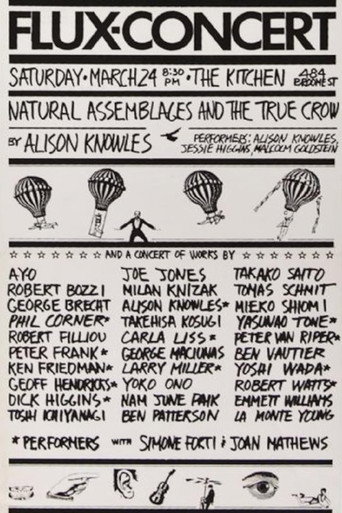
On March 24, 1979, The Kitchen presented a two-part program dedicated to the work of various Fluxus artists. The programming began with the premiere of Alison Knowles’s “Natural Assemblages and the True Crow.” For the piece, Knowles engaged in a dialogue with her own taped voice, which read aloud selections from various natural history books. Simultaneously, violinist Michael Goldstein provided an improvised score while dancer Jessie Higgins executed a number of one-movement phrases by following instructions on index cards. The second part of the night’s programming consisted of forty rapid performances—most sixty seconds or less—by various Fluxus members, including Yoko Ono, George Brecht, La Monte Young, and Nam June Paik. Ken Friedman and Larry Miller coordinated this portion of the event.
Fluxfilm No. 32 by Milan Knízák
Fluxfilm No. 33 by Milan Knízák
A tribe of survivors take possession of a large but rundown building, killing all who put up resistance - but they don't know that the building is cursed by some demon god and haunted by a girl in white that seems to know a dark secret.