Acting
No biography available.
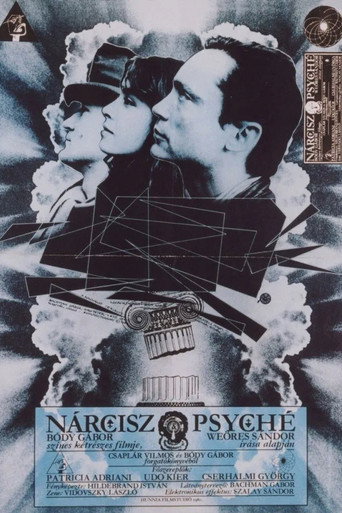
Narcisus and Psyche is based on a novel by Sandor Weores which was adapted by Vilmos Csaplar and director Gabor Body for a feature-length film. Borrowing the character of Psyche from mythology and placing her in Europe in the 19th century, the authors give her a "modern" life. She is an attractive young woman - and remains so throughout the film, in spite of one hardship after another. Psyche is libidinous, and her prurient interests shock her staid contemporaries.
He starts going, carrying a dinner-can. His eyes are suddenly arrested by the breasts of the girl on the bicycle, riding towards him. Prompted by the strange movements of the girl as well as by seeing another girl in a wheel-chair, his imagination starts working. In his dream, as he follows a young woman dressed in white, he comes to a tunnel. On its wall, which is full of candles, he reads the sign, "Memories Prohibited". Yet he is still able to enter the Tunnel of Memories.
According to Peter Brook, all that is needed for an act of theatre to be engaged is for a man to walk across an empty space whilst someone else is watching him. Thus, an empty space becomes a bare stage. However, this raises countless questions about the relationship between reality, everyday presence and role-playing, something experimental filmmakers coming from the 1970s world of theatre dealt with in detail. Tibor Hajas explored the topic in a short experimental film made at BBS.
A young man receives a telegram to attend his own execution at dawn. There may have been a mistake, but the office is closed and the truth cannot be found out. The mistake is masterfully mysterious and the sense of civic duty is so high that the candidate willingly puts his neck under the knife.
A Hungarian Jew is forced to give a false testimony on his relatives in WW2 Hungary.
Partita was made in 1974 as part of the BBS film language series. The film was not shown for a long time, only having a few screenings from the early eighties.