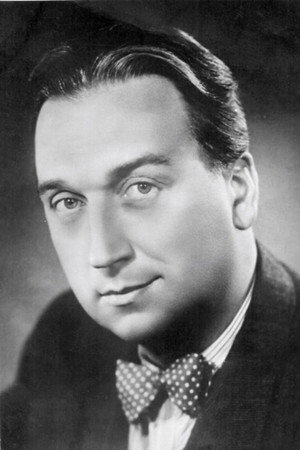
Mikhail Nazvanov Movies, TV Shows, and Filmography
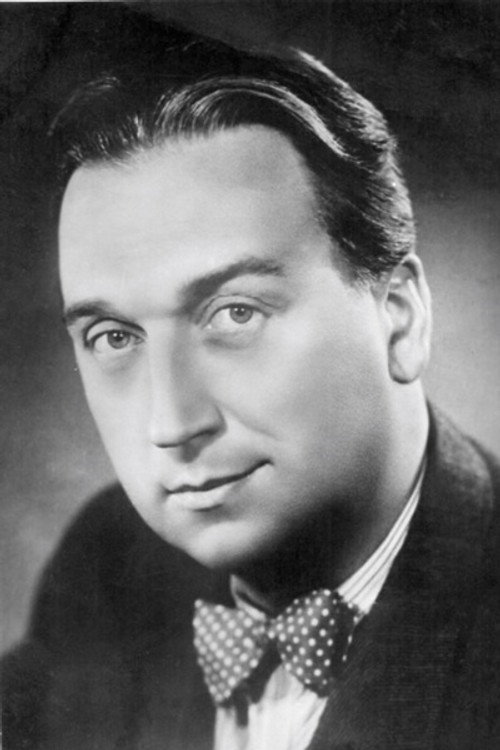
Mikhail Nazvanov
Acting
Biography
No biography available.
Filmography Movies
Acting
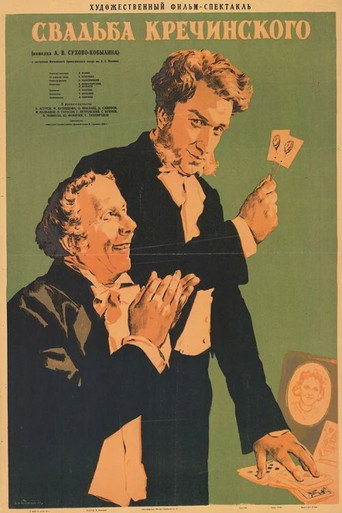
Krechinsky's Wedding
Mikhail Vasilyevich Krechinsky, an avid gambler and cardsharp, loses a large sum of money. Creditors are closing in on him from all sides. The only way out is to marry a rich girl. To get his father's blessing and speed up the wedding, Krechinsky resorts to deception.
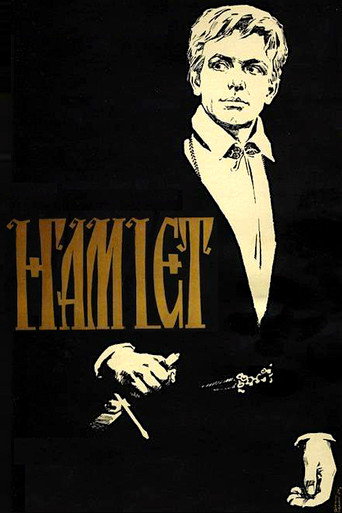
Hamlet
Shakespeare's 17th century masterpiece about the "Melancholy Dane" was given one of its best screen treatments by Soviet director Grigori Kozintsev. Kozintsev's Elsinore was a real castle in Estonia, utilized metaphorically as the "stone prison" of the mind wherein Hamlet must confine himself in order to avenge his father's death. Hamlet himself is portrayed (by Innokenti Smoktunovsky) as the sole sensitive intellectual in a world made up of debauchers and revellers. Several of Kozintsev directorial choices seem deliberately calculated to inflame the purists: Hamlet's delivers his "To be or not to be" soliloquy with his back to the camera, allowing the audience to fill in its own interpretations.
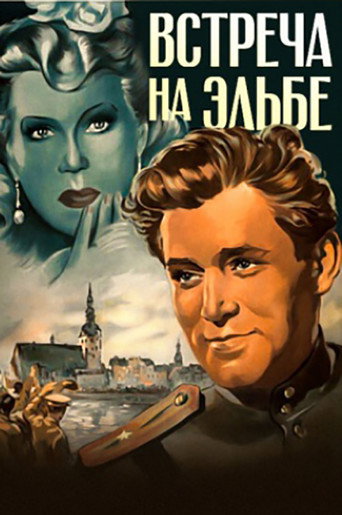
Meeting on the Elbe
Soviet and American soldiers are meeting on the shores of the Elbe river in Germany in 1945.
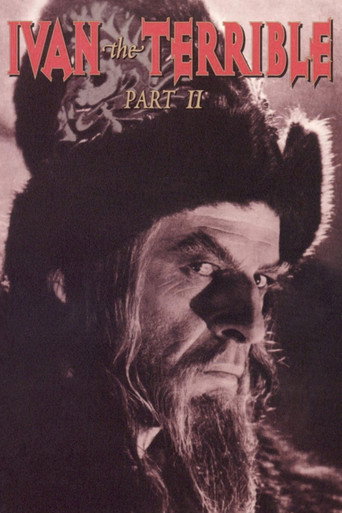
Ivan the Terrible, Part II: The Boyars' Plot
This is the second part of a projected three-part epic biopic of Russian Czar Ivan Grozny, undertaken by Soviet film-maker Sergei Eisenstein at the behest of Josef Stalin. Production of the epic was stopped before the third part could be filmed, due to producer dissatisfaction with Eisenstein's introducing forbidden experimental filming techniques into the material, more evident in this part than the first part. As it was, this second part was banned from showings until after the deaths of both Eisenstein and Stalin, and a change of attitude by the subsequent heads of the Soviet government. In this part, as Ivan the Terrible attempts to consolidate his power by establishing a personal army, his political rivals, the Russian boyars, plot to assassinate him.
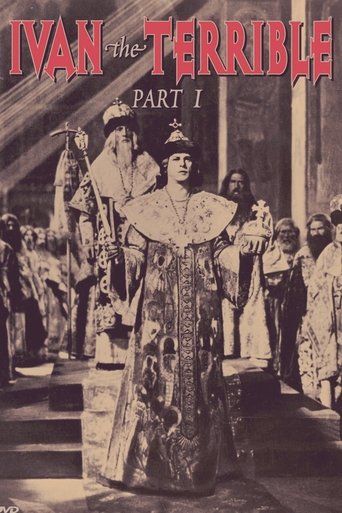
Ivan the Terrible, Part I
Set during the early part of his reign, Ivan faces betrayal from the aristocracy and even his closest friends as he seeks to unite the Russian people. Sergei Eisenstein's final film, this is the first part of a three-part biopic of Tsar Ivan IV of Russia, which was never completed due to the producer's dissatisfaction with Eisenstein's attempts to use forbidden experimental filming techniques and excessive cost overruns. The second part was completed but not released for a decade after Eisenstein's death and a change of heart in the USSR government toward his work; the third part was only in its earliest stage of filming when shooting was stopped altogether.
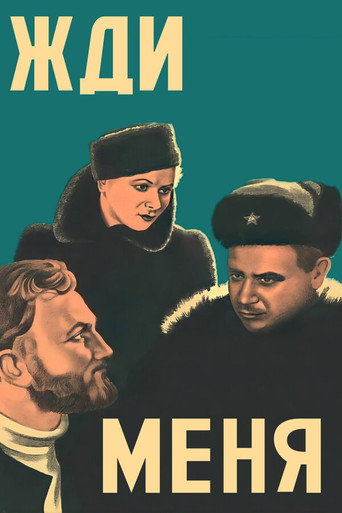
Wait for Me
A story of true love set during the WWII.
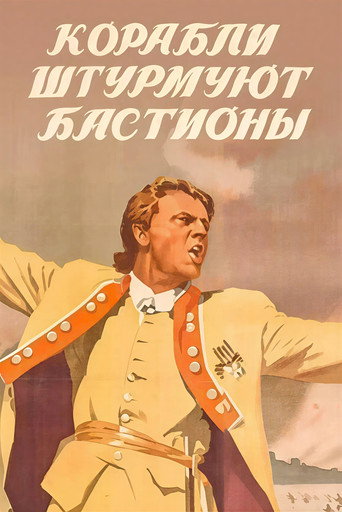
Attack from the Sea
The historical and biographic movie about the glorified Russian naval commander Ushakov. France begins aggressive wars. The Russian and allied troops freeing Italy are headed by A. V. Suvorov. The victory in the fortress of Corfu is ensured by operation of the admiral Ushakov.
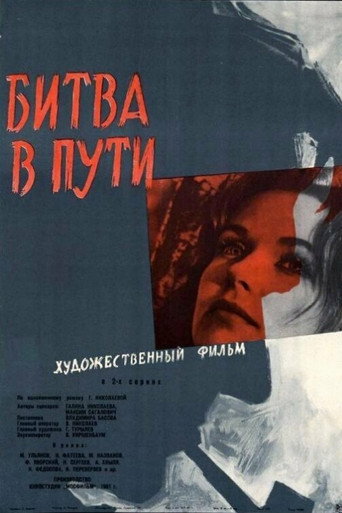
Battle on the Way
He was appointed as the new chief engineer of a tractor factory. The presence of this man, direct, hard and uncompromising, creates a lot of conflict - primarily between him and the director of the plant. However, clashes in the production are nothing compared with the pain that causes the loss of the beloved hero ...
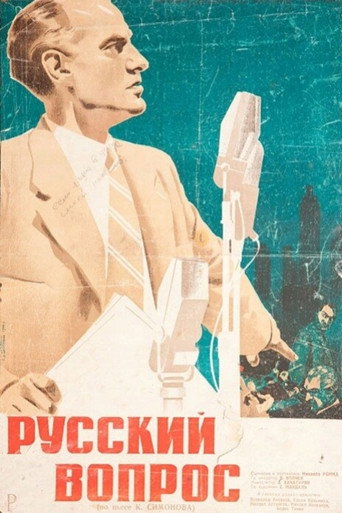
The Russian Question
The film is based on the play by K. Simonov. It is the story of an American journalist who spends time in Russia and sees socialism in action. Upon his return to the U.S., a prestigious editor asks him to write a book about his experience. He receives a handsome advance for the project and he and his fiancée are able to buy a house, a car, and other symbols of the American dream. But the editor’s generosity comes with a caveat: the book must present a negative picture of Soviet society. Will he simply keep the money and do what is expected of him, or will he instead tell the truth?
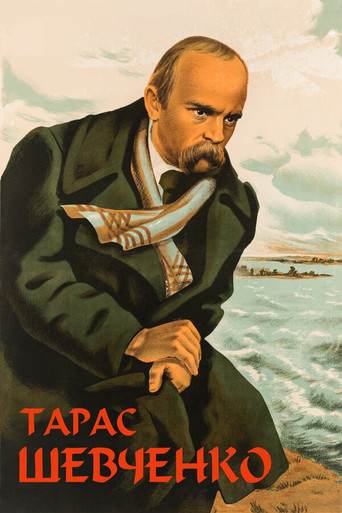
Taras Shevchenko
Growing up in a Ukrainian peasant family, knowing all hardships of serf life, young artist and poet Taras Shevchenko in the years of study clearly identifies the meaning of true art, which is to serve the interests of the people. The poems of Shevchenko are imbued with love for the common people. Fiery freedom-loving creativity of Taras Shevchenko is known throughout Russia. Nicholas I exiles the poet to the distant Caspian fort where he is to serve as an ordinary soldier and is banned from writing or drawing. In the poet's difficult days he has the support of Ukrainian soldier Skobelev, Polish revolutionary Sierakowski, captain Kosarev and the commandant of the fortress, Uskov. For the sake of his release Chernyshevsky and Dobrolyubov are hard at work. And so, the sick and aged Shevchenko is finally free. Together with Chernyshevsky and Dobrolyubov, he dreams of a bright future of the motherland, when the Russian and Ukrainian peoples throw off the chains of slavery.
Production
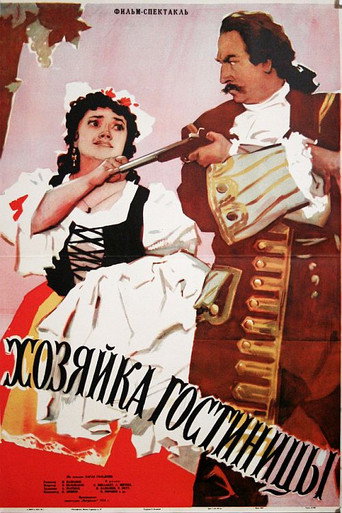
Innkeeper
An attractive woman who runs a country hotel tricks three men who challenge her favour.
Innkeeper
An attractive woman who runs a country hotel tricks three men who challenge her favour.
Gallery