Merle Palmiste Movies, TV Shows, and Filmography
Merle Palmiste
Acting
Biography
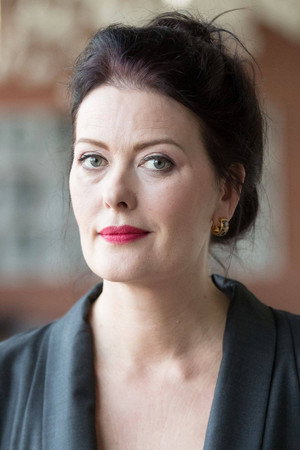
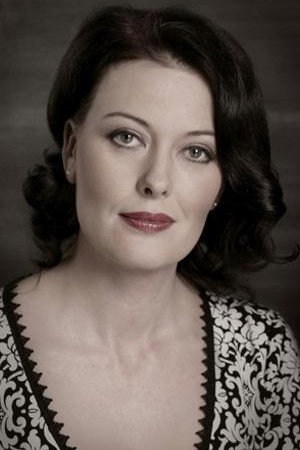
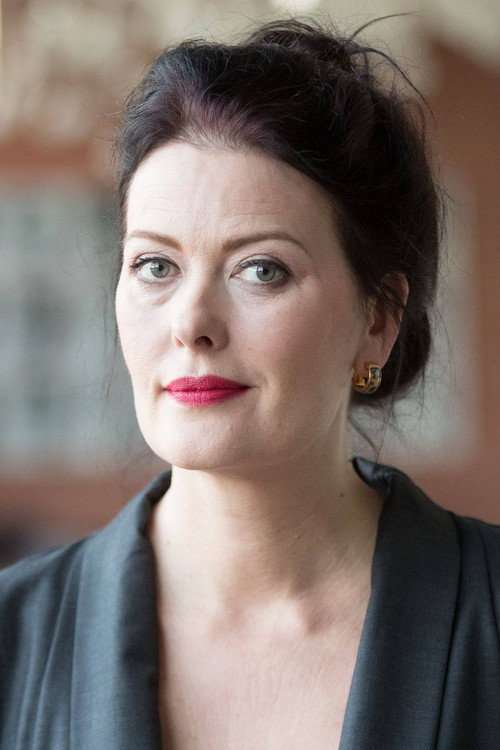
Merle Palmiste (born November 1, 1970) is an Estonian stage, film and television actress. Merle Palmiste was born in Tallinn and raised in the Tallinn subdistrict of Õismäe. Her father was an engineer and her mother was an accountant. She attended primary and secondary schools in Tallinn, graduating from Tallinn's 9th Secondary School in 1988. Following graduation, she enrolled in the Tallinn Conservatory (now, the Estonian Academy of Music and Theatre), graduating in 1992. Palmiste's diploma production roles included Helena in William Shakespeare's A Midsummer Night's Dream and Nina Mikhailovna Zarechnaya in Anton Chekhov's The Seagull. Among her graduating classmates were Andres Raag, Kristel Leesmend, Ivo Uukkivi, Jaanus Rohumaa, Üllar Saaremäe, Kaili Närep, Dan Põldroos, Sten Zupping, Tiina Mälberg and Garmen Tabor. Merle Palmiste made her full-length feature film debut in the role of Evelin in the 1994 Jaan Kolberg-directed historical action-drama Jüri Rumm; based on the life of the 19th-century Estonian brigand and folk hero Rummu Jüri. This was followed by the role of Grey One in the 2001 Arvo Iho-directed romantic drama Karu süda.[7] In 2006, she appeared as Rutt in the Jüri Sillart-directed and Hans Luik penned melodrama Kuldrannake for Taska Film. In 2001, Palmiste had a small role as an adjutant in the Sulev Keedus-directed drama Kirjad Inglile, starring Tõnu Oja and Rain Simmul. That same year, she voiced the character Benita the Cow in the Heiki Ernits and Janno Põldma-directed animated children's film Lotte and the Moonstone Secret (Estonian: Lotte ja kuukivi saladus), which was the second full-length feature film of the popular Estonian Lotte franchise. In 2013, she appeared in the role of Karin Viisla in the René Vilbre-directed family-fantasy film Väikelinna detektiivid ja valge daami saladus, produced by Balti Video and Eesti Rahvusringhääling. In 2016, she appeared in a small role as Mari in the Triin Ruumet-directed tragicomedy Päevad, mis ajasid segadusse, about a young, disaffected man played by Hendrik Toompere Jr. Jr. on a frantic journey through midsummer Estonia in the late 1990s trying to discover purpose and meaning in his life. In 2019, she appeared in the role of Marianne Büttel in the Mart Sander directed fantasy-horror film Kõhedad muinaslood. In 2020, she voiced several characters in the Meelis Arulepp and Karsten Kiilerich directed animated feature film Sipsik, based on the popular 1962 children's book of the same title by Eno Raud. In addition to Estonian films, Palmiste has appeared in several foreign language films, including; the 2003 Russian language feature-length romantic drama Yantarnye krylya directed by Andrey Razenkov; the 2004 German language film short Willkommen in Tallinn directed by Oliver Frohnauer; and the 2008 Ukrainian language family feature-length film Prykolna Kazka directed by Roman Shirman. Beginning in the early 2000s, Palmiste has also appeared in a number of Estonian short films. Merle Palmiste was formerly involved in a long-term relationship with Alex Lepajõe. Their daughter is the fashion model Elisabeth Berthel who was born in 1996. Palmiste currently resides in Tallinn.
Filmography Movies
Acting

The Kennedy Incident
May 1939, 3 months before the outbreak of WWII, the future US President, John F. Kennedy, visits Estonia. There his path crosses with two very different girls – a call girl, willing to abandon everything and a sweet local, who is in desperate need of money. The future of the world is crashing around him as he must figure out which is the spy when comes to find out one is working for the Nazis!

The Best of Salieri
It is time to get out of the closet and show the world your teeth. The director, who considers himself to be Mozart, has been tootling with his films in the festival circuit for years, waiting for a big breakthrough. For an inexplicable reason, the world has not recognised his talent. Still only Salieris have garnered the fame and the fortune. There is a simple conclusion. The world has not learned anything in 200 years and keeps repeating the same mistake.

Lotte and the Moonstone Secret
Plucky young Lotte embarks on an adventure with her uncle Klaus to solve the mystery of three stones that a pair of hooded figures are attempting to retrieve.
The Curse of the Werewolf
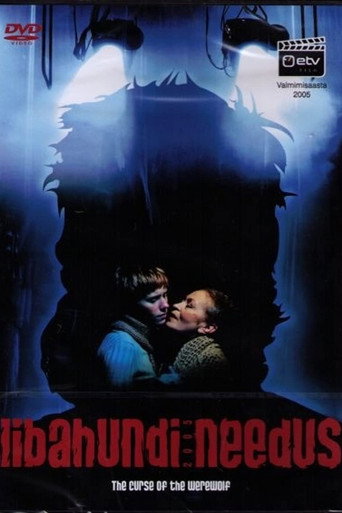
Liina is a young actress at Vanemuise Theatre who gets Tiina's part in the new, postmodernist version of the play "Werewolf" by August Kitzberg. The theatre is haunted and the rehearsals seem to be cursed, artificial blood becomes real blood. The play won't be complete before the murder mystery is unsolved - and Liina is being taken back to the old theatre legends and intrigues of the past century.

Sky Song
A postman endeavors to fly to the moon in one breath so he can deliver a package.

Letters to Angel
Jeremia Juunas Kirotaja has been fighting in Afghanistan; 21 years later he returns to Estonia to his father's funeral. He has converted to Islam and his only connection to his native land is the sound of his daughter Angel's crying that he heard a long time ago on the phone. Jeremia starts to search for his family. The daily life - if this can be called life in the first place - of the dusty and abandoned town is being run by women since men are almost gone. Nevertheless, the women seem to hope that Jeremia will be able to do something about it in order to remove the paralyzing feeling of emptiness.
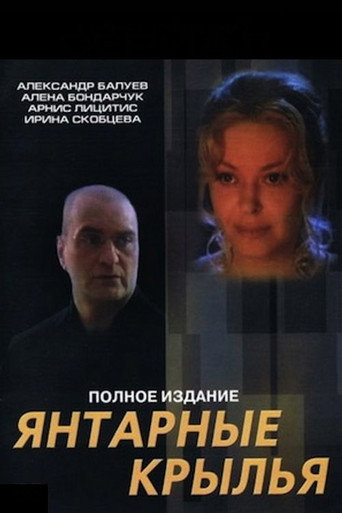
Amber Wings
A story about love between two people who accidentally met in old Tallinn.

Under the Clouds: Fourth Sister
Three sisters (doctor Piret, interior designer Mari and psychologist Kertu) discover that they have one more sister. Shocking news challenges family relationships and forces them to ask why their mother has hidden her first child's existence. When the fourth sister decides to come and visit her mother and sisters in Haapsalu, events that nobody could expect started happening. Is blood thicker than water and the stranger becomes theirs?
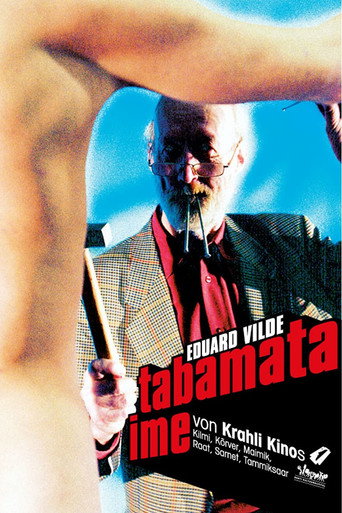
Uncaught Miracle
The 6 short films of "Tabamata ime" are based on Edward Vilde's play of the same name first published in 1912. Vilde's play is about a young piano player Leo Saalep, who returns to his homeland Estonia to give a concert, and whose alleged international breakthrough has given him the long awaited role of putting Estonian culture on the map in the eyes of the local culture elite.

What Silent Gerda Knows
Closing day of the season in the boarding house at the Vietinghoff Palace in the province of Latvia. Here the material world and atmosphere of the 1930s are reconstructed as fully as possible. According to the rules of the institution, guests must abandon all their means of digital communications. And this is what they are looking for: to disappear, at least for a while, and become inaccessible to the outside world. The lingering summer heat drags the guests into an insane frenzy where surrealistic and grotesque situations build up an ambiguous comedy.
Gallery