Maurice Bernart Movies, TV Shows, and Filmography
Maurice Bernart
Production
Biography
No biography available.
Filmography Movies
Acting

L'Amitié
“I have on occasion experienced filmmaking as an intensely shared activity. Lively friendships result and remain. Filming that affection today is no act of nostalgia. Paths once crossed make things simple. People who have been behind the camera, or in front of it, giving the movie their all, are without illusion.” (Alain Cavalier)
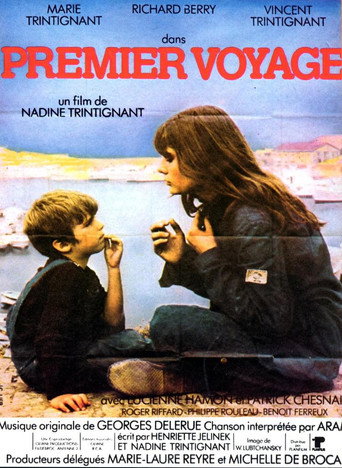
First Voyage
When her mother dies, a teenage girl, together with her five-year-old brother, decides to find her long-absent sailor father.

The Elegant Criminal
On 9 January 1836, Pierre Lacenaire goes to the guillotine, a murderer and a thief. He gives Allard, a police inspector, his life story, written while awaiting execution. He also asks Allard to care for Hermine, a lass to whom he has been guardian for more than ten years. In flashbacks, from the prison as Lacenaire writes, from Allard's study as he and Hermine read, and from other readers' memory after the book is published, we see Lacenaire's childhood as he stands up to bullies, including priests, his youthful thieving, his first murder, his brief army career, his seduction of a princess, and his affair with Avril, a young man who dies beside him.

Variations
Variations of the three portraits of the movie L'amitié.

The Girl in the Air
Who would have expected Brigitte to marry a prisoner with a long sentence in the first place? In this romantic action movie, that is only the first in a long line of surprising actions by the young woman. Somehow, she manages to get hooked to the young prisoner before realizing that he'll be locked up for another three or four decades. She decides that this is much too long to wait to spend time with her sweetheart and decides to learn how to fly a helicopter. Why? So she can fly in and take him out of his prison yard, which is exactly what she does, thrilling romantics all over France and seriously upsetting the authorities. This award-winning film is based on a true incident from 1986.
Production

Agent trouble
Amanda Weber is a museum employee. Her nephew, Victorien, who feels that wild animals should not be kept in zoos, while hitchhiking saw a mysterious bus with 50 dead tourists that later was found by autorities at the bottom of a lake. When Victorien gets in very serious problems due to what he saw Amanda seeks to find out what happened and soon also becomes a target.

Tell Her That I Love Her
Industrious accountant David Martinaud claims to be visiting his parents every weekend, but it's merely a cover for the labor-intensive refurbishing of his country cottage. The reason for David's secrecy is that his childhood crush, Lise, lives nearby, and, although she's married, he still believes they'll get together. His devotion to the idea borders on mania, and, when Lise's husband is accidentally killed, he quickly spirals out of control.

Bunker Palace Hotel
In an imaginary dictature of a futuristic world, rebellion has broken out. The men in power scramble to the Bunker Palace Hotel, a bunker built long ago for just this kind of contingency. But a rebel spy sneaks in, and although her nature is very quickly suspected, she is left to observe the raving of the decadent power class, who keeps wondering what happened to their leader, who has failed to show up.

Serie Noire
In the shadowy outskirts of Paris, a desperate door-to-door salesman crosses paths with a mysterious young woman trapped in a grim world. As his obsession deepens, his grip on reality begins to slip—and the line between escape and destruction starts to blur.
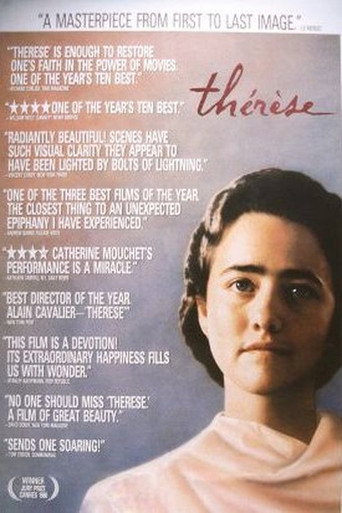
Thérèse
The life of little St. Therese of Lisieux, depicted in minimalist vignettes. Therese and her sisters are all nuns in a Carmelite convent. Her devotion to Jesus and her concept of "the little way" to God are shown clearly, using plain modern language. A sense of angelic simplicity comes across without fancy lights, choirs, or showy miracles.

I Love You
Michel is a bored, lonely, cheap-thrills-seeker. Everything changes when he finds an unusual bobble head doll in the shape of a pretty woman that can say "I love you" and falls in love with it to the point of obsession.

Nocturne Indien
The enigmatic but vivid imagery of this loosely plotted film is based on a similarly evocative novel by the Italian author Antonio Tabucchi, Noturno Indiano. An old friend of the hero's has been living in Bombay with a prostitute. His friend Peter Schlemihl (Otto Tausig) is a concentration camp survivor, who went to India after being captivated by a photograph he saw there. When the prostitute writes to him in Europe asking that he rescue his friend from a mysterious malaise, he flies into India to try and help. When he gets to Bombay, he discovers that his friend has disappeared. Following the clues left behind by the friend, and based on his acquaintance with him, he journeys to Madras to speak to a Theosophist dignitary there, and then journeys on to Portugues Goa. With each step of his journey, the hero (Jean-Hugues Anglade) becomes more identified with his friend, and re-enacts in his own person the transformations he must have experienced.

The Seasons of Pleasure
Charles and Emmanuelle organize as every year, the congress of perfumers who distribute their products in their castle. Garibaldi, their mutilated and somewhat disturbed son-in-law, will be the butler.

Stand-by
A woman remains in an airport after her husband announces he wants a divorce, just before they are to board a plane for Argentina. Unwilling to turn to her sister and emotionally traumatized she makes the airport her home, making money by working as a prostitute. She strikes up a friendship with a café worker Marco.....

C'est jamais loin
In Dieppe, a taciturn young man is fascinated by a woman whom he has only seen in the street. One day, he leaves Dieppe and Lola, the girl he was living with. He becomes a truck-driver. In the Middle East, Christian's travels end in a prison in the heart of the desert. There he meets Eliot who lives an isolated life within the prison environment. Since Eliot talks, Christian who was mute up to that point, listens then speaks too. But Eliot receives letters from a woman: Marie. And Christian starts dreaming that she's the woman he saw on the streets of Dieppe.