Directing
No biography available.
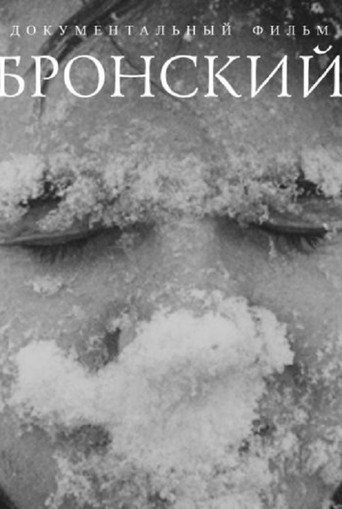
The film is a portrait of a young writer Alexander Sarapov (literary pseudonym of Bronsky) from a small closed city of Zelenogorsk, Krasnoyarsky kray. His work had a great influence on people close to him and aroused interest among the leading figures of cinema and literature.
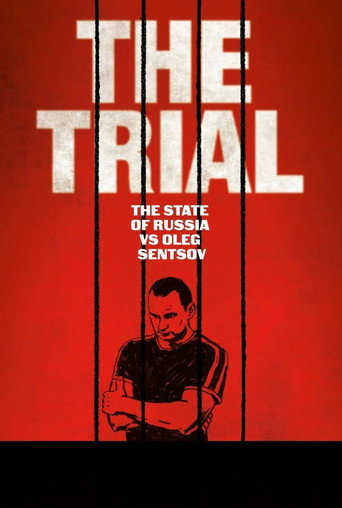
August 2015, a courtroom in Rostov-on-Don. A man is peering through the bars of his cage, his eyes reveal that his nerves are about to snap. Today he will be handed down a sentence to which he must submit: 20 years’ imprisonment in Siberia for terrorism. The man is Oleg Sentsov, a film director and Maidan activist born in Simferopol in the Ukraine. He is charged with leading an anti-Russian terrorist movement and having planned attacks on bridges, power lines and a monument of Lenin. Sentsov defends himself, courageously and without flinching. He responds to the verdict with an emphatic denial of his crimes and instead accuses the accusers themselves ...
Nikita is 25 years old and has a rare genetic condition that makes his skin very fragile and untreatable. Such people are usually called "butterflies". Together with his girlfriend Leroy, they are looking for a way to stop the development of the disease and get acquainted with famous scientists Alla and Vadim Zorin, who agree to conduct an experimental treatment.
The son of the village priest is obsessed with the idea of taking a look at the world from his father's belfry. But he can't cope with is fear of the height on his own. His mother helps him. For whom will this ascent become a feat? And what is feat of life, cross or blessing? And what is feat of life, cross or blessing?
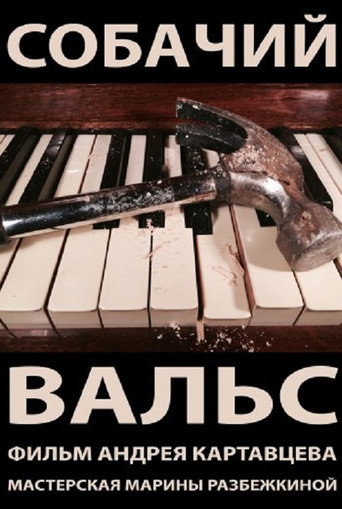
Two different worlds. On the one hand - porters, who bear pianos. On the other hand - people, who the porters visit – musicians, new Russian “middle class”. What is the dialog between them? How does it clear for each of them - what is the musical instrument for?
Susanna, a sixty-four year old actress, lives with her mother and for a long time hasn’t played in the theatre; only occasionally she appears at small venues with poetic concert programs. But she is haunted by the play, which she rehearsed more than twenty years ago, and which was never staged. She finds a partner; the only thing that remains is to find a theatre that will agree to produce the play.
"Ata" is translated from Kazakh as "grandfather". The story of the 80-year-old blind grandfather was filmed in the south of Kazakhstan.
A provincial Russian family killed off by suicide, murder and manslaughter and a boy who asks about guilt and forgiveness in the midst of all this squalor. Shockingly great.
Summer 2010. The entire central part of Russia is engulfed in fires. The authors of the films of the almanac together with the volunteers go to the epicenter of events. Volunteers, foresters, firefighters – they are not heroes in the usual sense of the word, it was just their life, their trouble, and they tried to cope with it as best they could.
Sakhalin is a distant island. It is swept away by April snowstorms, and if you leave there, then forever. And if you stay, then for good and for great love. Masha turns thirty, and she still hasn't left. And she still hasn't stayed. She can't decide. Or decide.
Igor and his friends dream of having a rave in Chernobyl to rethink the space of a man-made disaster through life and art. However, they are faced with a reality where their idea is opposed by unfounded fears, corruption and hypocrisy of officials. The film by the Guatemalan director Pablo Rojas Castillo, a graduate of VGIK and the School of Documentary Film and Theater Marina Razbezhkina and Mikhail Ugarov, is not only about the company of dreamers and the rave at the sarcophagus of the Chernobyl nuclear power plant, but also about the need to recycle the Soviet heritage and the clash of values of different generations.
The dusty roads of Odessa preserve and tangle the traces of many a traveler. Led by the shadow of Kira Muratova and their desire to follow her footsteps, Anya and Gleb set out on a journey to find the keepers of her memory, and the characters of her films. These Odessa encounters connect “reality” to the world of Muratova, where, as we know, everything is bound to repeat itself.