Sound
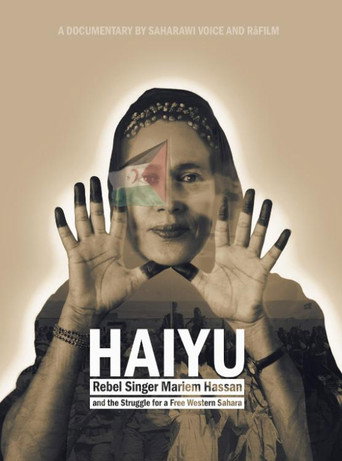
Mariem Hassan was a Sahrawi singer and lyricist. She usually sang in Hassaniya, an Arabic variant spoken mostly in Western Sahara and Mauritania, occasionally singing in Saharan Spanish.
HAIYU interweaves Mariem Hassan’s music and her personal quest for her country’s independence with larger historical events dating back to the region’s Spanish colonisation, and subsequent occupation by Morocco.
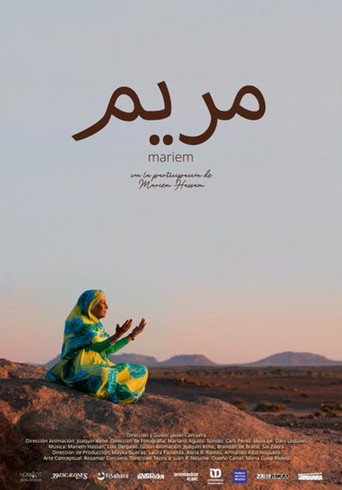
Mariem Hassan, Sahrawi refugee, composer and Western Sahara's most emblematic singer, died of cancer in 2015. Soon before her passing, Mariem returned to the liberated territories of her homeland, where she had spent her childhood. There, she told us her story and sang for the last time. This film pays tribute to her last testimony and her art.
Muslim women who leave the camps as teenagers to study in Cuba. After over a decade living in the land of salsa, they return to the desert... how will their new spirit adapt to Islamic precepts? What reasons do they have for leaving Sahara at such a young age? What is their reason for returning?
Refugees in Algeria since 1975, the Saharawi have had to forge another life path, fighting to return home. Their children, a generation born in exile to parents born in exile, tell the story and struggle of their people, the Saharawi, through their dreams, hopes, and strength.
In this exclusive broadcast, Democracy Now! breaks the media blockade and goes to occupied Western Sahara in the northwest of Africa to document the decades-long Sahrawi struggle for freedom and Morocco's violent crackdown. Morocco has occupied the territory since 1975 in defiance of the United Nations and the international community. Thousands have been tortured, imprisoned, killed and disappeared while resisting the Moroccan occupation. A 1,700-mile wall divides Sahrawis who remain under occupation from those who fled into exile. The international media has largely ignored the occupation—in part because Morocco has routinely blocked journalists from entering Western Sahara. But in late 2016 Democracy Now! managed to get into the Western Saharan city of Laayoune, becoming the first international news team to report from the occupied territory in years.
In the Arab world, women are fighting a two-front war against repressive internal constraints and intrusive Western interference. In this program, a feminist delegation composed of author Nawal Saadawi and other renowned activists from the Middle East and North Africa gathers at the UN, on college campuses, and in church basements to speak out about deterioration of women's rights in the Arab states in an effort to heighten awareness of the Arab feminist struggle for equality--and the effects of U.S. foreign policy on their efforts.
A video activist group is struggling to keep their cameras in the occupied Western Sahara where the Moroccan authorities have managed to implement a near total media blockade.
Ismael, Hindu and Bachir are three Sahrawis living in Gran Canaria (Canary Islands). They tell us about their lives away from their home country (Western Sahara), their own personal history and experiences... and the challenges they face in an island they consider something of a second home. This short film combines the three main characters' impressions with archive images of the Dignity Camp, of the Tindouf camps, and images of the Western Sahara in the mid- 70's. A Canary Islands production shooted in Gáldar and Las Palmas de Gran Canaria.
Spanish actor Pepe Viyuela embarks on a personal journey on the trail of his grandfather Gervasio, a soldier in the Republican Army during the Spanish Civil War.
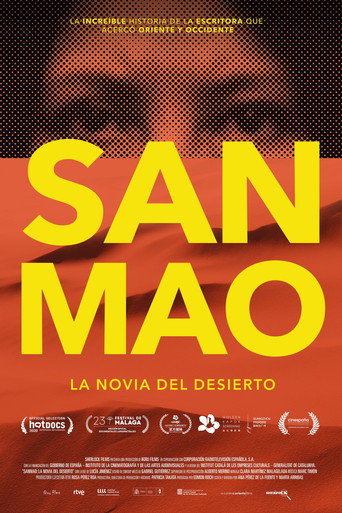
In 1973, Chinese writer Sanmao (Echo Chen Ping, 1943-91) marries Spanish naval engineer José María Quero while living together in the Spanish Sahara. Sanmao recounts her daily experiences in Tales From the Sahara, a book that is a best-selling phenomenon in Taiwan and China. Sanmao then becomes an icon for independent women and the protagonist of a life that takes on legendary overtones: love, adventure, literature and, finally, tragedy.
In December 2004, 120 years after it was built by the Spanish, Fort Villa Cisneros, a unifying symbol of tradition and modernity in the history of the Sahrawi people, was destroyed by Morocco, ignoring the voices of those who pleaded for its preservation in favour of respect for the community’s past.