Marie-Hélène Estienne Movies, TV Shows, and Filmography
Marie-Hélène Estienne
Writing
Biography
No biography available.
Filmography Movies
Production
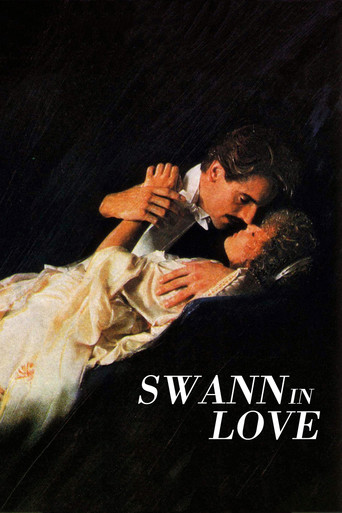
Swann in Love
In Belle Époque Paris, a 19th-century Parisian aristocrat falls in love with a lower-class prostitute who seduces him but never loves him.
Beckett by Brook
With hindsight, we can see exactly how wrong the labels given to Samuel Beckett have been, since it has been said that his writing was sad, negative and desperate. Nowadays, it can be said that several of his pieces submerge us in the reality of human existence, but with an element of humor - and it is this humor that has saved us. Beckett rejects every theory, every core belief, looking for the truth. He observes people amid the darkness and takes them into what is vast and unknown about life, so they can discover their truth by taking a look at themselves and others. Like Beckett, we share their uncertainty, their search, their pain. This theatrical reflection by the masters of European theater, Peter Brook and Marie-Hélène Estienne, incorporates parts of Fragments, a piece premiered in 2008 and filmed in 2015 and which contains the short plays Rough For Theater I, Rockaby, Act Without Words II and Neither.
Faire la déménageuse
In 1972, what does making a film mean? How does a movie make? What is the relationship between the producer of shows and the spectator? How does meaning travel in the story? These are the questions posed and proposed by the film.
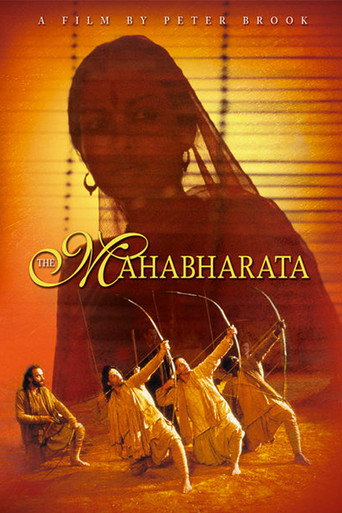
The Mahabharata
One of the great masterpieces of world literature comes to vivid life in an elaborate production from acclaimed theater and film innovator Peter Brook. This collection of ancient Sanskrit stories (composed into the longest book ever written) comprises a series of enlightened fables at the heart of countless beliefs, legends, and teachings; indeed, its very title means "the great story of mankind." Brook and writer Jean-Claude Carriere worked for eight years to develop this epic concerning two sides of a royal family, the Pandavas and the Kauravas, whose struggle leads to a fascinating voyage of emotions, passion and vision of glory. Briefly, the Mahabharata is a tale of two rival sets of brothers, cousins to eachother, each born into royalty and with divinely guided paths in life. The result, however, is a great war, death, destruction - a vast epic.
The Mahabharata
One of the great masterpieces of world literature comes to vivid life in an elaborate production from acclaimed theater and film innovator Peter Brook. This collection of ancient Sanskrit stories (composed into the longest book ever written) comprises a series of enlightened fables at the heart of countless beliefs, legends, and teachings; indeed, its very title means "the great story of mankind." Brook and writer Jean-Claude Carriere worked for eight years to develop this epic concerning two sides of a royal family, the Pandavas and the Kauravas, whose struggle leads to a fascinating voyage of emotions, passion and vision of glory. Briefly, the Mahabharata is a tale of two rival sets of brothers, cousins to eachother, each born into royalty and with divinely guided paths in life. The result, however, is a great war, death, destruction - a vast epic.
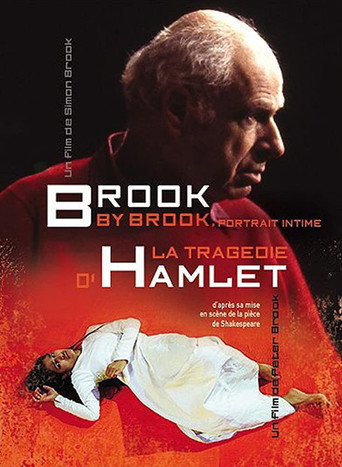
The Tragedy of Hamlet
Peter Brook presents a new interpretation of the classic in a setting is vaguely eastern rather than Scandinavian, with a multi-ethnic cast .