Maria Olguim Movies, TV Shows, and Filmography

Maria Olguim
Acting
Biography
Maria Cipriana Lobato Olguim.
Filmography Movies
Acting

Tinoco em Bolandas
The domestic misfortunes of Duarte Tinoco, a married man with a free heart. At a time when the leading filmmakers in Portugal were foreigners working under contract with Invicta Film, the possibility of Portuguese artists with special skills moving into directing was a key project for that production company. This is how António Pinheiro, an acclaimed actor, came to direct Tinoco in Bolandas. The experience proved positive and was continued in another film. To make this film, António Pinheiro enlisted the help of his mentor, Georges Pallu, who had directed him in several films. In addition to appearing in the cast, Pallu was also responsible for adapting the play on which the script is based.

The Lion from Estrela
Anastácio lives in Lisbon and is fanatic for Sporting CP, one of the city's football teams. When the team travels to face Porto, he follows it with the family, staying in house of his friend, Mr. Barata, pretending to be rich.

Ala-Arriba!
It focuses on maritime tragedy of the town and a forbidden love between Julha and João Moço, from different fisher castes, in a community where mixed-caste marriages were not allowed and dating without parent's assent was seen as a disgrace to the family, not only in respect to women, but also men.

The Costa from Castelo
André (Curado Ribeiro), is a son of a wealthy family who meets a girl called Luisinha (Milu). Luisinha lives at a small pension house with Rita (Maria Olguim) and Januário (João Silva), who are as parents to her, and with mr. Simplício Costa (António Silva), better known as Costa do Castelo, a lazy but highly talented guitar player who together with (Hermínia Silva) reaches success.

Frei Luís de Sousa
Seven years after the disastrous Battle of Alcácer Quibir, where King Sebastian and the nobleman Dom João disappeared, the latter's wife Dona Madalena de Vilhena finally gives up hope that he'll return and marries the knight Dom Manuel de Sousa Coutinho, with whom she has a daughter, who is afflicted by a fatal illness. Now only the tutor Telmo Pais retains the hope that the lost husband is alive, a premonition that may be confirmed after two decades, with the arrival of a mysterious pilgrim...

O Grande Elias
When Mr. Elias discovers that his aunt, who lives in Brazil, comes to visit him, he decides to temporarily occupy the house of a wealthy neighbor who's away so that she doesn't discover that he's not as rich as he told her.

Sonhar é Fácil
Mr. Silva has a dream: to live in the countryside and become a farmer. And one day it happens. He inherits a farm from an old aunt. But not everything will be roses, as Mr. Silva soon finds out...
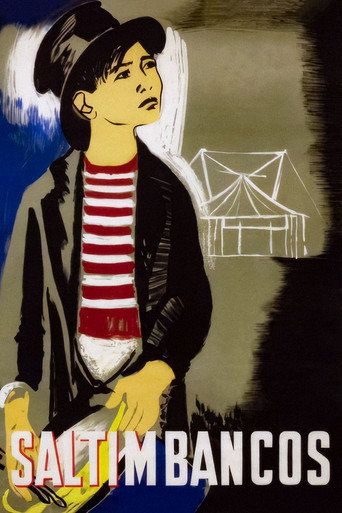
The Circus
Tony, a trapeze artist, gets a job at a small circus. When a tempest takes away the tent, Tony stays for the love of the beautiful Belmira who could be a rider… if they hadn’t sold the horse. They play at open-air, sleep under the stars, scrimp and save every penny, and soon there’s a new tent to be bought on credit. But Belmira is not happy, she dreams of a real home, while Tony is fascinated by the circus. And the gloomy days are back.
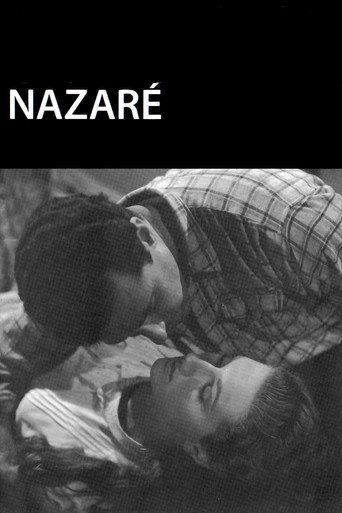
Nazaré
The sea, often treacherous, is the only source of living of the people of Nazaré. The film tells the story of António and his family, where no dreams are allowed. There is also the mourning of the woman in black wailing silently on the beach or waiting for their children lost in the sea.

Vidas sem Rumo
Meia-Lua used to be a sailor, but he now makes a poor living smuggling. He is a cynical man, who doesn't care for Ana or for the child they had together. He lives with the beautiful Marlene who dances in the bars. Gull spends her whole days lulling a doll in her arms, and she waits for her love that will rise from the depths of the sea. The deaf musician Sparrow watches over her, in his despaired love and long-held wish of becoming a sea captain. There is a dispute down the piers, there is a crime that might be just an accident, there is a bad conscience that turns sour, there is a boat full of poor wretches like a rocking lullaby, a baby that passes from arms to arms, a clumsy beggar that finds some work, a courthouse of tramps... From this expressionist account that has unexpected comical moments, the censors from Salazar's regime cut away 20 minutes that were never to be found again.
Gallery