Acting
No biography available.
A German documentary studying concepts of hell developed over time in Christianity, Judaism and Islam, often overlapping -but not in Catholicism- with purgatory. Special attention goes to 'physical' methods of torture in the afterlife, as in Dante's Inferno. Their inspiration stems partially from judicial torments, as used during the Inquisition to redeem 'Satanic' sinners, from witches and heretics to mere gay people. Also treated is hell's theological and 'educational' meaning.
The gay couple Tobi and Ernie are being visited by Ernie's old friend Uta. What at first looks like an innocent house-call, turns into an insidious attack on the couple's relationship.
Two actors improvise biographical scenes about Hitler and Jesus. They discover more and more similarities and set out in search of the reasons for their enormous success. Jesus wants to give love. Many conflicts have to be resolved until Hitler can finally come to accept this.
Bruno Lüdke, who was mentally disabled, is said to have brutally murdered 53 people in Berlin and throughout Germany. In 1944, he died under unexplained circumstances at the Central Institute of Forensic Medicine of the Security Police in Vienna, where numerous experiments had been performed on him. In 1991, doubts arose as to whether Lüdke could have committed a single murder at all.
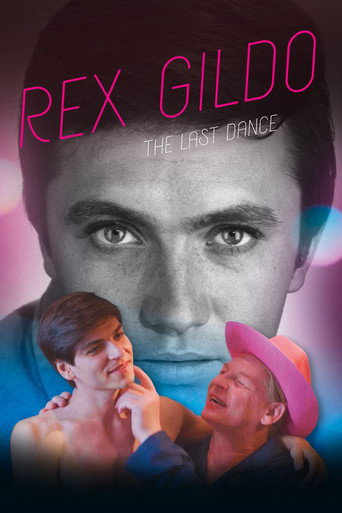
Rex Gildo’s songs and musicals made him very popular. His best-known song was “Fiesta Mexicana” from 1972. Rosa von Praunheim tells the story of his life in the context of the gay pride movement, the normative pressures of the Schlager music industry, and the profound changes currently underway.