Marcel Mouloudji Movies, TV Shows, and Filmography
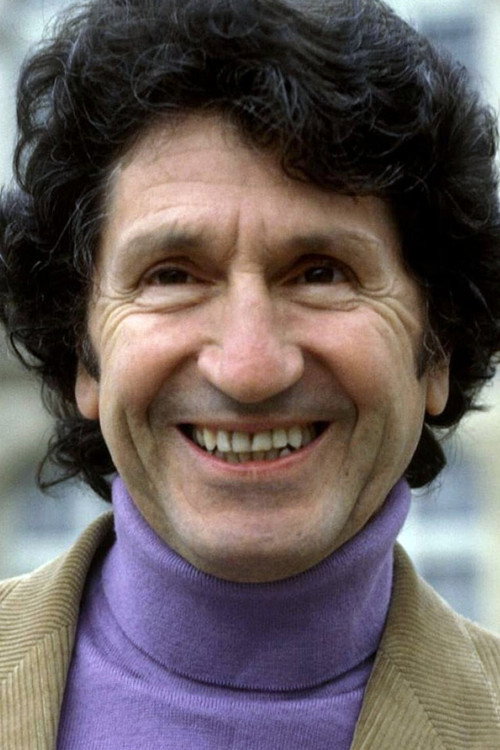
Marcel Mouloudji
Acting
Biography
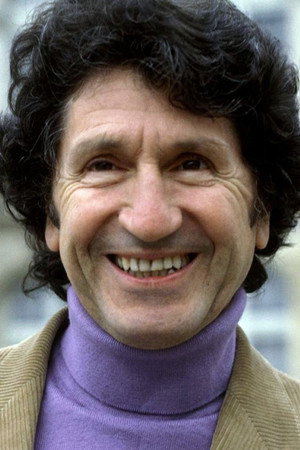
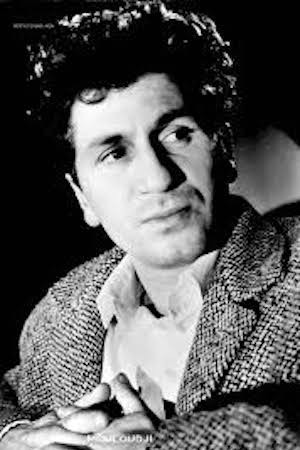
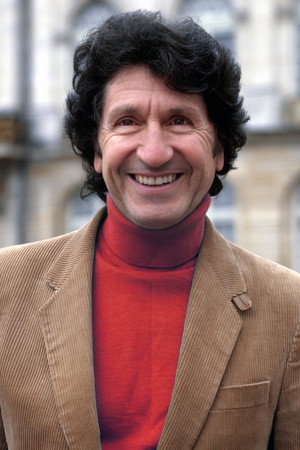
Marcel Mouloudji, born September 16, 1922 in the 4th arrondissement of Paris and died June 14, 1994 in Neuilly-sur-Seine is a French-Algerian singer, songwriter, painter and actor. His songs, alternately committed and sentimental, evoke love, war, nostalgia between sadness and loneliness. He has notably interpreted texts by poets such as Boris Vian, Louis Aragon and Philippe Pauletto. Marcel Mouloudji was born in 1922 in Paris to a bricklayer father and a housekeeper mother. His father, Saïd Mouloudji was born in 1896 in French Algeria in the Kabyle village of Leflaye (tribe of Aït Waghlis, daïra of Sidi-Aïch), and his mother, Eugénie Roux is a Breton born in Paris in 1901. The family knows serious problems: when Marcel was only ten years old, his mother was hospitalized for a mental disorder and his illiterate father, housed in a maid's room, had trouble raising his two sons, the eldest of whom, André, was gravely ill and the second, a gentle dreamer who finds accommodation by chance encounters. During his adolescence, Marcel enrolled with his brother in a left-wing youth movement, the Faucons Rouges, close to the SFIO. In 1935, he met Sylvain Itkine, director and member of the October Group, an organization affiliated with the Fédération des Théâtres Ouvriers de France. Marcel Maillot, director of a Syndicat du livre summer camp, encouraged him to sing with his brother. He was soon noticed by Jean-Louis Barrault. During this period, Marcel was thus hosted by Jean-Louis Barrault, who introduced him to the artistic milieu of Paris. He participated in the artistic life associated with the Popular Front in 1936. In 1936, he appeared in the film La Guerre Des Gosses by Jacques Daroy. In 1937, for the film Claudine À L'École by Serge de Poligny, the screenwriter Jacques Constant, around Blanchette Brunoy, created the character of "Petit Moulou"... soon to be Mouloudji. In 1938, Marcel played one of the three young heroes in Disparus De Saint-Agil by Christian-Jaque. In 1939, Marcel played the role of Louis in Christian-Jaque's film L'Enfer Des Anges, a film selected for the 1939 Cannes Film Festival which did not take place, and released in February 1941. In 1942, he played the role of 'Ephraïm Luska in Henri Decoin's film, The Strangers in the House, after Georges Simenon... Jacques Canetti, famous artistic agent. He will offer him to record "Comme Un P'tit Coquelicot" thanks to which Mouloudji obtains the Grand Prix du Disque 1953 and the Charles-Cros Prize in 1952 and 1953. He repeats with "Un Jour Tu Verras" the following year. He reappears in films like Henri Calef in 1949 or We Are All Assassins three years later. His last roles, he did in Rafles sur la ville by Pierre Chenal then in Llegaron Dos Hombres in 1958. After recording a disc with accordionist Marcel Azzola in 1976 called "And it was turning", he released "Unknown Unknowns" thanks to which he went on tour throughout the country. Exhausted, he decides to devote more time to writing and painting. He partially lost his voice due to pleurisy in 1992 but was still working on a new album. He died on June 14, 1994 and is buried in the Père-Lachaise cemetery in Paris.
Filmography Movies
Acting
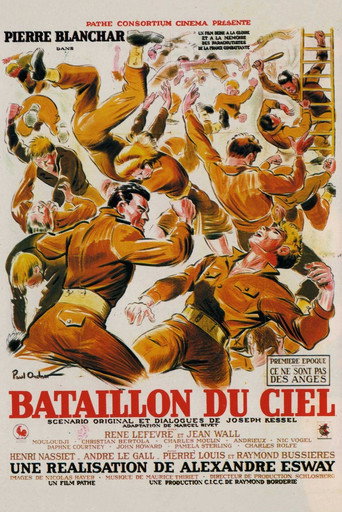
Sky Battalion
Film in two eras.1st era: They are not angels. Chronicle of a Free French parachute training camp during the Second World War. 2nd era: Terre de France. A group of paratroopers landed in Brittany sabotages the German installations.
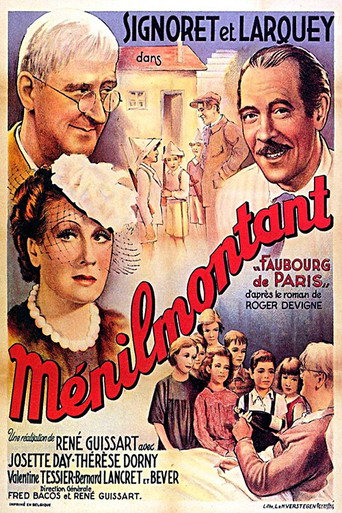
Ménilmontant
Because they brought her back a lost piece of jewelry, a very rich lady accedes to the request of three old people and transforms a vacant lot into a park for the neighborhood children.
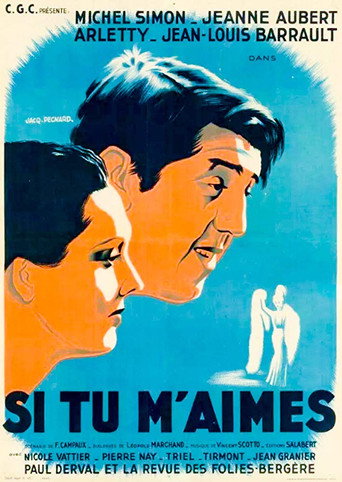
Mirages
A star of Les Folies Bergères has to choose between her career and her love for an engineer.
Les Gaietés de l'exposition
Set against the backdrop of the 1937 Paris Exposition, a mistaken identity plot where a travel agent from Morocco is confused by the French police with a dangerous swindler.
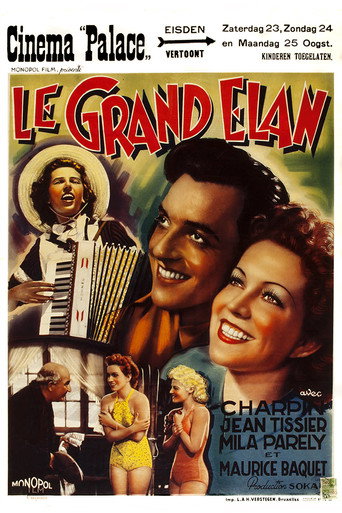
They Met on Skis
The owner of the place of Chamonix covets the inn, run by the Michel's uncle, whose business goes bad. Michel decides to participate in a ski competition to help uncle.
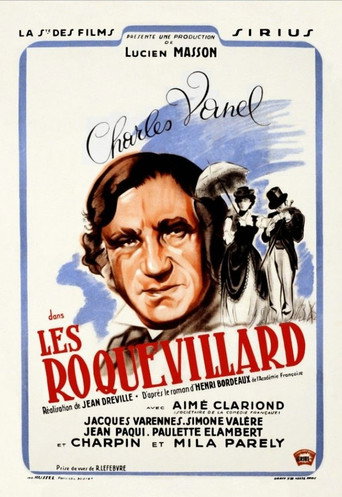
The Roquevillards
France, 1880. Francois Roquevillard is a respected lawyer in Chambery and the head of a family that prides itself on its impeccable morals. Francois's world rapidly begins to fall apart when his son Maurice elopes to Italy with Edith Frasne, the wife of an esteemed notary.
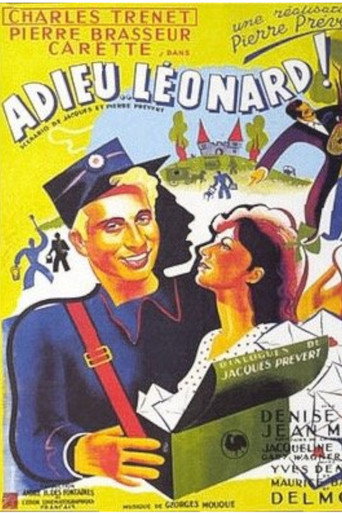
Adieu Léonard
A bungling thief is threatened by one target with blackmail, unless the thief will kill his own cousin, a wealthy eccentric who is considered the village idiot.
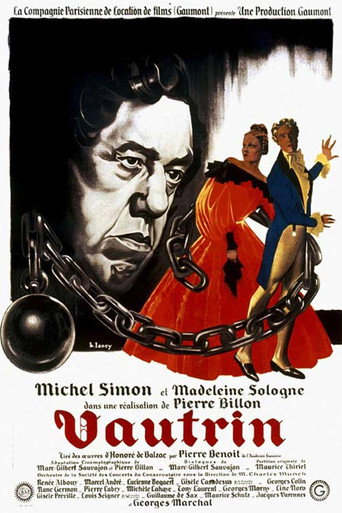
Vautrin the Thief
A famous convict Jacques Collin, alias Trompe la mort, or abbot Carlos Herrera, also called Vautrin, escapes from prison. Chance makes him meet Lucien de Rubempré, an impetuous and eternal lover who, when he is dismissed, collapses. Moved by this fragility, he takes him under his wing, and will do everything possible to ensure that his creature reaches happiness, even if it means imagining the worst shenanigans and other scams, with the help of a band of clever villains.
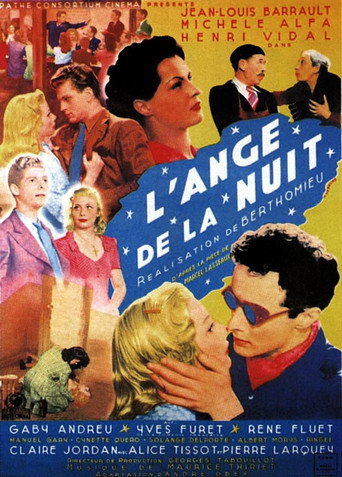
Angel of the Night
A young sculptor presides over the destinies of a student club where a miserable young girl ends up one evening. The treasurer of the association falls in love with the young girl who returns the favor. The war. The sculptor comes back blind. Out of gratitude, the young girl marries him and restores his confidence in his talent; out of discretion, the treasurer steps aside.
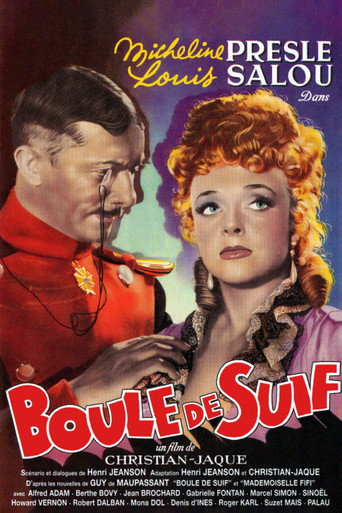
Angel and Sinner
During the stagecoach trip of a frightened group of inhabitants of Rouen, Elisabeth Rousset, known as "Boule de Suif", renders these people a signal service, but comes up against their stupidity and their sufficiency. A little later, Boule de Suif assassinates the formidable Prussian lieutenant whom his friends had nicknamed Fifi and who shamelessly displayed his taste for pillage and his sadistic tendencies.
Gallery