Marc Adrian Movies, TV Shows, and Filmography
Marc Adrian
Directing
Biography
No biography available.
Filmography Movies
Acting
Walk in
experimental short film by Moucle Blackout
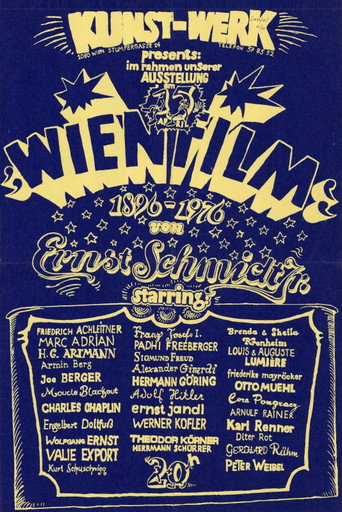
ViennaFilm 1896-1976
This film is a kind of anthology about Vienna, from the invention of film to the present day. The aim is to break down the usual clichéd "image of Vienna" such as that found in the traditional "Vienna Film" by juxtaposing documentary footage, newly shot material and subjective sequences created by various artists. Individual, self-contained sections of the film gain new meaning within the context of historical material. Familiar sites appear estranged when edited together with historical scenes. Other scenes appear like a persiflage or satirical. The film does not incorporate any commentary whatsoever. It is a collage of diverse materials aimed at conveying a distanced image of Vienna to the viewer
Production
Wo-Da-Vor-Bei
“In Wo-Da-Vor-Bei the syllables comprising the title are…worked over until they are more like images, structures, or abstract figures than they are word fragments.” –Hans Petersen
UAREI
UAREI, made between 1972 and 1977 in San Francisco, London and Vienna, is Marc Adrian's last abstract film and unfolds a psychedelic-meditative effect. The film is preceded by a quote ("human existence being an hallucination containing in itself the secondary hallucinations of day and night it will becomes any man of sense to be concerned at the illusory approach of the supreme hallucination known as death.") from the fictional Irish author Flann O'Brien fictional philosopher and scientist DeSelby, who is "quoted" in O'Brien's novel The Third Policeman. (Anna Artaker)
Text 2
Experimental film combining letters and sounds.
Black Movie II
Marc Adrian´s FILMBLOCK 0 paces out the foundations of a ritual of self-realization. With its matte surfaces (colorful leader) and easily visible splices – before the production of a negative, the film fell apart at the taped places with every presentation – Black Movie I stands at the beginning of this development, while Black Movie II with its gleaming, painstakingly made colors and sparklingly clean “cuts” marks the conclusion. Both films by themselves do not tell us anything. They are colors in space and time and nothing more, experiences of different materialities. Together, considering the three films that come between them, they tell the tale of the acquisition of a confidence and strength in craftsmanship, and with this a deeper understanding of the medium – a clarity.
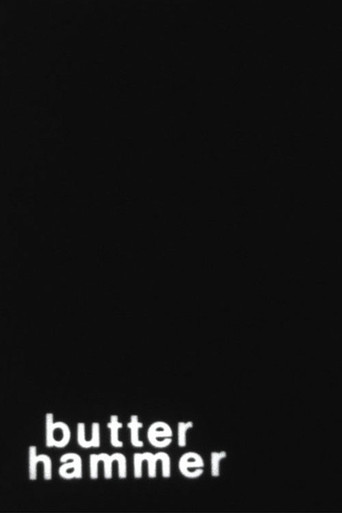
Text I
The Films Text I and Text II were likewise developed from randomly generated mathematical series; Text II is a pure permutation, Text I arose from the storage program of a computer. The words chosen were required to have the same meaning and spelling both in German and English.
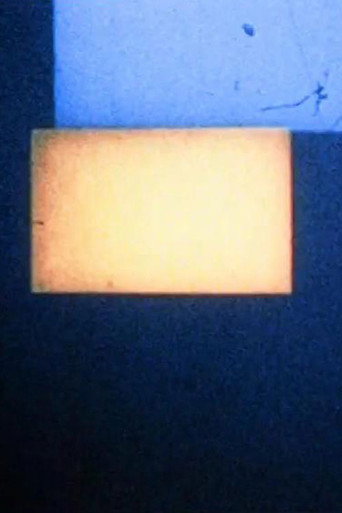
Blue Movie
Blue Movie is a metric color-and-form trip orchestrated with psychedelic sounds, the latter is a symbolic story about individual/collective drug use, which can be read as a model for, or a critique of society ... Both Kren and Radax had experience with other art forms but were for the most part filmmakers. Adrian, on the other hand, was an artist and filmmaker and poet/writer. Adrian, in a sense, already defied any kind of brewer´s purity requirements through his diversified talents.
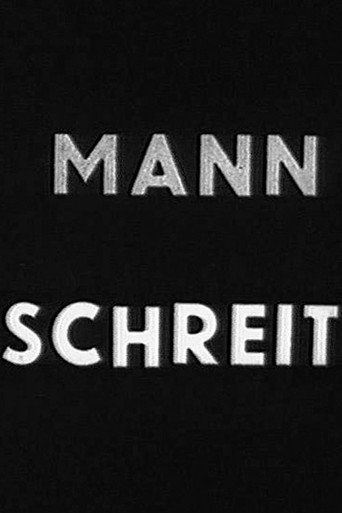
Schriftfilm
Schriftfilm functions according to the principle of the cadavre exquis or that of a textual machine that one finds in well sorted bookstores: On screen we see alternating nouns on top, and alternating verbs underneath. Some actually ‘fit’ such as “man walks”... ; while others might only ‘fit’ in a more extended sense “man burns,” “water breaks”... ; while others only ‘fit’ poetically “water screams,” “stone runs,” “sun falls”... ; and in this context the conventional language=meaning-logic disappears behind the pure word=meaning-presence. “Stone runs” is exactly as significant as “man walks,” whereby “man walks” through the very presence of “stone runs” appears to be something extraordinary, and “stone runs” becomes something entirely true and possible.
The Rain
Film by Marc Adrian