Manos Hatzidakis Movies, TV Shows, and Filmography

Manos Hatzidakis
Sound
Biography
Manos Hatzidakis (also spelled Hadjidakis; Greek: Μάνος Χατζιδάκις; 23 October 1925 – 15 June 1994) was a Greek composer and theorist of Greek music, widely considered to be one of the greatest Greek composers and one of the most globally recognised. His legacy and contribution are widespread among the works of contemporary Greek music, through the second half of the 20th and into the 21st century. He was also one of the main proponents of the "Éntekhno" form of music (along with Mikis Theodorakis). In 1960, he received an Academy Award for Best Original Song for his song Never on Sunday from the film of the same name. Hatzidakis was born on 23 October 1925 in Xanthi, Greece, to lawyer Georgios Hatzidakis, who came from the village of Myrthios, Agios Vasileios in the Rethymno prefecture in Crete; and Aliki Arvanitidou, who came from Adrianoupolis. His musical education began at the age of four and consisted of piano lessons from the Armenian pianist Anna Altunian. At the same time, he learned to play the violin and the accordion. After the separation of his parents, Hatzidakis moved permanently to Athens in 1932 with his mother. A few years later in 1938, his father died in an aircraft accident. This event, in combination with the beginning of World War II, brought the family into a difficult financial situation. The young Hatzidakis earned his livelihood as a docker at the port, an ice seller at the Fix factory, an employee in Megalokonomou's photography shop and as an assistant nurse at the 401 Military Hospital. At the same time, he expanded his musical knowledge by studying advanced music theory with Menelaos Pallandios, in the period 1940-1943. At the same time, he studied philosophy at the University of Athens. However, he never completed this course. During this period, he met and connected with other musicians, writers and intellectuals. Among these were Nikos Gatsos, George Seferis, Odysseas Elytis, Angelos Sikelianos and the artist Yannis Tsarouchis. During the last period of the Axis occupation of Greece, he was an active participant in the Greek Resistance through membership of the United Panhellenic Organization of Youth (EPON), the youth branch of the major resistance organisation EAM, where he met Mikis Theodorakis with whom he soon developed a strong friendship. Although he had made a statement on the exigency of Greece's entrance to the EEC (European Economic Community, later: European Union), he believed that within the European realm, Greece would be culturally assimilated completely. In the later years of his life, Hatzidakis explained that his work was meant not to entertain but to reveal. Further, he disclaimed part of his work, written for the Greek cinema and theater, as non-representative contract undertaking of his. ... Source: Article "Manos Hatzidakis" from Wikipedia in English, licensed under CC-BY-SA 3.0.
Filmography Movies
Acting
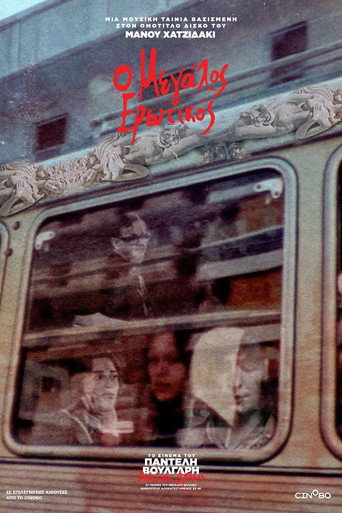
The Great Love Songs
A documentary about Greek music. Τhe Great Love Songs is series of ten poems by, among others, Sappho, Elytis, Myrtiotissa, Sarantari, and cavafy, put to music by Manos Hadjidakis. In the film, the camera lens illustrates the emotions stirred by the erotic atmosphere of the music. We follow the camera as it wanders through Athens; the nostalgic Athens of yesteryear; the big modern-day city; the Athens of lovers; the Athens of tourists. Our journey through the city is intercut with footage from the studio recordings of the songs, while there also scenes featuring the film crew. The film is a game between image and sound.

Stella
The story of a young, wild woman who doesn't want to compromise and settle down. Stella is a restless, rebellious Greek woman who plays with men and enjoys her life as much as she can. But when she meets a young footballer, things get mixed up. She loves him but she loves her freedom too. So it's about time she made an important choice.
Production

Sweet Movie
The winner of the Miss World Virginity contest marries, escapes from her masochistic husband and ends up involved in a world of debauchery.
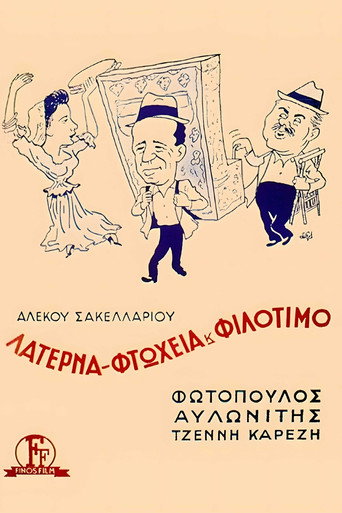
The Hurdy-Gurdy
Two poor portable barrel piano players ramble through Greek countryside and play in fairs. They meet by chance with a rich runaway girl whose father offers a large reward to her finders.They have to choose between getting the reward or helping the girl with her renegade love affair.
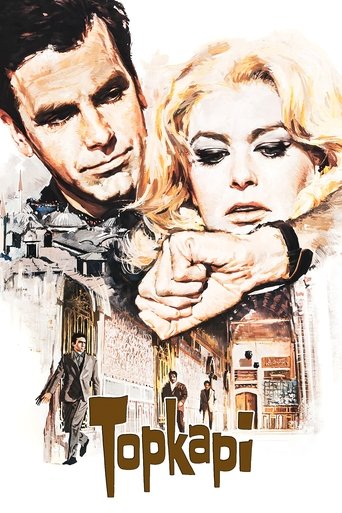
Topkapi
Arthur Simon Simpson is a small-time crook biding his time in Greece. One of his potential victims turns out to be a gentleman thief planning to steal the emerald-encrusted dagger of the Mehmed II from Istanbul's Topkapi Museum.
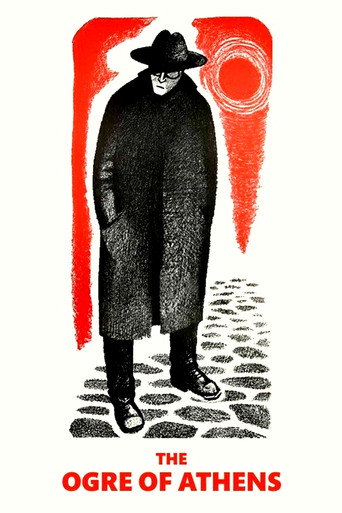
The Ogre of Athens
On New Year’s Eve, a timid bank clerk is mistaken for a notorious criminal mastermind who rules the streets of Athens. Embracing his mistaken identity comes with a price though, as his unwitting white lie begins to unravel.
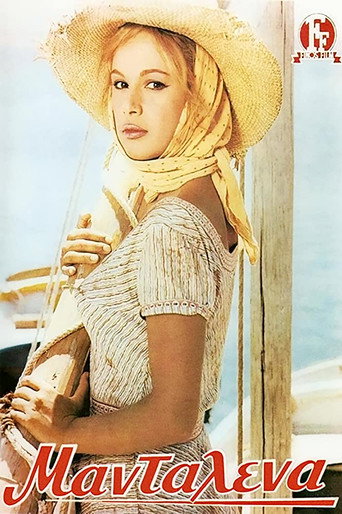
Madalena
Madalena is a tough seventeen-year-old who is forced to take on her father's ferry business after he dies. She has her many brothers and sisters to support, and there is no one else to do the job. So she rallies her defenses and sets out to give her rival in the ferry business a run for his money. But at the same time, the rival's handsome son is starting to look better and better. Madalena refuses to acknowledge her feelings for him -- though how long she can sustain that denial is the question.
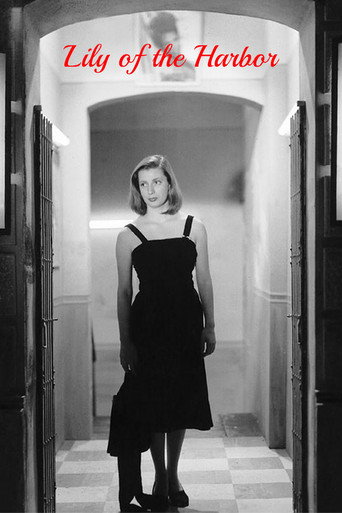
Lily of the Harbor
Captain Giakoumis makes the big decision to forsake the sea and live peacefully close to his wife and his adopted son, Andreas, who is about to sit for examinations in order to become a lieutenant. However, a terrible secret burdens his soul. He has a daughter, Agni, whom he had years ago when he had an affair with Maria, a prostitute from Troumpa. Maria, before she died, expressed the wish that Giakoumis recognize their daughter as his child. He, however, refused, since Agni ended up becoming a prostitute. The girl, to take revenge on her father, starts an affair with her half-brother with the intention of dragging him down into the mud. In the end, however, she falls in love with him, and this love blesses everyone and everything.
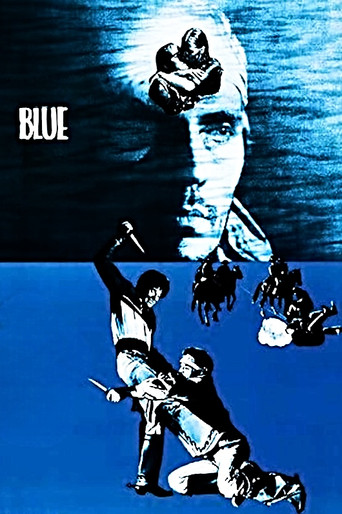
Blue
A young man is torn between the woman he loves and his loyalty to his father, the leader of a Mexican gang.
Stella
The story of a young, wild woman who doesn't want to compromise and settle down. Stella is a restless, rebellious Greek woman who plays with men and enjoys her life as much as she can. But when she meets a young footballer, things get mixed up. She loves him but she loves her freedom too. So it's about time she made an important choice.
Heron for Germany
The chronicle of Loukas Kostoglou, a publisher devoted to poetry, and Marios, his assistant, who is love with Nina.
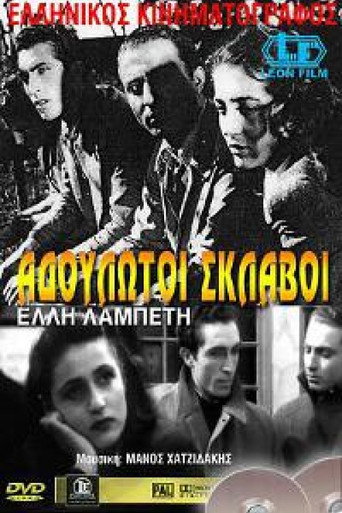
Unsubdued Slaves
On the eve of World War II in Athens, a troupe of young actors plans to put on William Shakespeare's, A Midsummer Night's Dream. However, the outbreak of war changes everything.
Gallery