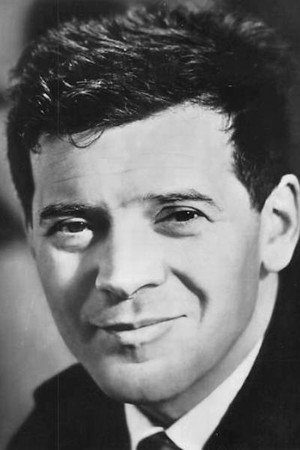
Manfred Borges Movies, TV Shows, and Filmography
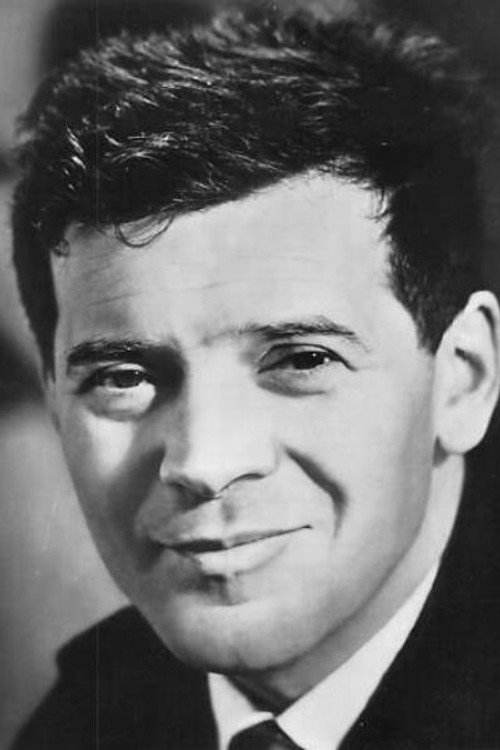
Manfred Borges
Acting
Biography
No biography available.
Filmography Movies
Acting
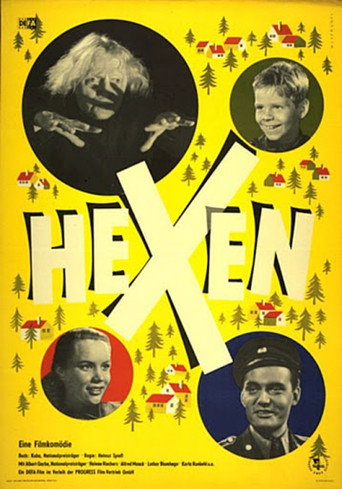
Hexen
Germany in 1949: The residents of the Thuringian village Hunsdorf are still heavily influenced by archaic superstition and explain unusual events with preternatural powers. The same happens when pigs again and again disappear from different farmyards. The village residents firmly believe that witches are the reason for this mystery. Not even police detective Kühlemann who is sent to Hunsdorf is able to dissuade them from their superstition. Thus, the farmers think his investigation is aimless and they do not support him at all. With a lot of patience and well-made arguments he finally convinces little Peter that there are no witches. Next, Peter’s grandfather and teacher Marianne take Kühlemann’s side. With their support, the police detective eventually finds out the truth and is able to put a stop to the gang of crooks that had been stealing the pigs.
Farssmann oder Zu Fuß in die Sackgasse
He could have had women, he could have climbed the ladder of his accountancy career, and he could have stood on the podium next to the highest in the land. If only he had wanted to! But Farssmann, shaken by divorce and unwilling to better himself, wants to remain what he is: an ordinary bookkeeper like you and me. And so the dollar deal with Mr. Osbar from Utah (USA) is not the first time he comes into conflict with the very palpable unreality of a country called the German Democratic Republic.

Two Strange Characters
The two computer specialists Frank and Kamminke are not the type of citizens the party likes. Thus they are sent to the landscape where they still find enough stuff to do: They repair the software of a western type factory which is currently not working.
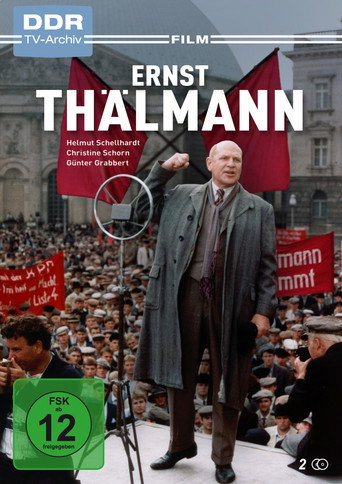
Ernst Thälmann
This elaborate two-part television film features a section from the life of communist worker leader Ernst Thälmann. It begins with the bloody riots on May 1, 1929 in Berlin, in which police officers shot at demonstrating workers, and ends with February 7, 1933, when Thälmann appeared as a speaker at the illegal meeting of the Central Committee of the Communist Party of Germany in goat neck. This period was marked by the struggle of the Communists against the ever stronger National Socialists and the rise of Adolf Hitler.
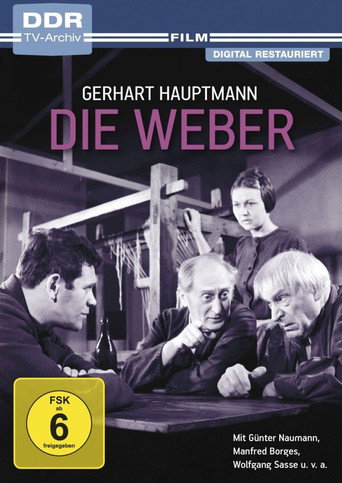
Die Weber
The emaciated weavers deliver their homework to the factory owner Dreißiger and receive their wages, on which they cannot live and cannot die. Driven by hunger, they ask for more money, but to no avail. Only the young baker and the reservist Jäger put up a fight, and both manage to encourage a large group of weavers to revolt against the factory owner. They break into his house and destroy it, whereupon he flees. The revolt continues, the weavers move through the surrounding villages, where more people join them. A little later, the military arrives to intervene against the angry crowd and restore the old order...

Zeit der Störche
Susanne and Christian get to know each other during a wonderful week in summer - and fall in love. This, however, leads to conflicts: up to now, Susanne has been living with Wolfgang, a biologist. This shared life was harmonious and based on mutual trust. Wolfgang is not only resolute and in full command of social situations; he has also always been the stabilizing force in the relationship. This is precisely why Susanne now feels drawn to the unsettled, unsteady and frivolous Christian, the complete opposite of the calm, well-balanced Wolfgang. And Christian, working as a shift boss on a natural gas derrick, has become more aware of his personal and social responsibilities as a result of loving Susanne.
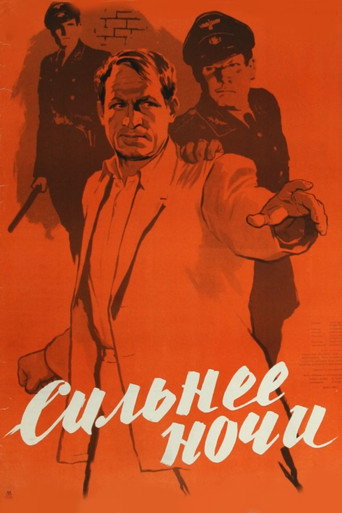
Stronger Than the Night
The story of a resistance fighter in the Nazi era: Communist Hans Löning was arrested in 1933, imprisoned in a concentration camp and tortured. The Gestapo plans to smash the resistance group around Löning. Despite the imminent threat to his life, Löning, together with his wife, organized the passive resistance of the Hamburg workers against the Hitler regime. In 1944, Löning was again taken and killed.

The Captain from Cologne
Albert Hauptmann is an out of work waiter in Cologne who is often confused with a former Captain of the Nazi Army. Albert uses this to his advantage and becomes the Director of the Montan Corporation, and a member of the West German Parliament. Herr Karjanke, the real Captain, learns of Albert’s ruse, and wants to claim his "rightful" position in Parliament. But Karjanke cannot come forward until his politicking "Doppelganger" succeeds in passing an amnesty law for war criminals. When Albert is finally brought before a judge on charges of fraud, he learns that this own amnesty law does not apply to him.
Es steht der Wald so schweigend
The young forester Rudolf is released from a mental hospital after suffering from a mental illness. His widowed mother accompanies the taciturn son to a vicarage where he is supposed to recover. There he meets the pastor's daughter Anna, with whom he immediately falls in love, and the two decide to get married. His mother is critical of the marriage and demands that her son conceal his stay in the "lunatic asylum" from his wife. This secret overshadows the young couple's relationship from the very beginning, and the burden of silence finally makes Rudolf want to take his own life. Only at the last minute is Anna able to save him from this stupidity.
Gallery