Directing
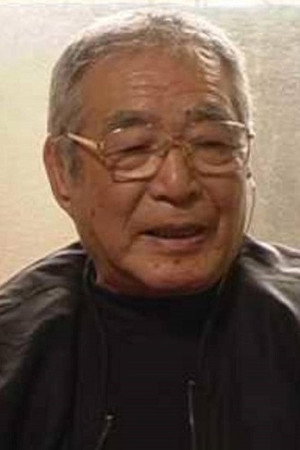
Film director, screenwriter, and producer. Especially prolific as a director of pinku-eiga with well over 200 credits to his name.
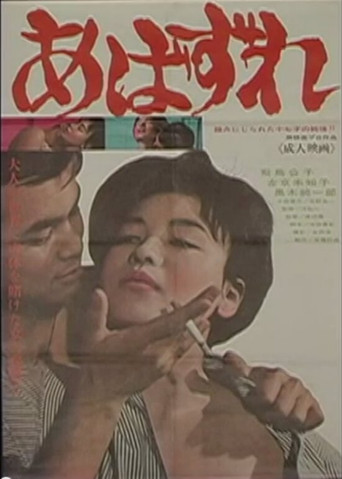
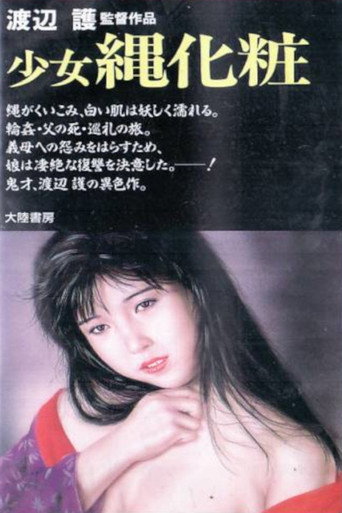
16-year-old Tachiko (Kimiko Asuka) discovers the true nature of her father's wife, Fumie (Michiko Sakyo), who is after the fortune of the company president, Gozo (Keisuke Senda), and recommends divorce to him, but she is kidnapped and her virginity is stolen by Hayata (Ryoichi Amano) who is colluding with Fumie. After the funeral for her father, who committed suicide out of pity for his daughter, Tachiko disappears.
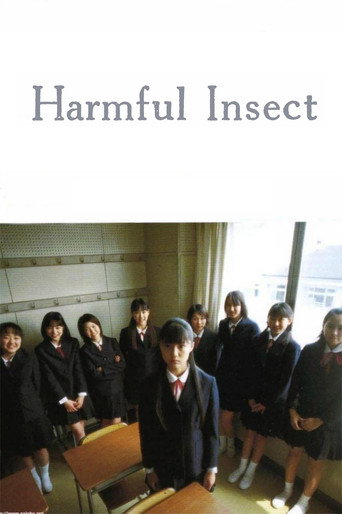
13-year-old Sachiko is about to encounter the most difficult moments in her young life. Her father abandons her and her mother attempts to commit suicide by slashing her wrist. Her teacher, whom she relies on heavily, leaves for northern Japan to take another job. Other students start to gossip about Sachiko and her former teacher. Sachiko then drops out of school and attempts to find herself.
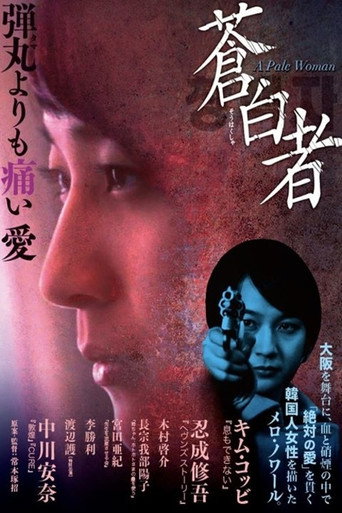
In order to be with the man she loves, Kim goes back to Japan from Korea. The man saved Kim from darkness, when she was little. But he was raised by Kim's mother under the dark world. Now, he is involved in the criminal world. To protect her love, Kim makes a dangerous plan to get the man from her mother.
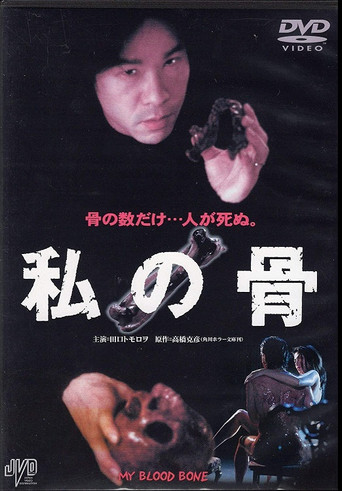
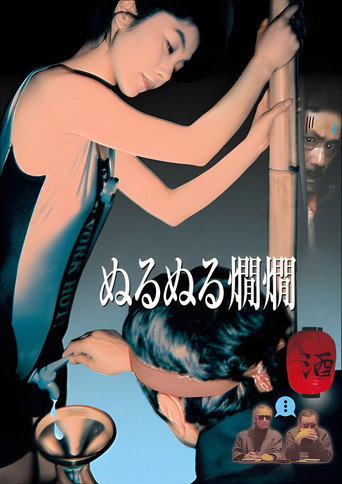
The best must be the freshest. The best sake also follows the same principle to brew in which it needs the best and freshest raw materials, and also the freshest virgin to make it? Visiting one of a Japanese pub that seems to offer the best warm sake, Mononobe tries to follow the steps to reproduce the same flavor. However, he suddenly found out that those flavors are actually a combination of sake, sweat, and other bodily secretions of a virgin. As his only daughter is not a virgin anymore, the only way to make the best sake without a pure virgin is...
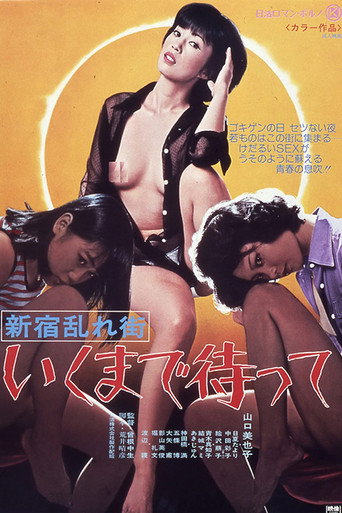
A young couple with artistic tendencies spends their time around a bar in central Shinjuku, trying to figure out their relationship and life aspirations.
Documentary filmmaker Kenjiro Fujii takes a look at the history of a distinctly Japanese brand of softcore pornography in this extensive examination of the "pinku eiga" genre (ピンク映画 Pinku eiga or Pinkeiga). For more than 40 years, so-called "pink" films have served as both a key source of revenue for the Japanese film industry as well as a launching pad for the careers of such mainstream filmmakers as Kiyoshi Kurosawa. After providing a detailed history of the still-profitable and popular genre through interviews with a variety of behind-the-scenes players and clips from such classic pink films as Fish Bait Boobies, director Fujii shifts his focus to the production of an upcoming pink film to offer a glimpse into the creative and stylistic evolution of the genre.
A salesman who is double-married ends up having to marry another woman through an unexpected turn of events...
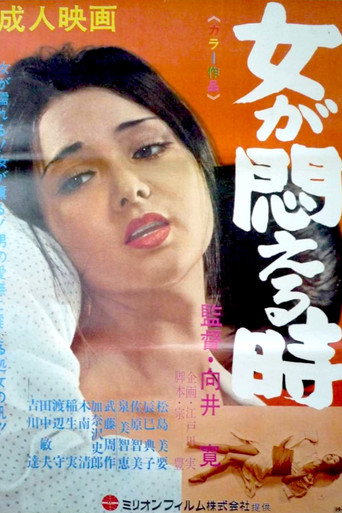
Pink film directed by Kan Mukai.
A tale of photo shoots, hypnosis, and pseudo-documentary sex on a stage.
A teacher sets out to instruct a young high school girl in what should be an ordinary lesson. Yet when this gal turns out to be an outrageously vivacious, modern-day bombshell, even the simplest classroom routine spirals into a wildly scandalous and forbidden affair. This brazen young student, who deceives her parents and nonchalantly crashes at his home, exudes an almost deliberately provocative and irresistible charm. Although the teacher is a married man, his attempts at reprimand falter under her irresistible sexual features. Could it be that this fiercely free-spirited high schooler—living purely for the thrill of fun ends up transforming her mentor, taking him on an unexpected, sizzling journey into uncharted realms of temptation and forbidden desire?
Pink film from 1979
Pinku from 1965.
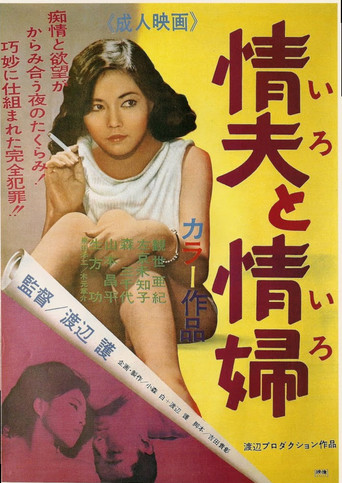
A woman joins with an insurance clerk in trying to kill her husband and thus secure a big insurance pay-out.
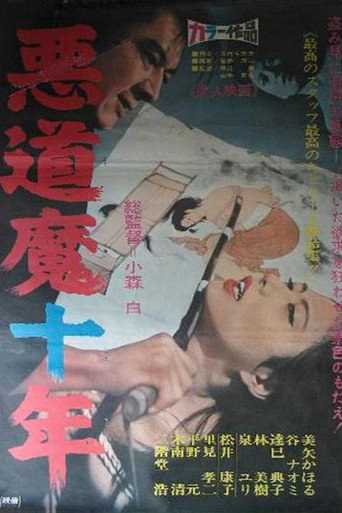
A young bonze who has been deceived by a woman becomes a pornographic painter. He proceeds to tie up his models, rape them and kill them.
Pinku from 1969.
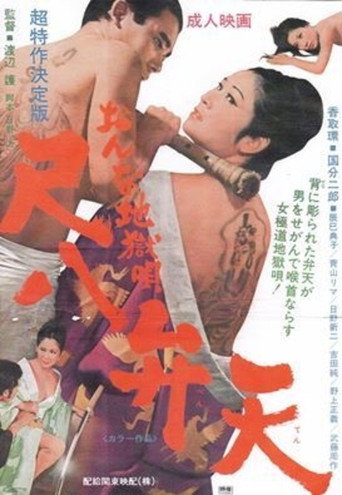
The roaming outlaw Okayo, also known as Benten due to the prominent tattoo of the Buddhist Goddess of Love emblazoned across her back. On the run from her persecutors, who seek to claim the tattoo and its skin canvas as a bounty, Okayo finds a safe haven in the arms of the mysterious shakuhachi (bamboo flute) playing Seigaku, himself tattooed with the image of Kisshoten, the Goddess of Prosperity.