Lynne Sachs Movies, TV Shows, and Filmography
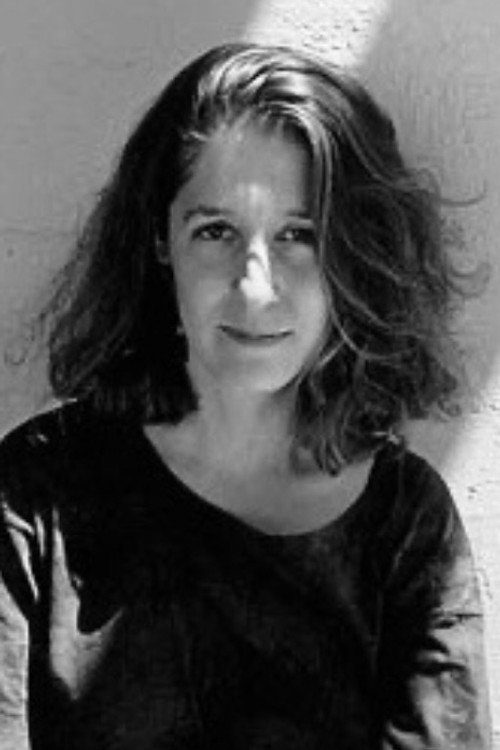
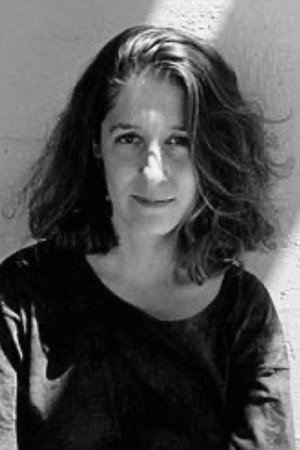
Lynne Sachs
Directing
Biography
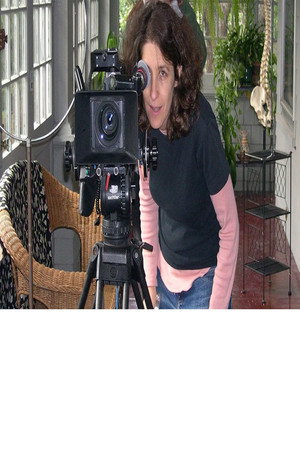
Lynne Sachs makes films, performances, installations and web projects that explore the intricate relationship between personal observations and broader historical experiences by weaving together poetry, collage, painting, politics and layered sound design. Since 1994, her five essay films have taken her to Vietnam, Bosnia, Israel and Germany — sites affected by international war–where she tries to work in the space between a community’s collective memory and her own subjective perceptions. Strongly committed to a dialogue between cinematic theory and practice, Lynne searches for a rigorous play between image and sound, pushing the visual and aural textures in her work with each and every new project. Since 2006, she has collaborated with her partner Mark Street in a series of playful, mixed-media performance collaborations they call The XY Chromosome Project. In addition to her work with the moving image, Lynne co-edited the Millennium Film Journal issue on “Experiments in Documentary”. Supported by fellowships from the Guggenheim, Rockefeller and Jerome Foundations and the New York State Council on the Arts, Lynne’s films have screened at the New York Film Festival, the Sundance Film Festival and Toronto’s Images Festival as well as a five-film survey at the Buenos Aires Film Festival. The San Francisco Cinematheque recently published a monograph with four original essays in conjunction with a full retrospective of Lynne’s work. In 2012, Lynne began a series of live film performances of Your Day is My Night at St. Nick’s Alliance in Greenpoint, at Proteus Gowanus in Brooklyn, at Maysles Cinema and at the University Settlement. She then screened the completed hour-long hybrid video at the Museum of Modern Art, the Vancouver Film Fest, Union Docs, the New Orleans Film Fest and other venues in Mexico, Argentina and Ecuador. Lynne teaches experimental film and video at New York University and The New School and lives in Brooklyn.
Filmography Movies
Acting
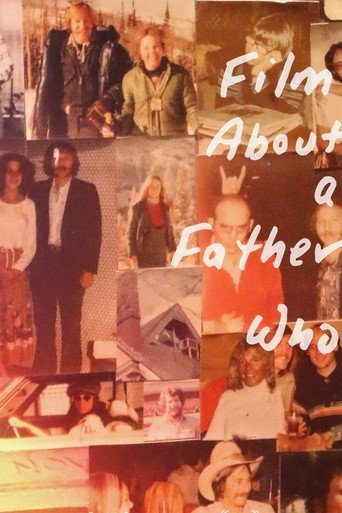
Film About a Father Who
From 1984 to 2019, Lynne Sachs shot film of her father, a bon vivant and pioneering businessman. This documentary is her attempt to understand the web that connects a child to her parent and a sister to her siblings. As the startling facts mount, Sachs as a daughter discovers more about her father than she had ever hoped to reveal.
Film Hawk
What do filmmakers as disparate as Kevin Smith, Ed Burns, Rob Epstein, and Barbara Hammer have in common? A secret weapon known as Bob Hawk. As a veteran of the American independent film scene since its inception, the cinephile and consultant has been a regular, cherished presence at film festivals and markets for over three decades. Hawk saw promise in scrappy, independently produced films like Clerks and The Brothers McMullen when no one else even knew to look, and he brought these films to the attention of the Sundance Film Festival, thereby launching multiple careers in the process. An unsung champion of new voices, he has discovered innovative work, nurtured new talents, and brokered relationships with film festivals and critics alike, while staying out of the spotlight—until now. At 75, Bob Hawk looks back on a still-vibrant life in independent film, exploring how the rebellious gay son of a preacher found his calling as a behind-the-scenes film impresario.
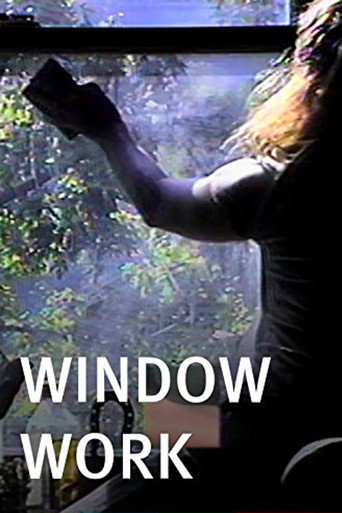
Window Work
A woman drinks tea, washes a window, reads the paper: simple tasks that somehow suggest a kind of quiet mystery within and beyond the image. Sometimes one hears the rhythmic, pulsing symphony of crickets in a Baltimore summer night. Other times jangling toys dissolve into the roar of a jet overhead, or children tremble at the sound of thunder. These disparate sounds dislocate the space temporally and physically from the restrictions of reality. The small home-movie boxes within the larger screen are gestural forms of memory, clues to childhood, mnemonic devices that expand on the sense of immediacy in her “drama.” These miniature image-objects represent snippets of an even earlier media technology: film. In contrast to the real time video image, they feel fleeting, ephemeral, imprecise.
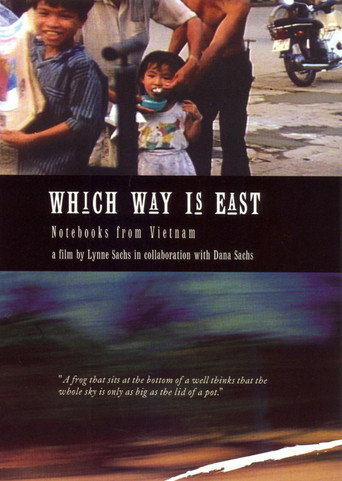
Which Way Is East: Notebooks from Vietnam
In this illuminating study of cultural contrasts, American filmmaker Lynne Sachs and her sister, Dana, travel north from Ho Chi Minh City to Hanoi, recording conversations with Vietnamese strangers and friends. The sisters' expansive travel diary covers tourism, insights into city life, pervasive culture clashes and a bracing historic inquiry. What begins as a picaresque road trip soon blossoms into a richer social and political discourse.
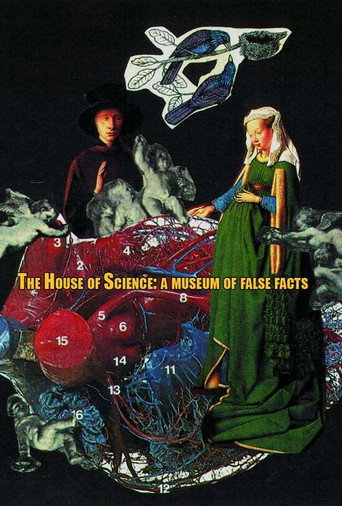
The House of Science: A Museum of False Facts
The winner of numerous festival prizes, this early work by Lynne Sachs is a provocative film essay on women's perspectives on their bodies in a "man's world." It touches on everything from the female form's depiction in Renaissance art to the school of 19th century "scientific" thought equating "abnormal" physiognomy with criminality. This adventurous collage also features the filmmaker's own diaristic recollections (notably of being fitted for a diaphragm by a cold, intimidating doctor), poetical staged sequences, other women's audio testimonies, an old classroom instructional reel about menstruation, prose by Gertrude Stein and feminine "ideals" like the undulating young woman performing in fish-tail costumes at Florida's kitschy Weeki-Wachee Springs "Underwater Mermaid Theater." - Dennis Harvey
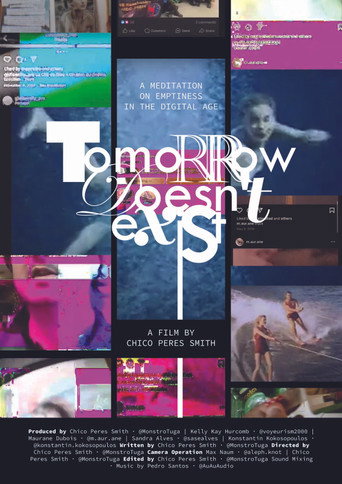
Tomorrow Doesn't Exist
An experimental exploration of modern life’s emptiness, examining how the spectacle, the death of community, and the rise of individualism have reshaped our world.
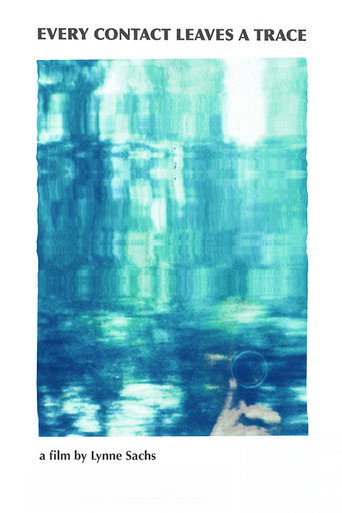
Every Contact Leaves a Trace
Since 1990, filmmaker Lynne Sachs has collected 600 business cards—from a hairdresser, a therapist, a textile artist. Together they form an archive of encounters.
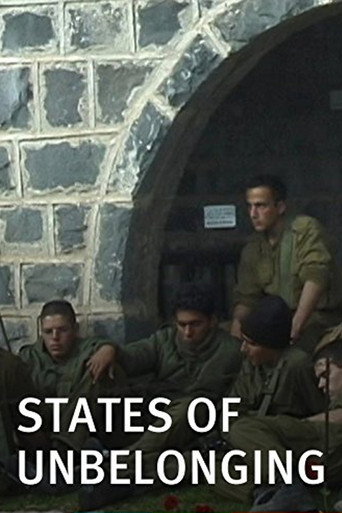
States of UnBelonging
The core of this haunting meditation on war, land, the Bible, and filmmaking is a portrait of Revital Ohayon, an Israeli filmmaker and mother killed near the West Bank. Director Lynne Sachs creates a film on the violence of the Middle East by exchanging letters with an Israeli friend. Together, they reveal Revital's story through her films, news reports, and interviews, culminating in heartbreaking footage of children discussing the violence they've witnessed. Without taking sides or casting blame, the film becomes a cine-essay on fear and filmmaking, tragedy and transformation, violence and the land of Israel/Palestine.
Production
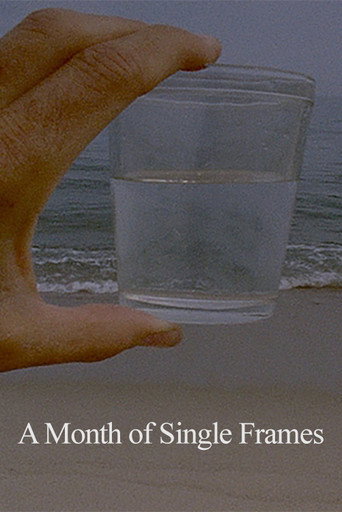
A Month of Single Frames
In 1998, filmmaker Barbara Hammer had a one-month artist residency in the C Scape Duneshack which is run by the Provincetown Community Compact in Cape Cod, Massachusetts. The shack had no running water or electricity. While there, she shot 16mm film with her Beaulieu camera, recorded sounds with her cassette recorder and kept a journal. In 2018, Barbara began her own process of dying by revisiting her personal archive. She gave all of her Duneshack images, sounds and writing to filmmaker Lynne Sachs and invited her to make a film with the material.
A Month of Single Frames
In 1998, filmmaker Barbara Hammer had a one-month artist residency in the C Scape Duneshack which is run by the Provincetown Community Compact in Cape Cod, Massachusetts. The shack had no running water or electricity. While there, she shot 16mm film with her Beaulieu camera, recorded sounds with her cassette recorder and kept a journal. In 2018, Barbara began her own process of dying by revisiting her personal archive. She gave all of her Duneshack images, sounds and writing to filmmaker Lynne Sachs and invited her to make a film with the material.
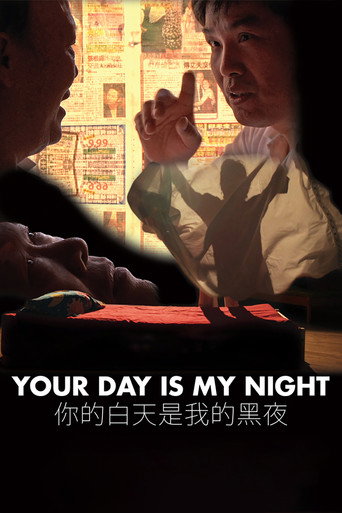
Your Day Is My Night
Immigrant residents of a “shift-bed” apartment in the heart of New York City’s Chinatown share their stories of personal and political upheaval. As the bed transforms into a stage, the film reveals the collective history of the Chinese in the United States through conversations, autobiographical monologues, and theatrical movement pieces. Shot in the kitchens, bedrooms, wedding halls, cafés, and mahjong parlors of Chinatown, this provocative hybrid documentary addresses issues of privacy, intimacy, and urban life.
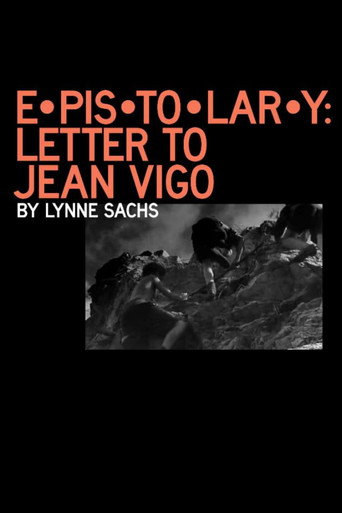
E•pis•to•lar•y: letter to Jean Vigo
In a cinema letter to Jean Vigo, Lynne Sachs ponders the French filmmaker’s 1933 classic Zéro de conduite, in which school boys wage an anarchist rebellion against their authoritarian teachers. Thinking about the January 6, 2021 assault on the US Capitol by right-wing activists, Sachs wonders how both innocent play and calculated protest can quickly turn into chaos and violence.
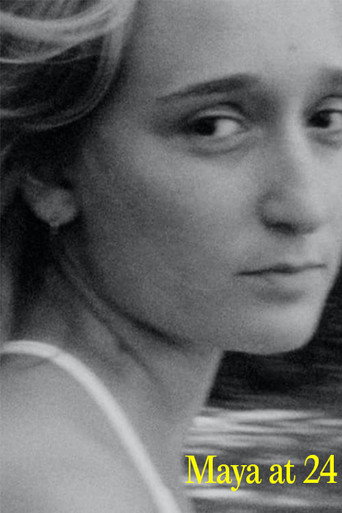
Maya at 24
Lynne Sachs films her daughter Maya in 16mm black and white film, at ages 6, 16 and 24. At each iteration, Maya runs around her mother, in a circle – clockwise – as if propelling herself in the same direction as time, forward. Conscious of the strange simultaneous temporal landscape that only film can convey, we watch Maya in motion at each distinct age.
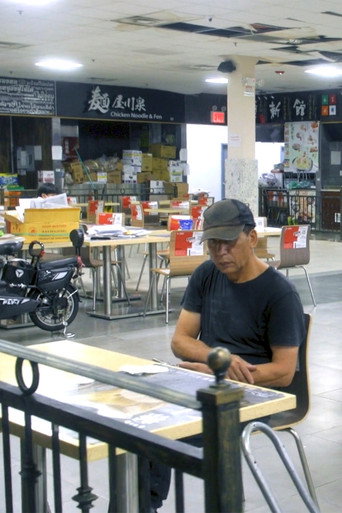
Swerve
A food market and playground in Queens, NY becomes the site for this film inspired by Paolo Javier’s Original Brown Boy poems. The film itself transforms into an ars poetica/cinematica—a meditation on writing and making images in the liminal space between a global pandemic and what might come next—as five New York City performers speak in verse while wandering through food stalls in search of a new sensation.
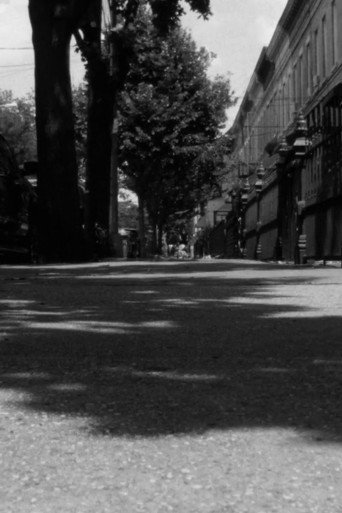
Visit to Bernadette Mayer’s Childhood Home
In July 1971, avant-garde writer and language poet Bernadette Mayer produced Memory, a multimedia project in which she shot one roll of 35mm film each day and kept a daily journal. In honor of the project’s compilation and release as a book, Lynne Sachs embarks on a study of the memory and language of place. Journeying to Mayer’s childhood home in the Ridgewood neighborhood of Queens, Sachs pays homage to Mayer in a collage of architecture, light, and rhythm.
The Last Happy Day
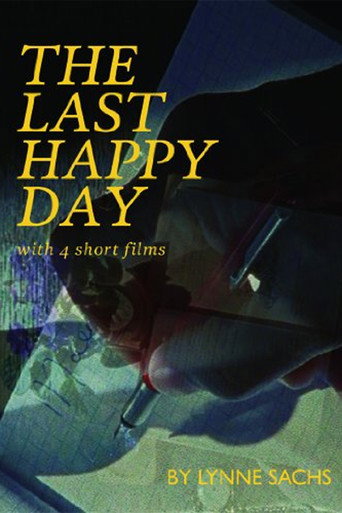
THE LAST HAPPY DAY is an experimental documentary portrait of Sandor (Alexander) Lenard, a Hungarian medical doctor and a distant cousin of filmmaker Lynne Sachs. In 1938 Lenard, a writer with a Jewish background, fled the Nazis to a safe haven in Rome. Shortly thereafter, the U.S. Army Graves Registration Service hired Lenard to reconstruct the bones, small and large, of dead American soldiers. Eventually he found himself in remotest Brazil where he embarked on the translation of “Winnie the Pooh” into Latin, an eccentric task that catapulted him to brief world-wide fame. Sachs’ essay film uses personal letters, abstracted war imagery, home movies, interviews and a children’s performance to create an intimate meditation on the destructive power of war.
The Last Happy Day
THE LAST HAPPY DAY is an experimental documentary portrait of Sandor (Alexander) Lenard, a Hungarian medical doctor and a distant cousin of filmmaker Lynne Sachs. In 1938 Lenard, a writer with a Jewish background, fled the Nazis to a safe haven in Rome. Shortly thereafter, the U.S. Army Graves Registration Service hired Lenard to reconstruct the bones, small and large, of dead American soldiers. Eventually he found himself in remotest Brazil where he embarked on the translation of “Winnie the Pooh” into Latin, an eccentric task that catapulted him to brief world-wide fame. Sachs’ essay film uses personal letters, abstracted war imagery, home movies, interviews and a children’s performance to create an intimate meditation on the destructive power of war.
Girl Is Presence
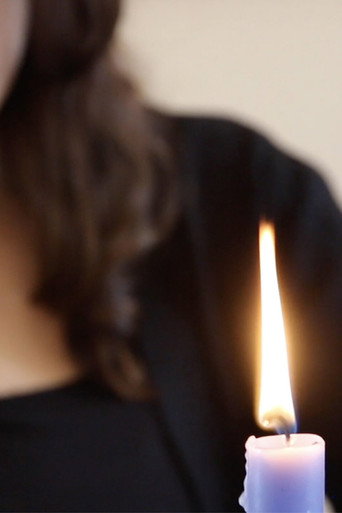
During the 2020 global pandemic, filmmaker Lynne Sachs and her daughter Noa collaborated with Anne Lesley Selcer to create Girl is Presence. The work is a form of reading and listening in response to disquieting words from Selcer’s poem “Sun Cycle.” The film’s disparate objects reflect a disharmonious and tense list of voiced nouns. The poem’s original tone, contextualized by a book that deals with gender and power, takes on an expanded sense here. Against the uncertain and anxious pandemic atmosphere, inside domestic space, the “girl” arranges and rearranges a collection of small and mysterious things. Commissioned by Small Press Traffic for Bay Area Shorts during the national shelter-in-place order caused by the Coronavirus Pandemic of 2020.
Gallery