Louise Forestier Movies, TV Shows, and Filmography

Louise Forestier
Acting
Biography
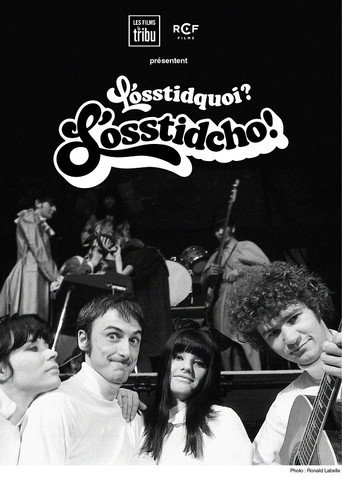
Louise Forestier (born Louise Belhumeur on August 10, 1942) is a Canadian singer, songwriter and actress. Born in Shawinigan, Quebec, Canada, Forestier was trained in acting at the National Theatre School in Montreal, but it was as a singer that she first became known in 1966, when she received the Renée Claude Trophy from Le Patriote, a boîte à chansons in east-end Montreal, and was named Discovery of the Year on the Radio-Canada TV program Jeunesse Oblige. In 1968 she was part of the extraordinarily successful revue L'Osstidcho, followed the next year by L'Osstidchomeurt with Robert Charlebois, Yvon Deschamps and Mouffe. She and Charlebois recorded the landmark song "Lindberg'" and toured France in 1969. In April 1970 Forestier starred in the Michel Tremblay, François Dompierre musical, Demain matin Montréal m'attend. She continued with acting, appearing in Jacques Godbout's 1972 film IXE-13, singing on the original film score. Forestier topped the Quebec charts in 1973 with a version of the folk song "La Prison de Londres", performed with guitarist Claude Lafrance, and pianist Jacques Perron. With this song Forestier started to turn away from the hard rock of her early career to a repertoire largely inspired by Quebec folk music, and to a more personal style, which she continued through the 1970s. In 1980 Forestier played Marie-Jeanne, the robot waitress in the Montreal production Luc Plamondon, Michel Berger rock opera Starmania. Two years later, with Plamondon as producer, she staged the hit show Je suis au rendez-vous. This was the first of a series of shows in the 1980s, culminating in an appearance with Belgian singer Maurane as part of the Francofolies de Montréal in 1989. In 1990 she appeared at the Place-des-Arts in Montreal as Émilie Nelligan, the mother of the poet in the romantic opera Nelligan by Michel Tremblay and André Gagnon. Forestier defended Yann Martel's novel Histoire de Pi in the French version of Canada Reads, which was broadcast on Radio-Canada in 2004. In March 2019, she was one of 11 singers from Quebec, alongside Ginette Reno, Diane Dufresne, Céline Dion, Isabelle Boulay, Luce Dufault, Laurence Jalbert, Catherine Major, Ariane Moffatt, Marie Denise Pelletier and Marie-Élaine Thibert, who participated in a supergroup recording of Renée Claude's 1971 single "Tu trouveras la paix" after Claude's diagnosis with Alzheimer's disease was announced. Source: Article "Louise Forestier" from Wikipedia in English, licensed under CC-BY-SA 3.0.
Filmography Movies
Acting

Orders
A fact-based account of ordinary citizens who found themselves arrested and imprisoned without charge for weeks during the October Crisis in 1970 Quebec.

Dying Alive
Montreal, a multigenerational house loaded with books, paintings and knick-knacks, so many memories revived on the evening of one last Christmas Eve. Luc, a retired pediatrician and teacher in his eighties, lives with his son François, a pediatrician like his father, and François' wife Esther. Suffering and physically diminished, the old man has now decided to end his life. In a corrosive and sensitive verbal joust, he asks his son to end his days in privacy. The son then takes him on an existential and circus-like journey through the streets of Montreal where the father is supposed to go to his final destination, a hospital where he will be confronted with his ultimate wish: the choice between the finality of medical aid to die or a return to square one, the small pleasures of what remains of his life, alive.

Backyard Theatre
Backyard Theatre is a documentary about playwright Michel Tremblay and director André Brassard’s flavourful brand of Quebec theatre, which captured the earthy wit and joual (slang) of Montreal's East End working-class neighbourhood. The film features impromptu improvisation by the cast of Les belles-soeurs and Demain matin, Montréal m'attend, two genre-defining plays.

IXE-13
A first-rate French-Canadian spy must tangle with a female Chinese spy who is in love with him.
Ti-Cul Tougas, ou, Le bout de la vie
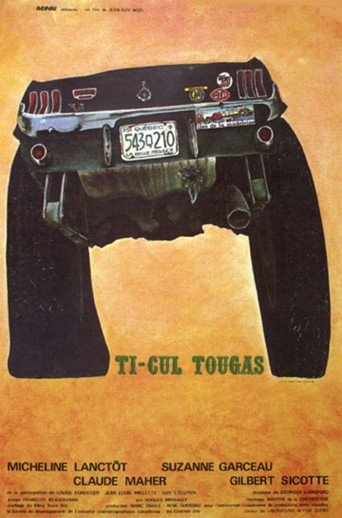
In this Canadian character study, a petty thief steals $5,000 from a marching band and heads to the US with his ditzy girl friend and another couple.

2 Seconds
Laurie, a professional downhill racer gets fired because of her slight overindulgence in irresponsibility. She returns to Montreal where she is welcomed by her geeky but cute brother. She meets Lorenzo, a cranky, ex-racer who owns a bike shop. The two become friends. Laurie gets a job with a local bicycle courier company, but a member of the group is intent on shutting her out of their circles, making her life difficult and sad. After a bonding truth-revealing discussion between Laurie and Lorenzo, Laurie begins to see what she has to do to make things better for herself.

The Postmistress
In 1935, in a Quebec village, a boy observes with curiosity the little intrigues of the adult world.

Angel Life
Two strangers have a fateful one-night stand in Montréal.

Hold on to Daddy's Ears
The tribulations of two Québec nationalists in the English-speaking world of insurance. A satire that draws its irony from a specific social situation. A typical example of the era's popular comedies based on television and trendy stars, which gave birth to a certain commercial stream in Québec cinema.
Gallery