Leandro Listorti Movies, TV Shows, and Filmography
Leandro Listorti
Directing
Biography
No biography available.
Filmography Movies
Acting
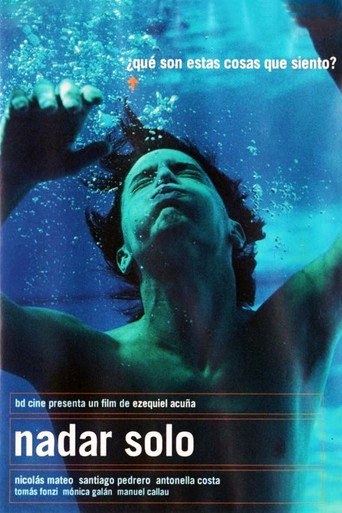
Swim Alone
The film does not describe, rather it observes, in a distant manner, the world of Martin, a seventeen year old who feels he doesn’t belong anywhere, not at home, school, nor with his friends or members of his rock band. In search of some happiness, Martin takes off to the coastal town of Mar de Plata, where his older brother lives. Unglamorous, yet enchantingly addictive and refreshingly genuine, Acuña paints a confused and uncomfortable world, and makes us want revisit it over and over again.
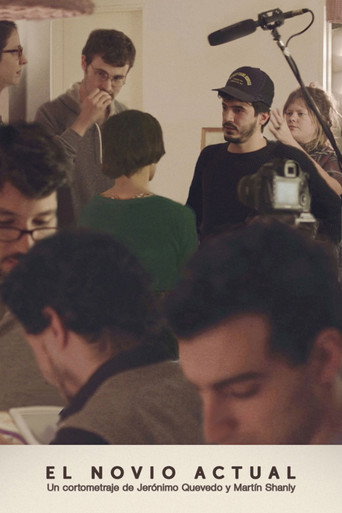
El novio actual
A filmmaker meets her ex-boyfriend, who plays a role in her new film, in which the authenticity or falsity of a kiss in a gay scene is debated, with backstage included. Metacine or metagay? Gay cinema within cinema or cinema within gay cinema, variations of a daedalus of representations. "The current boyfriend" feeds on lateral humor, on the political of desire as a talk in the kitchen, on the flicker-free observation of who we are and what we pretend to be, as a nucleus that is reinterpreted with always different gestures, once as drama and another like comedy, almost without knowing which is appropriate.
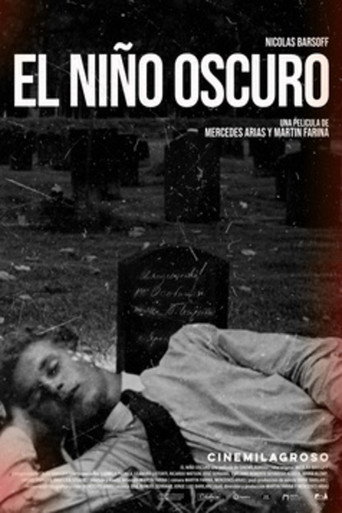
El niño oscuro
Nicolás Barsoff, a young Argentine actor of Austrian and Russian descent, rescues a box of film reels just as his father was about to throw it away. He hopes the box will be the key to unlocking a tendency toward darkness that haunts him as part of an inevitable inheritance he tries to combat with natural medicines. Through the archive, we delve into the story of a family torn apart by World Wars I and II, immigration to Argentina, and the military dictatorship of 1976. His two grandparents are presented as antagonistic characters in the context of the disappearance: two ghostly figures in a genealogy that Nicolás will try to reconstruct.
Production
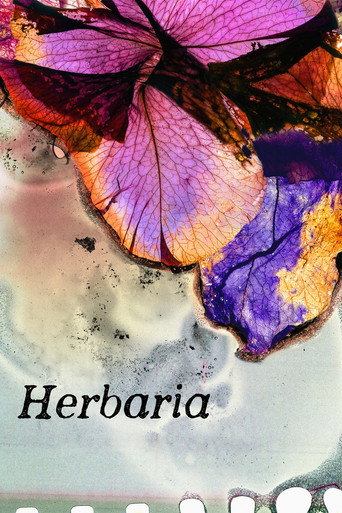
Herbaria
In his second feature film, Leandro Listorti establishes a parallel between two worlds he seems to know well: that of plants and that of cinema. This delicate cinematographic work, full of beautiful images—both archival and current—gives an account of the immense work of classification and preservation, and generously invites us to think about forms of representation and memory.
Herbaria
In his second feature film, Leandro Listorti establishes a parallel between two worlds he seems to know well: that of plants and that of cinema. This delicate cinematographic work, full of beautiful images—both archival and current—gives an account of the immense work of classification and preservation, and generously invites us to think about forms of representation and memory.
Herbaria
In his second feature film, Leandro Listorti establishes a parallel between two worlds he seems to know well: that of plants and that of cinema. This delicate cinematographic work, full of beautiful images—both archival and current—gives an account of the immense work of classification and preservation, and generously invites us to think about forms of representation and memory.
Herbaria
In his second feature film, Leandro Listorti establishes a parallel between two worlds he seems to know well: that of plants and that of cinema. This delicate cinematographic work, full of beautiful images—both archival and current—gives an account of the immense work of classification and preservation, and generously invites us to think about forms of representation and memory.
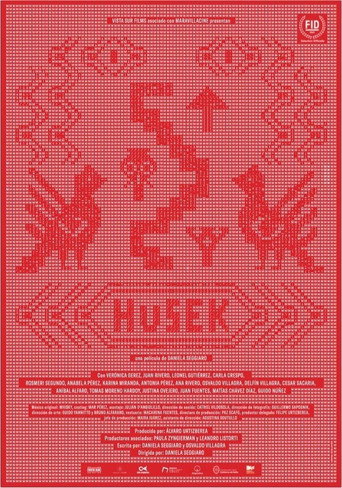
Husek
Set in Santa Victoria, Argentina, this 2SLGBTQ+ supernatural docu-drama tells the story of a Wichí community facing displacement, along with their efforts of retaliation, at the hands of a negligent government’s plan for urbanization.
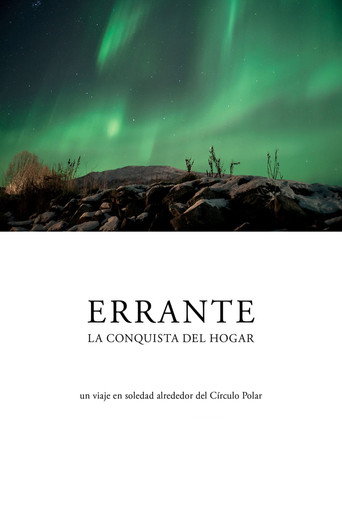
Wanderer. The Conquest of Home
Between January 2019 and May 2020, Adriana Lestido undertook a journey, without company or assistance, through the Arctic Circle and the Svalbard Islands, a frigid and inhospitable region shared by Norway and Iceland. During those months, Argentine photography recorded, in all its splendor, a still unknown ecosystem.
Wanderer. The Conquest of Home
Between January 2019 and May 2020, Adriana Lestido undertook a journey, without company or assistance, through the Arctic Circle and the Svalbard Islands, a frigid and inhospitable region shared by Norway and Iceland. During those months, Argentine photography recorded, in all its splendor, a still unknown ecosystem.
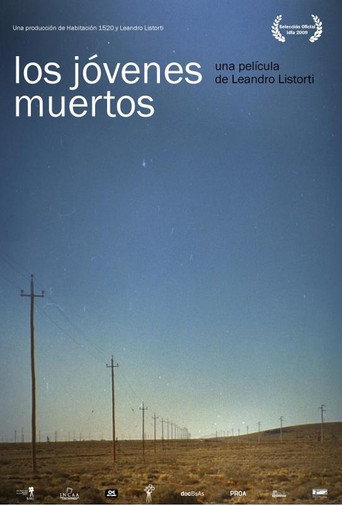
Dead Youth
Since the end of the 90’s, more than thirty teenagers have taken their own lives in Las Heras, a southern town in the province of Santa Cruz. There were no indications of the causes for these suicides, and no one can explain what happened. Based on those deaths, and others that still occur today, this film evokes those existences, trying to examine the emptiness and the mystery that surrounded their lives and deaths.
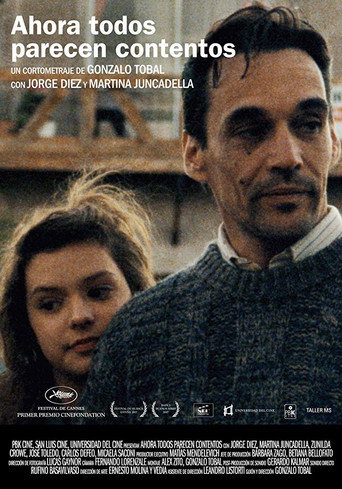
Ahora todos parecen contentos
A 43-year-old teacher and his 14-year-old student embark on a forbidden trip.
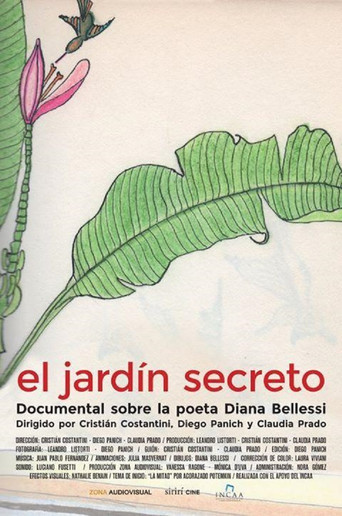
El Jardín Secreto
As a young woman, Diana Bellessi wanted to travel. When few women walked the road alone, she hitchhiked the continent. A poet searching for the lands promised by her childhood books. Over time, she discovered that going somewhere very close could be as intense an adventure as those trips. The secret garden accompanies the poet on the journey that she makes every end of the year, from Buenos Aires to an island in Paraná. There, surrounded by the nature of the delta - in that place where the garden of the house merges with the mountain - is the place where she writes. "Writing is also a vertigo - she says while, with buckets, she removes the mud left by the flood -. But the beautiful thing is to have the vertigo and the return. Writing pushed me far and out, and brought me back."
Gallery