Lawrence Jordan Movies, TV Shows, and Filmography
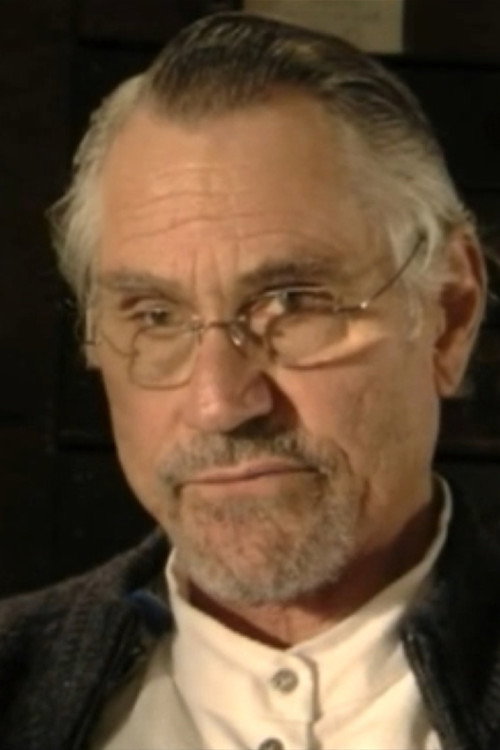
Lawrence Jordan
Directing
Biography
Known principally as a maverick spirit in the world of avant-garde American cinema, Lawrence Jordan played an important role in the late 1950s and early 1960s San Francisco art scene. Jordan has made over seventy experimental films, including a number of fanciful, filmic animations made from collaged cut outs of Victorian engravings. The animations extend dreamlike imagery of collaged landscape into a cinematic realm of transformation and free form symbolism. Jordan seeks to delve into the deep structures and Jungian connotations of the mythological images his films reference. His alchemical approach to imagery creates what he has called the “theater of the mind, which you construct. That is the Underworld... the realm of the imagination. You have to have a place to work with images.” Jordan founded the film department of the San Francisco Art institute in 1969 and taught there for over thirty years. He made his own box assemblages in Cornell ’s lyrically evocative style since the mid-1960s. Many feature ingenious mechanical and kinetic effects. He continues to make films and box collages at his home and studio in Petaluma where he has lived since 1978.
Filmography Movies
Acting
Cornell, 1965
Lawrence Jordan's portrait of the reclusive artist Joseph Cornell.
Unglassed Windows Cast a Terrible Reflection
An anatomy of violence. Four young men and two young women are on a drive. There's a rivalry between two guys for one of the girls. On a remote road, the car stalls. The driver hitchhikes for help. Led by the intrepid girl, the others walk toward abandoned buildings, perhaps a mining operation. One of the three guys sits and reads. The intrepid one explores the building and sees something that scares her. She screams; the two rivals and the second girl run to find her. Something she says starts a fight between her two suitors. The one reading a book walks away in disgust. After stopping the fight, the two young women follow. How can this end? Preserved by the Academy Film Archive in 2005.
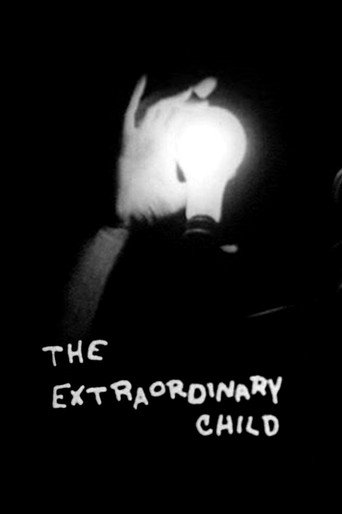
The Extraordinary Child
The Extraordinary Child applies his developing style to broad slapstick. His friends from the previous films and the director himself play out a riotous farce about an overgrown baby who steals his father’s cigars. Everyone mugs hilariously. The movie could be taken as another example of the Romantic notion of the artist as a monstrous child or misfit, or a parody of the same rather than the personal confessional statement seen so often in these film movements.

Desistfilm
Four young men and a young woman sit in boredom. She smokes while one strums a lute, one looks at a magazine, and two fiddle with string. The door opens and in comes a young man, cigarette between his lips, a swagger on his face. The young woman laughs. As the four young men continue disconnected activities, the other two become a couple. When the four realize something has changed, first they stare at the couple who have kissed and now are dancing slowly. The four run from the house in a kind of frenzy and return to stare. The power of sex has unnerved them.

Tapestry
TAPESTRY, part of Lawrence Jordan's "Odyssey" triptych and filmed much later in Jordan's life, is a charged record of his bachelor life after marriage and child-rearing.
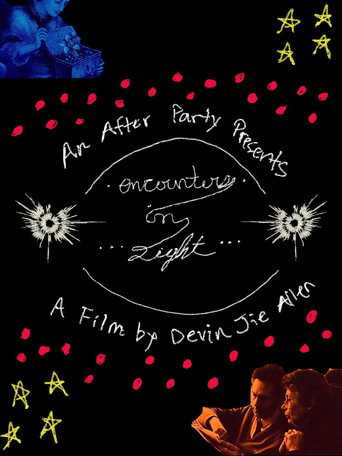
Encounters in Light
Encounters in Light is the poetic documentation of two artists, friends, and lovers. The film eschews any biographical structure and instead looks at the ways these two artists are bound by time and light. Lawrence Jordan and Joanna McClure have extensive bodies of work between them. The film interweaves Joanna’s poetry, Lawrence’s films, personal interviews, and emotive imagery to produce a sensory engagement with a long lasting friendship and artistic practice. An understanding of mortality is ever present and the film let’s that feeling permeate throughout. How does one relate to years of love, friendship, and art? How does it resonate in the present moment? In the film, there is a sense of boundlessness and understanding that indeed, time dissolves all boundaries until there is only the possibility of light.
Untitled Film of Geoffrey Holder's Wedding
Wedding gift from Maya Deren to Geoffrey Holder; Stan Brakhage and Larry Jordan made film of wedding at Maya Deren’s invitation, told to be “as free as possible”
Production
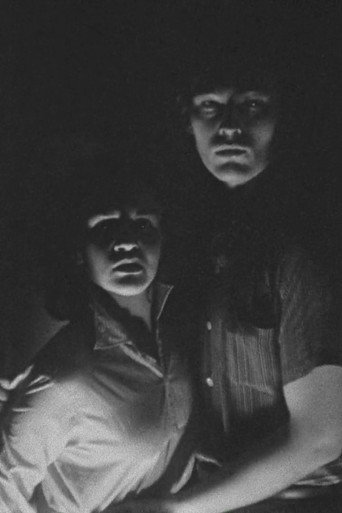
Three
In the rarely-seen THREE, one begat three became two and then one again.
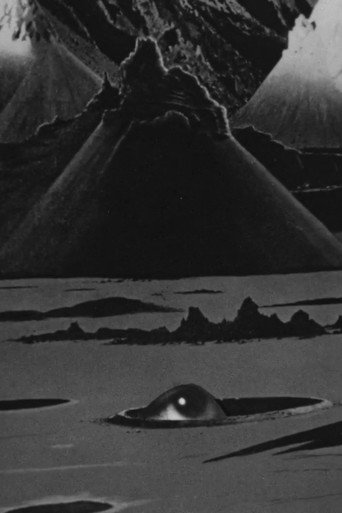
Minerva Looks Out into the Zodiac
From a central pivotal position, the camera eye (in this case, the hard and inflexible eye of Minerva) looks out upon twelve passing scenes. None of the scenes are necessarily associated with specific signs of the Zodiac. Lawrence Jordan instead assembled twelve of his collages and passed them in review before the deity (who, as he has noted, never revealed her pleasure or displeasure with these images). The filmmaker underscored the mood of each scene with a short passage of music. One might say that theses scenes are not meant to convey particular meanings to a viewer but are intended to represent various entrances or, as the Egyptians called them, hidden or false doors to the siprit world, the world of the dead, the Underworld, the Bardo or, simply, another plan of reality: verities of the soul in Symbolist terms.
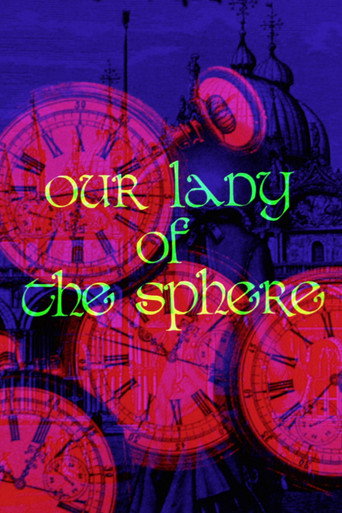
Our Lady of the Sphere
Animation using cutout animation to craft a bizarre science fiction experiment. Moving spheres, such as balloons and bubbles, are superimposed on static backgrounds to suggest travel and discovery.

The Ogre's Garden
This short piece is somewhat romantic, despite its title. We do see the ogre however. He inverts himself into the action throughout the film. As usual, the action is partly symbolic, partly surreal.
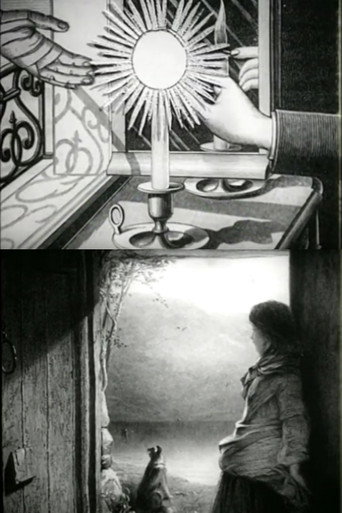
Duo Concertantes
Jordan’s imagery is exquisite and eloquent, concentrating on simple, repeated use of particularly poetic symbols and figures, a conglomerative effect of old Gustave Dore drawings, 19th century whatnot memorabilia, all fused to a totally aware perception. —Lita Eliseu, East Village Other
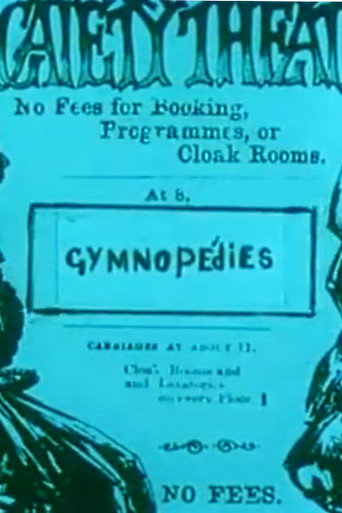
Gymnopédies
Animation. The theme is Weightlessness. Objects and characters are cut loose from habitual meanings, also from tensions and gravitational limitations. A lyric Eric Satie track accompanies the film. Such a portrait seems necessary from time to time to remind us that equilibrium and harmony are possible, and that we will not dissolve into a jelly if we allow ourselves to relax into them: A horseman rides through the landscape, through the town, but never arrives anywhere in particular. An acrobat swings on a rope above a canal in Venice, and is content just to swing there. Nothing threatens to disturb them. This film is a total contrast to the Kafka-like oddities of Eastern European animation. —Canyon Cinema
Hamfat Asar
"The strangeness of this film is laced with carefully moulded apocalypses as the filmmaker explores a vision of life beyond death – the Elysian fields of Homer, Dante’s Purgatorio, de Chirico’s stitched plain. A moving single picture. Evolving the structure or script for the film involved a process of controlled hallucination, whereby I sat quietly without moving, looking at the background until the pieces began to move without my inventing things for them to do. I found that, given the chance, they really did have important business to attend to, and my job was to furnish them with the power of motion. I never deviated from this plan." —Canyon Cinema
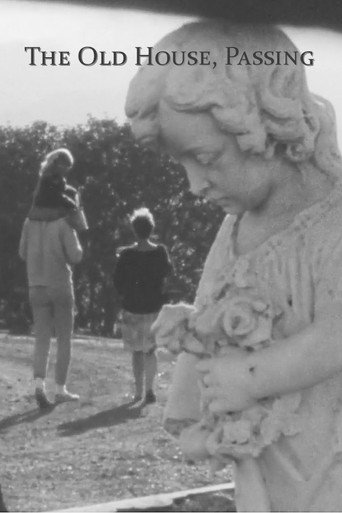
The Old House, Passing
A ghost story with an unstructured plot set amidst the mysteries of an old house. Mood is dominant over plot, and heightened by musical accompaniement.
Moonlight Sonata
"After GYMNOPEDIES, I had long wanted to animate a film specifically for a pre-selected piano piece by [Erik] Satie. MOONLIGHT SONATA is that film. It was totally designed for the 'Gnossienne V' and the movements of the animation are timed to the overall rhythms as well as the specific beats of the music." - Lawrence Jordan
Sophie's Place
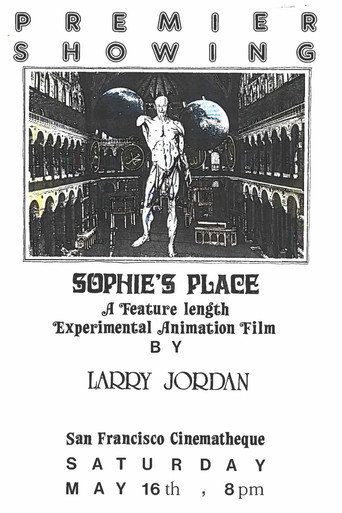
Five years in the making, Lawrence Jordan's feature-length "alchemical autobiography" Sophie's Place takes as its inspiration the story of the Greek goddess of wisdom, Sophia. Writes Jordan, "I must emphasize that I do not know the exact significance of any of the symbols in the film any more than I know the meaning of my dreams... I hope that the symbols and the episodes set off poetic associations in the viewer. I mean them to be entirely open to the viewer's own interpretation."
Gallery