Laurence Dale Movies, TV Shows, and Filmography
Laurence Dale
Acting
Biography
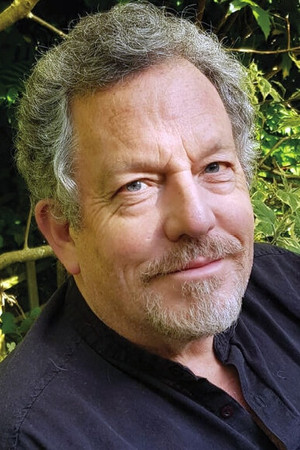
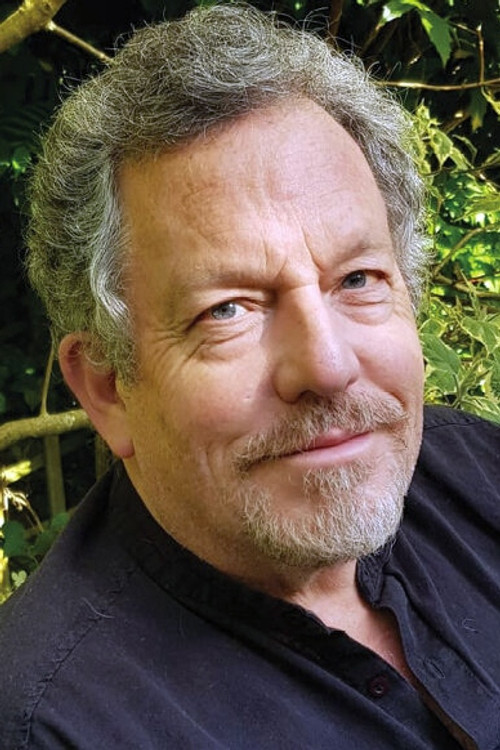
Laurence Dale (born 1957) is an English tenor, artistic director and conductor. Laurence Dale studied singing at London's Guildhall School of Music and Drama with Rudolf Piernay and the Mozarteum in Salzburg. Early leading roles included that of Hilarion in the Gilbert and Sullivan opera Princess Ida with the London Symphony Orchestra and the Ambrosian Opera Chorus in 1982, and Ramiro in Rossini's opera La Cenerentola with the Glyndebourne Festival Opera in 1983. In 1984 he appeared in the Channel 4 series Top C's and Tiaras. Amongst many Mozartian rôles, as well as baroque and romantic, his portrayal of Tamino, with which he opened Mozart year in Salzburg in 1991 was described by the press as legendary. He performed this rôle regularly in Vienna's Staatsoper and Berlin's Deutsche Oper, then in Paris Opera Bastille and throughout the world. In 1992, he created the Rodrigue in Rodrigue et Chimène to open the new opera in Lyon, recorded for Erato Records under the direction of Kent Nagano. Following the performance of Claudio Monteverdi's Orfeo as celebrations for Herbert Wernicke's Monteverdi year production at the 1993 Salzburg Festival, he recorded the title rôle under the direction of René Jacobs for Harmonia Mundi. He has recorded under the direction of Georges Prêtre, Gounod's Messe de Saint Cécile alongside Barbara Hendricks and Jean-Philippe Lafont, Mozart's C minor mass with Franz Welser-Möst, and the title rôles of Auber's Gustave III and Etienne Mehul's Joseph en Egypte. Having created the rôle of Don José in Peter Brook's La Tragédie de Carmen in 1981 at the Bouffes du Nord in Paris, and played the rôle through three seasons, including New York, that Peter Brook turned him to re-direct the production for the Opera de Bordeaux and further performances on tour. Immediately afterwards he directed Lehar's Der Zarewitsch for the Operette Festival, Bad Ischl and literally the next day, Haydn's L'Incontro improvviso for the Haydn Festival Eisenstadt and EXPO 2000, Hannover. These productions received praise from the Viennese press, which led to him being re-invited at Bad Ischl, in a co-production with Salzburg to mount Lehar's Das Land des Lächelns (designed by Hartmut Schörghofer). In 2001, he conceived and prepared the New York Off Broadway Salsa musical (¡MUSICA!), which following the disaster of 11 September had to be abandoned. He directed the French première at Nantes of Thomas Adès's Powder Her Face, (conducted by John Burdekin). In 2002, he mounted two operas for New York Gotham Chamber Opera, Les Malheurs d'Orphée by Milhaud and Purcell's Dido and Aeneas (designed by Dipu Gupta and Fabio Toblini and conducted by Neal Goren). In 2003 a third Lehar's operetta was presented in Bad Ischl, The Count of Luxemburg, having originally opened in Innsbruck. He re-conceived the 1769 farcical opera L'Operia Seria (Gassmann) with the Dutch Reisopera, and made his own performing edition of Offenbach's Hoffmann's Tales. He mounted the double bill Poulenc's La Voix Humaine and Ravel's l'Heure Espagnole in 2011, as Rossini's La Pietra del Paragone for Opera Trionfo, or Die Fledermauss from Johann Strauss at the Norvegian National Opera in 2012. ... Source: Article "Laurence Dale" from Wikipedia in English, licensed under CC-BY-SA 3.0.
Filmography Movies
Acting
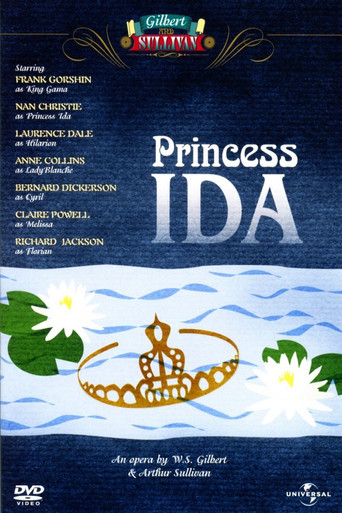
Princess Ida
Princess Ida and Prince Hilarion were betrothed when the Prince was two years old and the Princess just one year old. Twenty years have now passed, and the time has come for Hilarion to claim his bride. The Princess, however, has other ideas. She has set up a women's-only University - and men are not allowed. Hilarion and his friends, Cyril and Florian, disguise themselves as women to gain entrance to the University. All goes well until Cyril's unmaidenly conduct compromises their disguise - and reveals the three friends as intruding men.
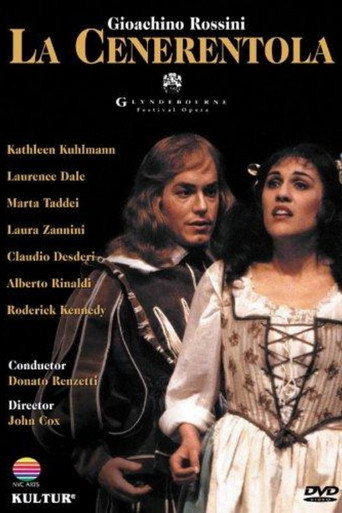
Rossini: La Cenerentola
La Cenerentola is Gioachino Rossini's version of the popular Cinderella story, an exciting mixture of comedy, pathos, coloratura fireworks and masquerade. This Glyndebourne production by John Cox captures perfectly the fairy-tale spirit of the piece, matched by Allen Charles Klein's imaginative scenery, distorted like three-dimensional cut-outs in an old-fashioned story book.
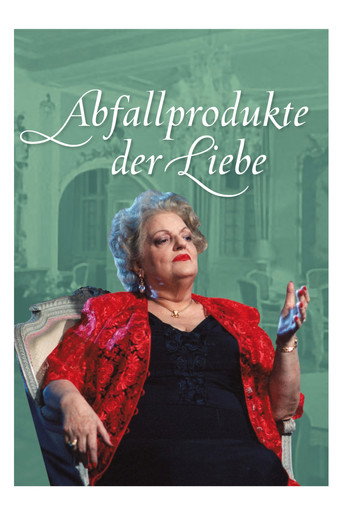
Love’s Debris
German director Werner Schroeter invited his favourite opera singers to a 13th century abbey near Paris. There was no pre-planned action. There was no script, no continuity. On the other hand, there were precise constraints that provided the rules of the game: the setting, the Abbey of Royaumont, and the chosen participants. Each singer came accompanied by a person of his or her choice, and worked on an aria chosen by the director.
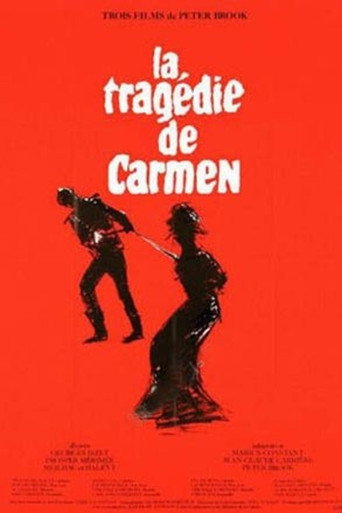
The Tragedy of Carmen
Peter Brooks' adaptation of Carmen by Mérimée and Bizet.
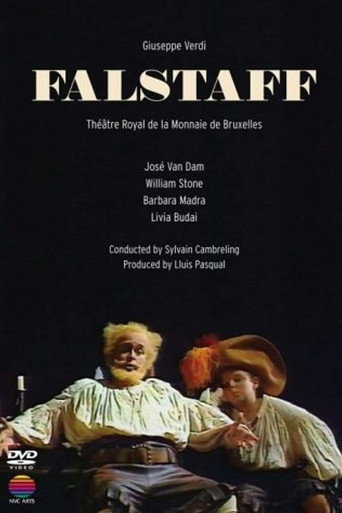
Falstaff
Based, in part, on Shakespeare's The Merry Wives of Windsor, Falstaff is Verdi's last work for the stage - and only his second comic opera. And yet the humour in this multilayered masterpiece is distinctly wry, for all the main characters exhibit an array of human weaknesses that are implacably exposed by Verdi and his librettist Arrigo Boito.
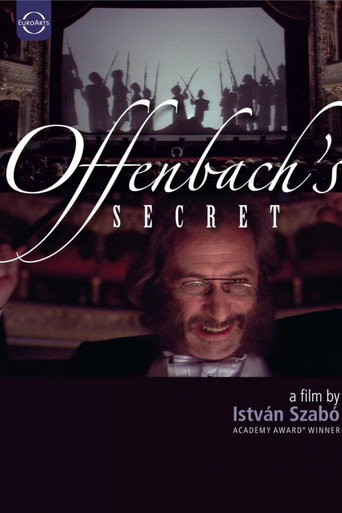
Offenbach's Secret
Academy Award winner Istvan Szabo brings to the screen Offenbach's operettas set against the backdrop of power and intrigue in 19th century Paris. Offenbach's Secret follows the staging of Croquefer and Les deux Aveugles at the Theatre des Bouffes-Parisiens founded by Offenbach in 1855. Limited by French law to one act with no more than three singers, Offenbach's early operettas were filled with biting social commentary and poked fun at the moral ambiguity of France's Second Empire under Napoleon III. In addition to Offenbach's vivacious music, the film features lush costumes, period details, and striking set designs.
Gallery