Larry Holmes Movies, TV Shows, and Filmography
Larry Holmes
Acting
Biography
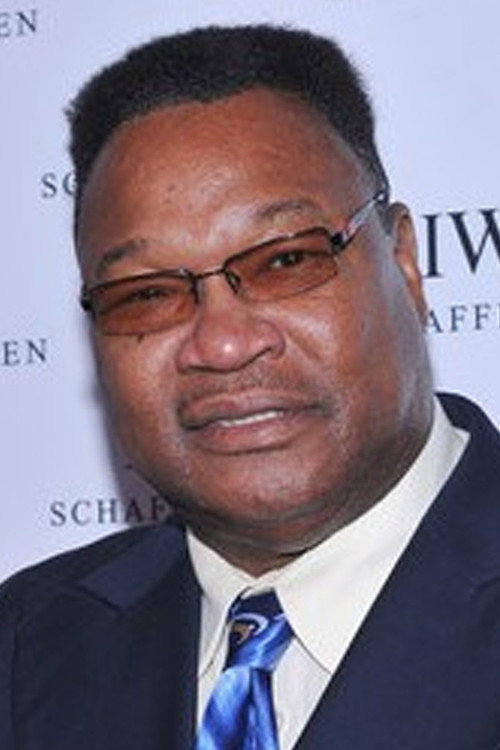
Larry Holmes is an American former professional boxer who competed from 1973 to 2002. He grew up in Easton, Pennsylvania, which led to his boxing nickname of the Easton Assassin. Holmes, whose left jab is rated among the best in boxing history, held the WBC heavyweight title from 1978 to 1983, The Ring magazine and lineal heavyweight titles from 1980 to 1985, and the inaugural IBF heavyweight title from 1983 to 1985. During his only title reign, he defended his title against 19 fighters, the second most in history behind Joe Louis. He also holds the record for the longest individual heavyweight title streak in the modern boxing history. Holmes is one of only five boxers—along with Joe Frazier, Ken Norton, Leon Spinks and Trevor Berbick—to defeat Muhammad Ali; he is the only one to have stopped Ali. Holmes won his first 48 professional bouts, including victories over Norton, Ali, Earnie Shavers, Mike Weaver, Gerry Cooney, Tim Witherspoon, Carl Williams and Marvis Frazier. He fell one short of matching Rocky Marciano's career record of 49–0 when he lost to Michael Spinks in an upset in 1985. Holmes retired after losing a rematch to Spinks the following year, but made repeated comebacks. He was unsuccessful in three further attempts (against Mike Tyson in 1988, Evander Holyfield in 1992 and Oliver McCall in 1995) to regain the heavyweight title. Holmes fought for the final time in 2002, aged 52, against the 334lb Eric "Butterbean" Esch, and ended his career with a record of 69 wins and 6 losses. He is frequently ranked as one of the greatest heavyweights of all time and has been inducted into both the International Boxing Hall of Fame and World Boxing Hall of Fame. When Holmes was nineteen, he started boxing. In his twenty-first bout, he boxed Nick Wells in the semifinals of the 1972 National Olympic Trials in Fort Worth, Texas. Wells, a southpaw known for unprecedently high knockout-to-win percentage for an amateur boxer, with a majority of knockouts coming in the first round, stopped Holmes in the first round. Nevertheless, Holmes was chosen by a selection committee of the National Olympic authorities to fight at the Olympic Box-offs in West Point, New York, where he had a match-up versus a fighting seaman Duane Bobick. Holmes was dropped in the first round with a right to the head. He got up and danced out of range, landing several stiff jabs in the process. Bobick mauled Holmes in the second round but could not corner him. The referee warned Holmes twice in the second for holding. In the third, Bobick landed several good rights and started to corner Holmes, who continued to hold. Eventually, Holmes was disqualified for excessive holding. Holmes invested the money he earned from boxing and settled in his hometown of Easton. When he retired from boxing, Holmes employed more than 200 people through his various business holdings. In 2008, he owned two restaurants and a nightclub, a training facility, an office complex, a snack food bar and slot machines.[citation needed] Holmes currently co-hosts a talk show What The Heck Were They Thinking?
Filmography Movies
Acting
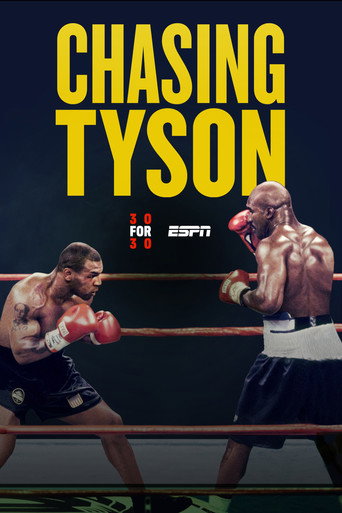
Chasing Tyson
Evander Holyfield knew he could never earn the respect he craved until he defeated Mike Tyson. When the two finally fought, the world witnessed not one, but two of the boxing's most memorable fights.
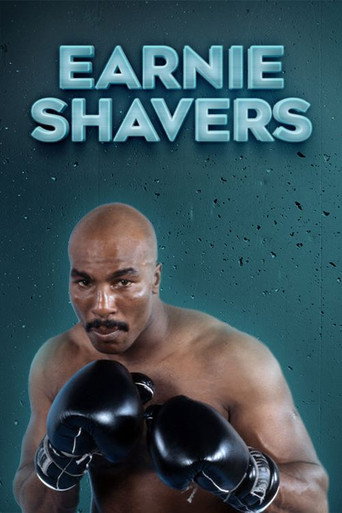
Earnie Shavers
Considered one of the hardest-hitting heavyweight boxers of all time, Earnie Shavers took on all the best of his era including Muhammad Ali, Larry Holmes, and Jerry Quarry. This is a look back at his career and how he got into the sport of boxing.
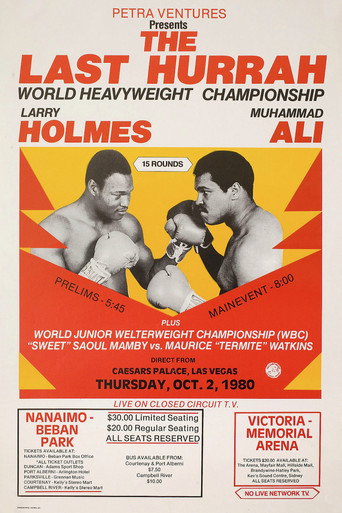
Muhammad and Larry
Through the poetic lens of visionary filmmakers Albert and David Maysles, Muhammad and Larry explores the unique and poignant relationship between two great boxers and two remarkable men who were more than just competitors. They were once teacher and student, and remain close friends.
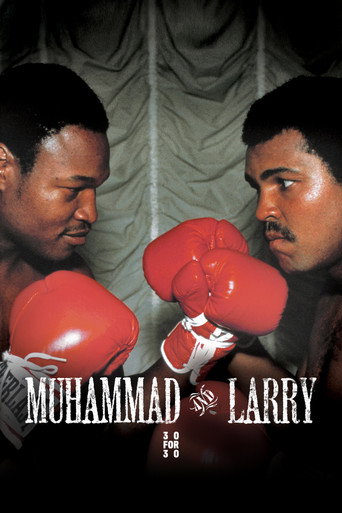
Muhammad and Larry
In October of 1980 Muhammad Ali was preparing to fight for an unprecedented fourth heavyweight title against his friend and former sparring partner Larry Holmes. To say that the great Ali was in the twilight of his career would be generous; most of his admiring fans, friends and fight scribes considered his bravado delusional. What was left for him to prove? In the weeks of training before the fight, documentarians Albert and David Maysles took an intimate look at Ali trying to convince the world and perhaps himself, that he was still “The Greatest.” At the same time, they documented the mild-mannered and undervalued champion Holmes as he confidently prepared to put an end to the career of a man for whom he had an abiding and deep affection
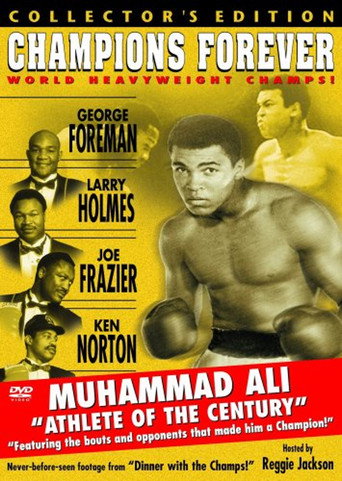
Champions Forever - World Heavyweight Champs!
Previously unseen footage, seeing and hearing the champions interviewed and talking to each other at a private dinner party hosted by baseball’s legendary great, Reggie Jackson. Ali, Frazier, Foreman, Holmes, Norton. For more than twenty years, these kings of boxing ruled the ring as they passed the world heavyweight title from one to the other. Now for the first time, see them all come face to face – gloves off – in an unprecedented video event. Footage from over 30 fights, which include 15 title matches, featuring interviews and news events as they occurred during each champion’s reign.
Out From Ali's Shadow: The Larry Holmes Story
Larry Holmes is undeniably one of the greatest boxers in heavyweight history, but, despite his accomplishments, he never managed to escape the presence of the beloved Muhammad Ali. This documentary sheds light upon Holmes, bringing his legacy "Out From Ali's Shadow."
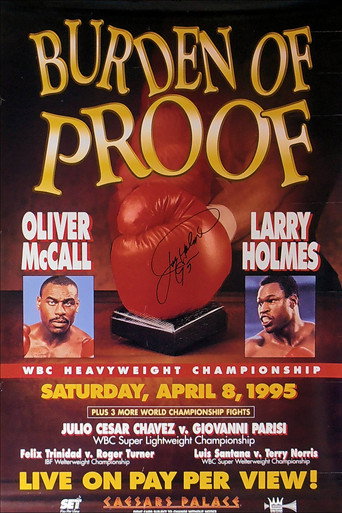
Oliver McCall vs. Larry Holmes
Oliver McCall vs. Larry Holmes, billed as "Burden of Proof", was a professional boxing match contested on April 8, 1995 for the WBC Heavyweight Championship. After Oliver McCall stunned Lennox Lewis in the second round to become WBC Heavyweight Champion, he turned down a $10 million offer from Lewis for an immediate rematch. Instead he agreed to fight 46 year old former WBC, IBF and lineal heavyweight champion Larry Holmes, who was making his fourth attempt at regaining a heavyweight title after losing to Michael Spinks in 1985. Each of his previous three attempts (against Spinks in 1986 in a rematch, against Mike Tyson in 1988, and against Evander Holyfield in 1992) ended in defeat, although he went the distance in two of the three fights.
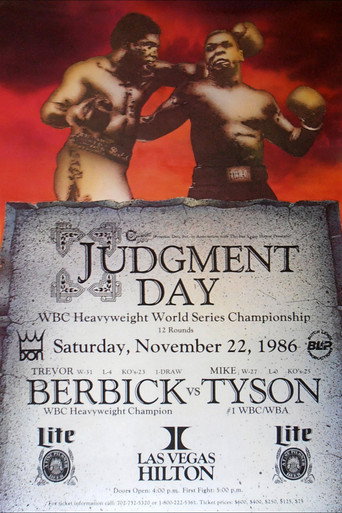
Mike Tyson vs Trevor Berbick
TYSON WINS W.B.C. CHAMPIONSHIP LAS VEGAS, Nev., Nov. 22— Mike Tyson made history tonight. The 20-year-old slugger from Catskill, N.Y., became the youngest heavyweight champion ever when he stopped Trevor Berbick at 2:35 of the second round of a scheduled 12-round bout. In taking away Berbick's World Boxing Council crown, Tyson knocked Berbick down twice, both times in the second round, pounding him so hard that he had Berbick reeling across the ring at the end in a nearly comic loop-de-loop.
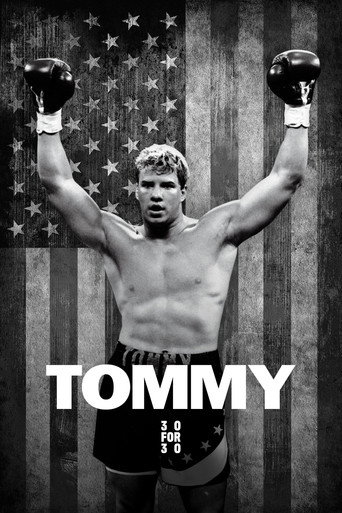
Tommy
Co-directed by Gentry Kirby and Erin Leyden, “Tommy” examines Morrison’s remarkable rise to the spotlight, followed by a stunning, confounding, and ultimately tragic fall. He was one of the best heavyweights of his time; a handsome, charming, yet unsettled young star. Born into a troubled family in America’s heartland, Morrison’s initial emergence as a fighter was bolstered by a starring role in “Rocky V.” A few years later he beat George Foreman for the WBO heavyweight title, and seemed primed for more stardom, even in the face of blown opportunities and upset losses. But everything changed in early 1996 when he tested positive for HIV, abruptly forcing him into retirement at age 27. From there, Morrison’s life spiraled further and further downward, plagued by drug problems, jail time, and an eventual denial that he had the virus at all.
Larry Holmes vs. Carl Williams
Undefeated Heavyweight Champion Larry Holmes turns back undefeated challenger Carl Williams in a razor thin contest filled with close rounds.
Gallery