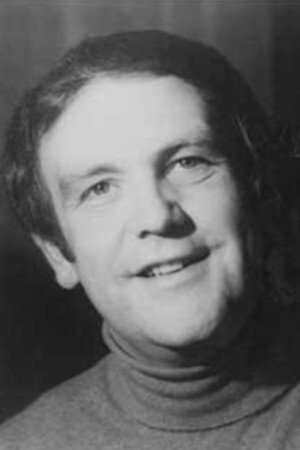
Kurt Moll Movies, TV Shows, and Filmography
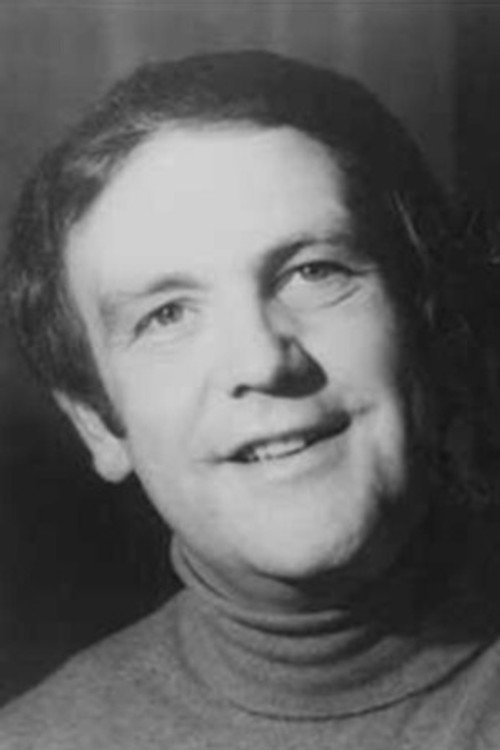
Kurt Moll
Acting
Biography
Kurt Moll (11 April 1938 – 5 March 2017) was a German operatic bass singer who enjoyed an international career and was widely recorded. His voice was notable for its range, a true basso profondo, including full, resonant low and very-low notes with relaxed vibrato; also for its unusual combination of extreme volume-capacity and a purring, contrabassoon-like timbre. Although he had a powerful voice and stamina adequate for the most demanding parts, he was not a thunderer, and never performed as Wagner's vocally athletic, bellowing bassos Hagen, Hans Sachs, nor Wotan. His interpretations tended to be restrained and intelligent, even in comedic roles like Osmin in Mozart's Die Entführung aus dem Serail and Baron Ochs in Der Rosenkavalier. Moll was born in Buir, near Cologne, Germany. As a child, he played the cello and hoped to become a great cellist. (He also had ambitions to be an industrialist/businessman.) He sang in the school choir whose conductor encouraged him to concentrate on singing. He studied voice at the Musikhochschule Köln. He joined the Cologne Opera at age 20 and remained a member of the ensemble until 1961. He then sang for three years at the Mainz Opera and five years at the Wuppertal Opera. In 1969, he accepted an engagement with the Hamburg State Opera, and then performed in major opera houses of Europe. He made his Bayreuth Festival debut in 1968 as the nightwatchman in Die Meistersinger von Nürnberg, and sang there for several years as Fafner in Der Ring des Nibelungen, Marke in Tristan und Isolde and Pogner in Die Meistersinger. He made his American debut with the San Francisco Opera as Gurnemanz in Wagner's Parsifal in 1974, a role he reprised with the company in 2000. He made his debut at the Metropolitan Opera on the opening night of the 1977–78 season, appearing as the Landgrave in Wagner's Tannhäuser. He also sang there as Rocco in Beethoven's Fidelio and Sparafucile in Verdi's Rigoletto. He made many recordings of opera, sacred music, Charpentier's Te deum H.146, Magnificat H.74 in 1990 with Neville Mariner and lieder. Moll can be heard as Ochs in seven complete recordings of Der Rosenkavalier, as Sarastro in six recordings of Mozart's Die Zauberflöte, as Marke in six sets of Wagner's Tristan und Isolde, and as the Archangel Raphael in three recordings of Haydn's Die Schöpfung. His recording for the Orfeo label of Schubert's philosophical "Lieder für Bass" set a new standard for these songs; he also recorded Schubert's song-cycle Winterreise, and an album of dramatic/heroic ballads by Carl Loewe. Besides German, Italian, and Latin, he recorded a few roles in Russian, including Pimen in Boris Godunov and the Old Convict in Lady Macbeth of the Mtsensk District by Shostakovich. He can be seen in many roles on commercial video, including Sarastro (twice), Osmin, the Commendatore, Bartolo, Hunding in Wagner's Die Walküre (three times), Fafner in Das Rheingold and Siegfried, in Gurnemanz in Parsifal, and Ochs (three times). ... Source: Article "Kurt Moll" from Wikipedia in English, licensed under CC-BY-SA 3.0.
Filmography Movies
Acting
Kurt Moll - Ein Mann, ein Bass
Documentary about the German opera singer Kurt Moll.
Mythos Mozart - Musik für die Welt
Documentary about Wolfgang Amadeus Mozart.
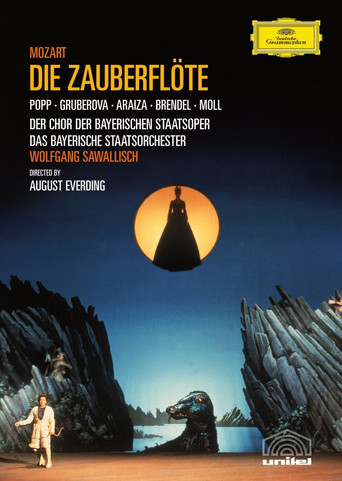
The Magic Flute
The Queen of the Night enlists a handsome prince named Tamino to rescue her beautiful kidnapped daughter, Princess Pamina. Aided by the lovelorn bird hunter Papageno and a magical flute that holds the power to change the hearts of men, young Tamino embarks on a quest for true love, leading to the evil Sarastro's temple where Pamina is held captive.
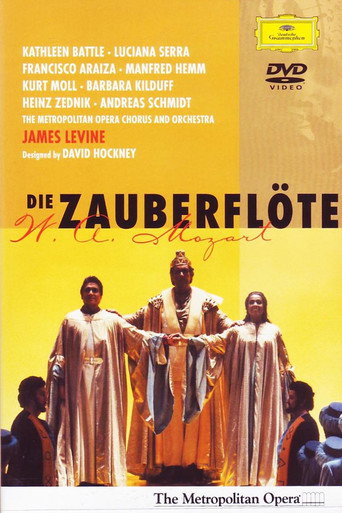
The Metropolitan Opera: The Magic Flute
Mozart’s allegorical fairy tale has charmed audiences and inspired artists, for more than 200 years. A few weeks before this telecast, the Met unveiled a new production of the opera featuring the colorful designs of acclaimed artist David Hockney. His bold colors and vivid images enchanted audiences and seemed to inspire the striking cast, led by James Levine’s affectionate conducting. Francisco Araiza is the young prince Tamino, who finds himself in a strange land, forced to undergo mysterious tests so he can rescue, then marry, the woman he loves, Pamina, played by Kathleen Battle. Kurt Moll is the compassionate Sarastro and Luciana Serra is the Queen of the Night.
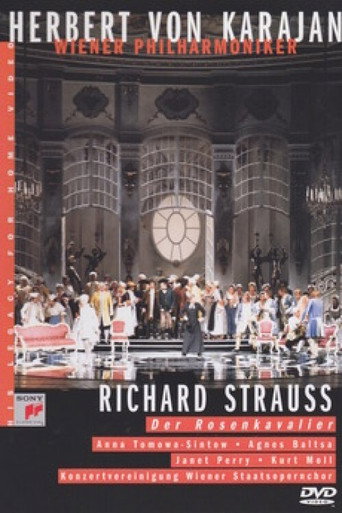
Der Rosenkavalier
A production of Strauss' opera 'Der Rosenkavalier' performed at the Saltzburg Festival in 1984. Includes the Vienna State Opera Choir, the Philharmonic Orchestra with singers Wilma Lipp, Anna Tomowa-Sintow and Agnes Baltsa. Conducted by Herbert Von Karaja
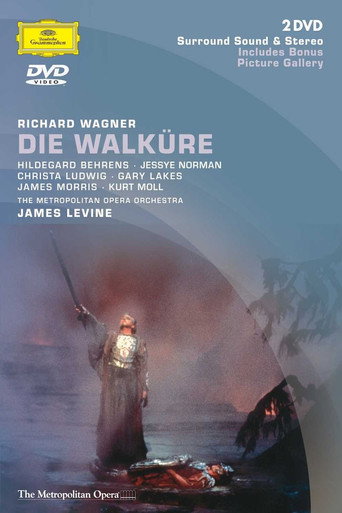
Die Walküre
The gorgeous and evocative Otto Schenk/Günther Schneider-Siemssen production continues with this second opera in Wagner’s Ring cycle. Hildegard Behrens brings deep empathy to Brünnhilde, the favorite daughter of the god Wotan (James Morris) who nevertheless defies him. Morris’s portrayal of Wotan is deservedly legendary, as is Christa Ludwig, as Fricka. Jessye Norman and Gary Lakes are Sieglinde and Siegmund, and Kurt Moll is the threatening Hunding. James Levine and the Met orchestra provide astonishing color and drama. (Performed April 8, 1989)
Don Giovanni
Every woman wants him, every man wants to be him: Mozart’s version of the irresistible rogue who brings excitement with him and leaves destruction it his wake has always attracted top singing actors, as in this performance brilliantly led by James Levine. Samuel Ramey is Don Giovanni, pursued by the incandescent Karita Mattila (Donna Elvira) in her Met debut season and role, and by the white-hot avenging fury of Carol Vaness (Donna Anna.) Ferruccio Furlanetto delivers a masterful comic turn as the Don’s servant, Leporello.
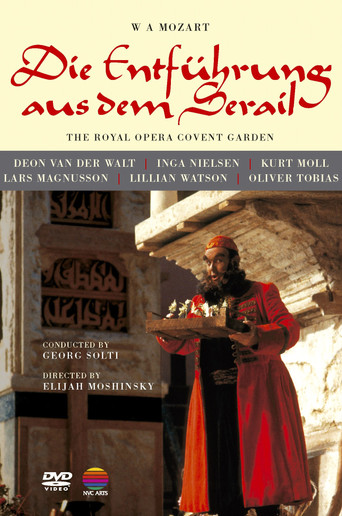
Die Entführung aus dem Serail
Mozart's famous Singspiel after Christoph Friedrich Bretzner's work "Belmonte und Konstanze", DIE ENTFÜHRUNG AUS DEM SERAIL comes to life in the sumptuous setting of Topkapi, the Ottoman sultans' own Istanbul seraglio (palace harem). Belmonte finds his fiancée Konstanze and her English maid Blondchen, who were captured and sold by pirates, in the Mediterranean seraglio of the Ottoman pasha Selim. Belmonte's servant Pedrillo gets him engaged as builder. After Selim tried to enforce himself upon Konstanze, Pedrillo and Blondchen, his own sweetheart, prepare their flight, managing to get Osmin, the pasha's overseer, drunk. Yet Osmin and Selim's guard still capture them, already in the garden; however the touching display of true love melts the pasha's heart, so he lets them go.
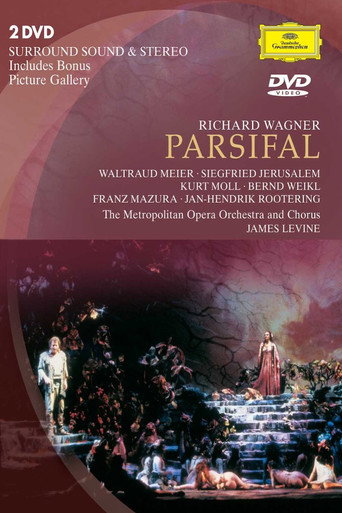
Richard Wagner: Parsifal
The Met production easily has the most beautiful staging, designed by Otto Schenck, who also produced the fabulous set for the Met's previous Ring cycle. Kurt Moll is a wonderful Gurnemanz, but compared to his studio recording under Karajan a decade earlier it has lost some of its original velvety body and luster. As Parsifal, Jerusalem is starting to show some wear and tear on his voice at the Met in 1992 as opposed to his prime form at Bayreuth in 1981, but is still quite good; only Placido Domingo could compete with him in the role at that time.
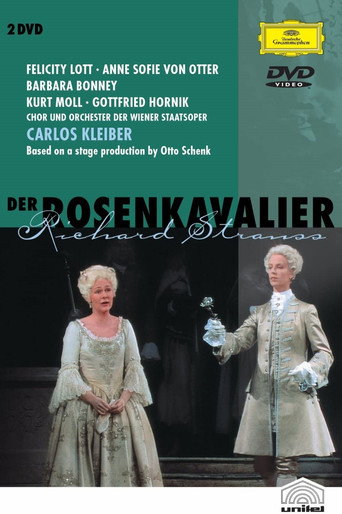
Der Rosenkavalier
Felicity Lott, Anne-Sofie Von Otter, and Kurt Moll star in this production of Richard Strauss' opera, staged in Vienna in 1994. A romantic comedy of errors. Princess von Werdenberg must hide her affair with Octavian from her family; when he disguises himself as a chambermaid to avoid scandalizing the Princess, he is pressed into presenting a gift to Baron Ochs von Lerchenau, who has arrived to propose marriage to Sophie von Faninal. However, Ochs soon finds himself infatuated with the chambermaid, much to Octavian's chagrin, which proves to be only the first of a long series of romantic misunderstandings. This production of Der Rosenkavalier is performed by the Vienna State Orchestra and Chorus, under the direction of Carlos Kleiber.
Gallery