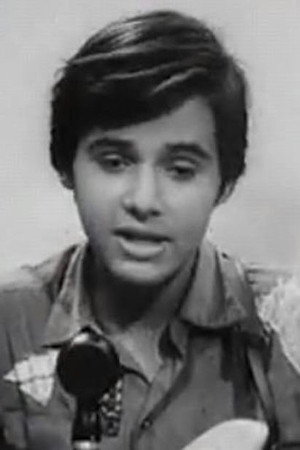
Krzysztof Janczar Movies, TV Shows, and Filmography

Krzysztof Janczar
Acting
Biography
No biography available.
Filmography Movies
Acting
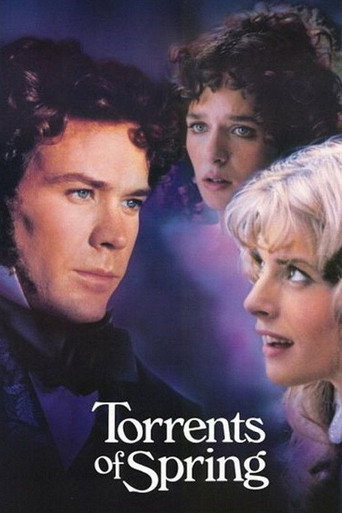
Torrents of Spring
In 1840, a young Russian aristocrat, Dimitri Sanin, is returning home after a long tour of Europe. In Germany, he falls in love with a beautiful pastry shop girl, Gemma Rosselli, who soon starts sharing his feelings. They decide to get married and, in order to finance the wedding, Dimitri goes back to Russia to sell his family estate. Unfortunately he falls prey to a seductress, Princess Maria Nikolaevna, who pretends to be willing to buy his land to come nearer him. Now Sanin is in a fix: should he choose the pure Gemma or the evil but irresistible Maria?

The Fog
In the first months after the war, a period of confusion and fratricidal fighting, a Warsaw whack-job drafted into the ranks of the KBW gains the first life experiences that make him an informed citizen. Marian, a boy from Targówek, is serving in the KBW. His unit is sent to a village plagued by a band of NSZ. Marian becomes involved with a young teacher, Anka, whose brother is a member of the NSZ. During the final trial, Stefan is killed and Marian is seriously wounded and taken to the hospital. An investigation is carried out in the village. Marian does not admit that he knew about Stefan and his contacts with his sister. When he leaves the hospital, he does not find the girl, but their son, who is being cared for by Anka's parents. He takes the boy and returns to Targowek.
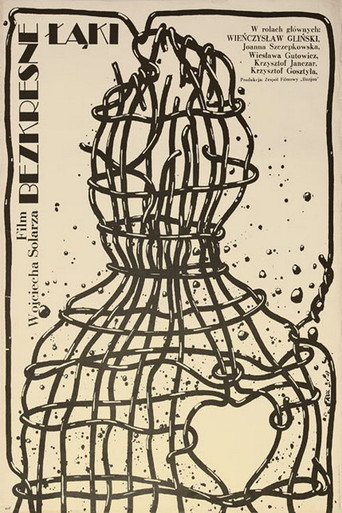
Bezkresne łąki
A lyrical comedy; an escape to nature for a civil servant tired of everyday life and the monotony of life becomes an opportunity to reflect on the meaning of existence; it helps to regain mental balance. Henry, an exemplary husband and civil servant, returns to the places of his childhood, wants to find the treasure buried decades ago by Tereska, who fell in love with him. Along the way, he picks up two boys and two girls, who begin to compete for him. One of the boys assaults him when Henry digs up a bottle containing, it turns out, Tereska's love letter. The youngsters notify Henryk's wife of his whereabouts.
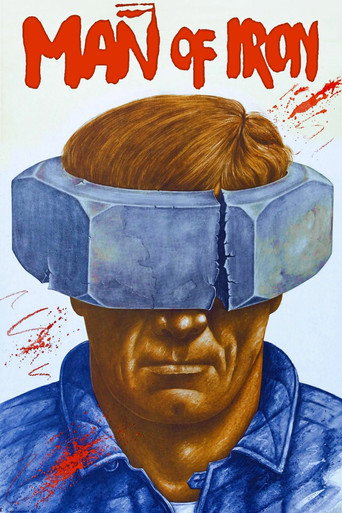
Man of Iron
In Warsaw in 1980, the Communist Party sends disgruntled radio reporter Winkel to Gdańsk to dig up dirt on the shipyard strikers - particularly on Maciek Tomczyk, an independent labour union leader whose father was killed in the December 1970 protests. Posing as sympathetic, Winkel interviews the people surrounding Tomczyk, including his detained wife, Agnieszka.
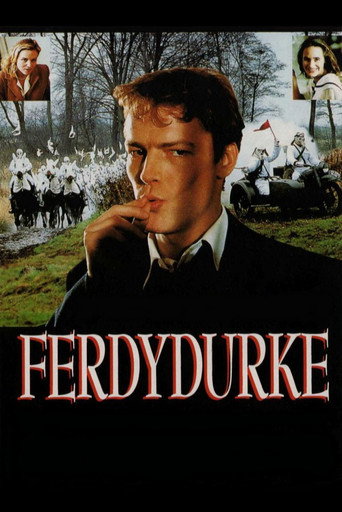
30 Door Key
A young writer in 1939 Warsaw faces the conflict of acting his age or relapsing into childhood during the brink of World War II. Based on the famous novel Ferdydurke by Witold Gombrowicz.

You Will Not Have Peace
After leaving prison, Tolek plans to get revenge on his former girlfriend.
The Story About Master Twardowski
On his way home, Mikołaj Twardowski is attacked by bandits. He calls on the devil for help, who rescues him from danger. The devil's intentions are not selfless. Twardowski signs a pact with Hell, unaware of what he is agreeing to. Eighteen years pass, and the devil appears at Mikołaj's house with the intention of taking his son away. The cautious Twardowski, just before his death, sends his son to a hermit, who advises him on how to steal the contract his father signed.
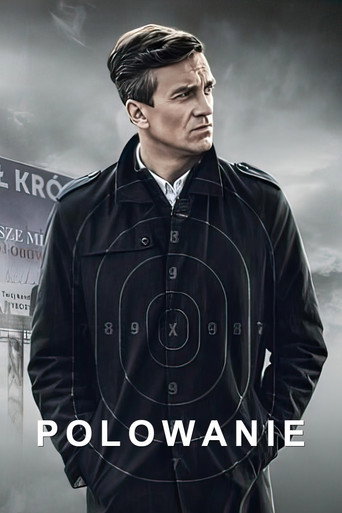
Polowanie
Outraged by corruption in his small town, a family man runs for mayor but discovers that staying true to his principles may come at a devastating cost.
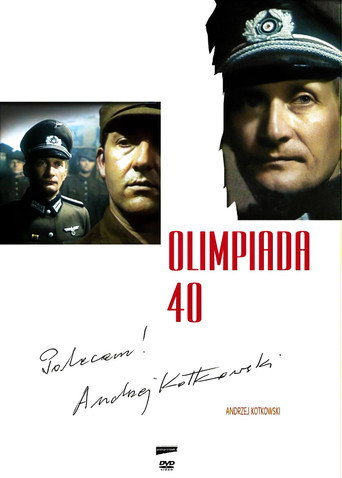
Olympics 40
The film deals with the a clandestine Olympiade held in a German POW camp during WW II, housing many Poles, but also French and Brits. A spit and a Polish German lieutenant is added to the staff of a prison camp. He sees a Pole, the acknowledged leader of the Polish prisoners, against whom he had competed during the Berlin Olympics in 1936. He asks the Pole to train with him but is refused; the Pole points out out that he is a prisoner and nothing more. But that plants the seed and the Pole proposes and Olympics 40 to be held among the prisoners. They ingeniously make a flag and medals, set up a number of races; a croaching hop race is unwittingly organized by a German prison guard who uses it as a torture. The German lieutenant knows that something is going on but cannot find out. Finally the Germans realize the idea and the Polish chief is sent to concentration camp but the others disobey the orders.
Before the Day Breaks
A boy escapes from a reformatory, but comes again into conflict with the law. During a robbery he hits a woman with a bottle on the head. He is convinced he killed her and because of his past thinks that nothing matters anymore. Only when he finds out that the victim did not die, he reveals the truth about what happened.
Gallery