Kira Muratova Movies, TV Shows, and Filmography
Kira Muratova
Directing
Biography
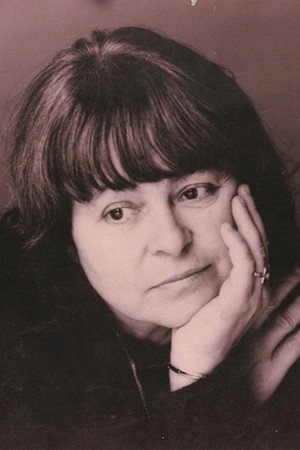
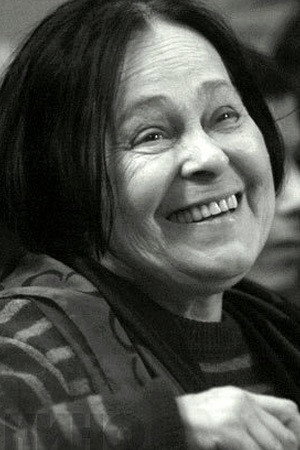
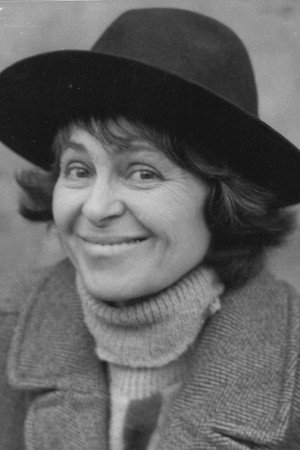
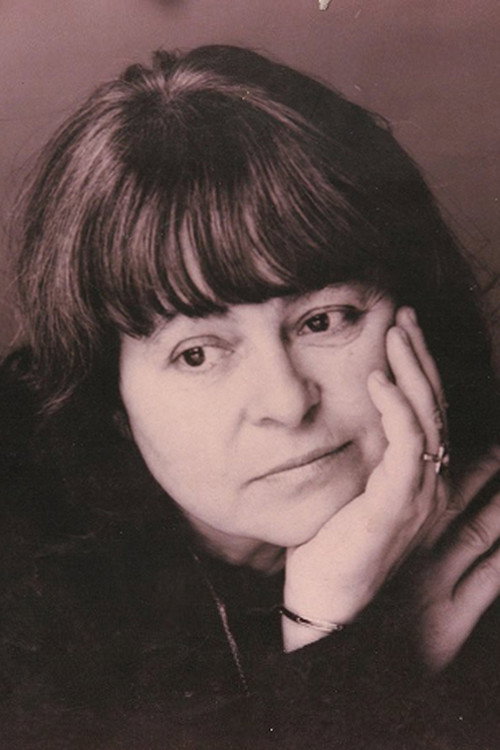
Kira Georgievna Muratova (Ukrainian: Кіра Георгіївна Мура́това; née Korotkova; 5 November 1934 – 6 June 2018; Soroca – Odesa) was a Soviet and Ukrainian film director, screenwriter and actress of Romanian/Jewish descent, known for her unusual directorial style. Muratova's films underwent a great deal of censorship in the Soviet Union, yet still Muratova managed to emerge as one of the leading figures in contemporary Cinema of Ukraine and Russian cinema and was able to build a very successful film career from 1960s onwards. She is People's Artist of Ukraine(1989); Academician of National Academy of Arts of Ukraine (1997). Laureate of the Shevchenko National Prize (1993) (in List of laureates at 1993 - № 12); Oleksandr Dovzhenko State Prize (2002). Muratova spent much of her artistic career in Odesa, creating most of her films at Odesa Film Studios. Her work has been described as possibly 'one of the most distinctive and singular oeuvres of cinematic world-making.'
Filmography Movies
Acting
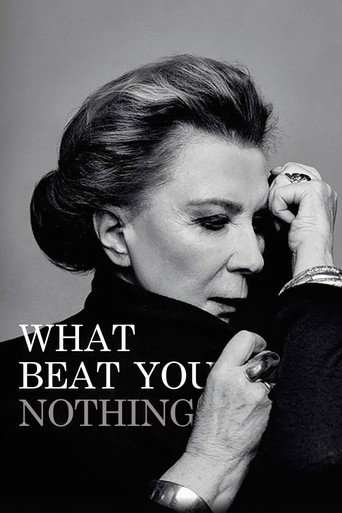
What Beat You Nothing
Alla Demidova ranks among the greatest actresses to have graced the Russian-language stage over the past six decades, as well as screens big and small. She's famous for her tragic characters. Perhaps because she, above all, understands the world as a realm of worries and sorrow?

Brief Encounters
Country girl Nadia moves to the city and becomes a maid in Valya's apartment. Valya, who is a member of the local District Committee, does not know that Nadia fell in love with her currently absent husband, a geologist named Maksim, when he had visited Nadia's village during a recent expedition.
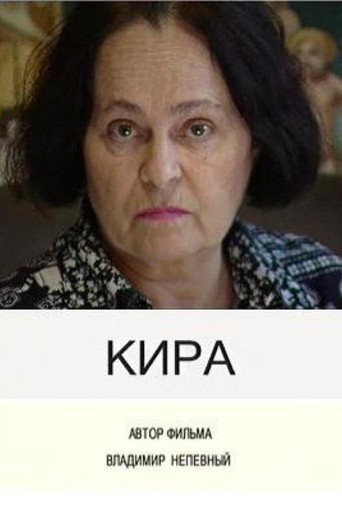
Kira
Film about the work of Ukrainian film director Kira Muratova.
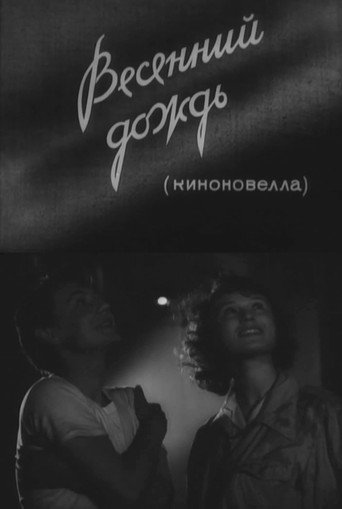
Spring Rain
A sweet romance unfolds between two young factory workers who meet on a train and set out to discover their city together before the young woman must return to her flat.

I Am an Ox, I Am a Horse, I Am a Man, I Am a Woman
This glasnost-era documentary, which incorporates footage from films from the 1920s through the 1980s, looks at the history of women in Russian cinema through the eyes of Russian women directors, actors, and scriptwriters. The film’s title refers to a WWII slogan about women doing the work of absent men in the fields and at home. Featuring Kira Muratova, Natalia Ryazantseva, Inna Churikova, Nonna Mordyukova, and others.
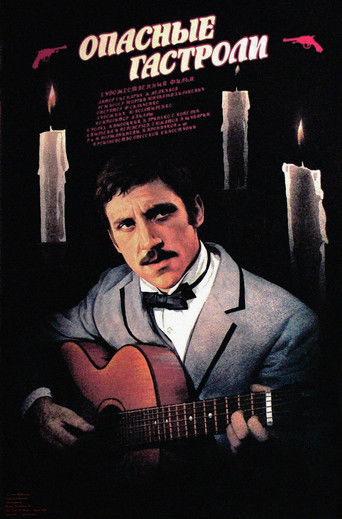
Dangerous Tour
Based on the events that took place in Odessa in 1910, when, on the instructions of the Foreign Bureau of the RSDLP, a prominent Bolshevik underground worker arrived in the city under the guise of a French timber merchant, who was to organize the delivery of illegal literature to Russia through the Odessa port. The task can be completed. In Odessa, a variety show theater was created, which, having gained fame, toured Russia and received "theater props" from France...
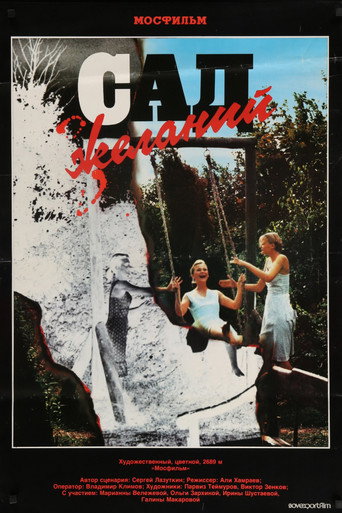
The Garden of Desires
The film is set during the last summer before the Great Patriotic War. Three sisters are coming to stay with their grandmother in the village. They imagine the world as a vast and charming "Garden of desires" and all members of the household are waiting for Asya's birthday. Asya has a sense of foreboding regarding the impending grief. Guests come to visit but none of them are her parents. She still does not know that her father was declared an enemy of the people, that tomorrow she will not see her mother and that the war is approaching.
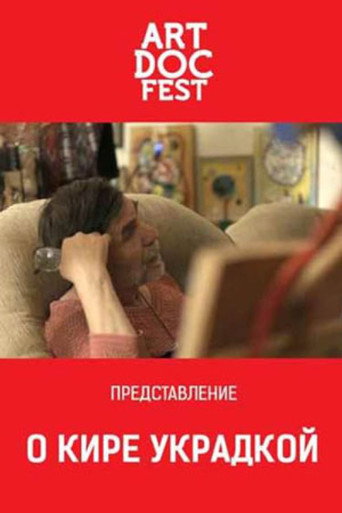
Furtively About Kira
In VGIK, she was a student of the workshop of Sergei Gerasimov and Tamara Makarova, and watched Godard's "Last Breath" and thought, nothing more is needed. Everything is already there. But, in the end, without her, without her 22 films, the history of world cinema would be incomplete. In our country, her name has become one of the undisputed geniuses-Tarkovsky, Parajanov, Herman, Sokurov. The brilliant Kira Muratova looks at a person with irony, as if from a distance and from above, as if at a funny puppet theater, but her gaze is full of sympathy. It divides artists into two categories: preachers and gamblers. Of course, he considers himself one of the latter. Chance is her muse. Improvisation is a feature of the method. And what is life but improvisation? In contrast to Rene Clair with his phrase " my film is ready. It remains only to remove it", goes to the set, opening up to life, the game of chance.
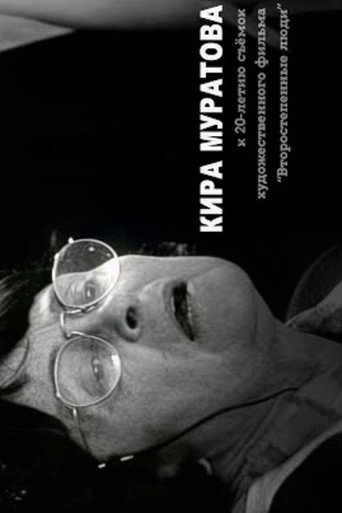
…in Memory of the Master
The film is dedicated to the 20th anniversary of the shooting of the feature film "Secondary People," filmed at the Odesa Film Studio in 2001. On the set is People's Artist of Ukraine, film director Kira Muratova.
Production
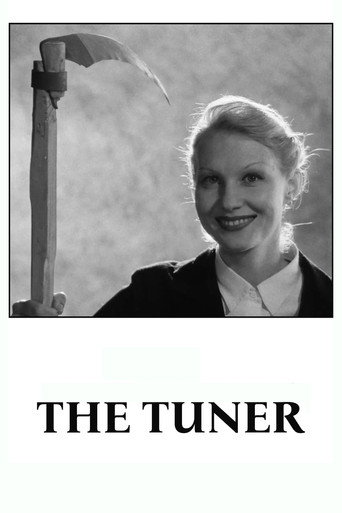
The Tuner
A young piano tuner befriends two rich old-ladies, and plots, with the help of his girlfriend, to betray their trust and steal from them.
Brief Encounters
Country girl Nadia moves to the city and becomes a maid in Valya's apartment. Valya, who is a member of the local District Committee, does not know that Nadia fell in love with her currently absent husband, a geologist named Maksim, when he had visited Nadia's village during a recent expedition.
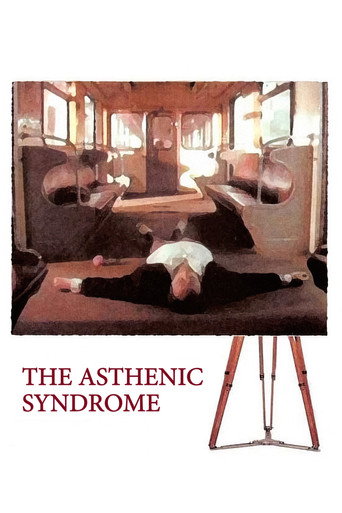
The Asthenic Syndrome
In the old days it was called hypochrondria, or black melancholia. Now, apparently, it's termed the Asthenic Syndrome. Whatever it is, Nikolai, a teacher of epicly indifferent pupils, has got it, and it's not much fun.
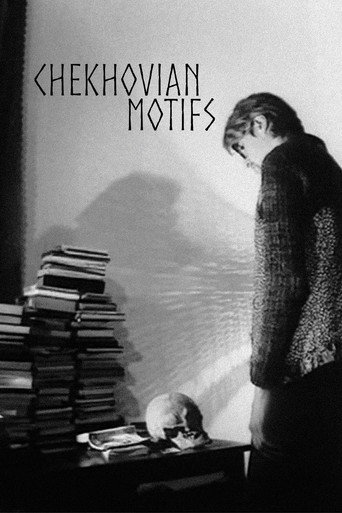
Chekhovian Motifs
The film is based on A. P. Chekhov’s play “Tatiana Repina” and short story “Difficult People”. At his wedding, the groom is horrified to see among the church crowd his former mistress who had recently committed suicide.

The Long Farewell
A single mother is confused by the changes in her teenage son, who has become distant since spending summer vacation with his father.
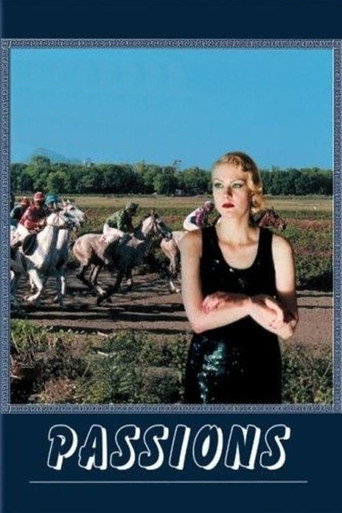
Passions
Blonde Lilia and brunette Violetta are fascinated by horse racing, and the young racers are more than a little attracted to them, too. However, the worlds of sporting and romance don't always coexist peacefully as the two girls learn the hard way through a series of touching, surreal, and sometimes heartbreaking encounters. One of the most beautifully photographed Russian films in recent years, this acclaimed modern classic was hailed at numerous film festivals including the Berlin Film Festival and Russia's Kinotavr Festival, where it won the Jury and Critics Prizes. Amazon
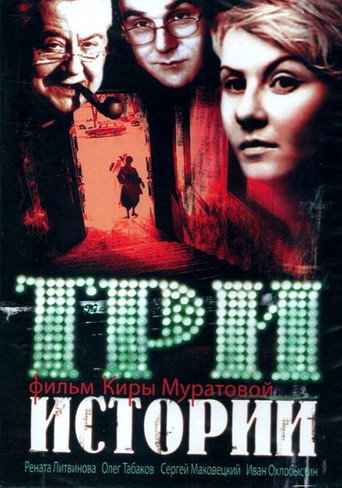
Three Stories
A man goes to see his former schoolmate working at a boiler house and persuades him to burn in the furnace the corpse of his communal flat neighbor whom he has just murdered after a quarrel. An orphaned girl gets a job in the archives of the maternity home to find out the identity of her mother who abandoned her years earlier. She finds her, befriends her and takes the first opportunity to throw her into the sea. An old intellectual tries to explain to the neighbor’s five-year-old daughter “all the abomination of her lumpen existence”. The girl feeling hurt for her mother decides to poison the old man with arsenic.
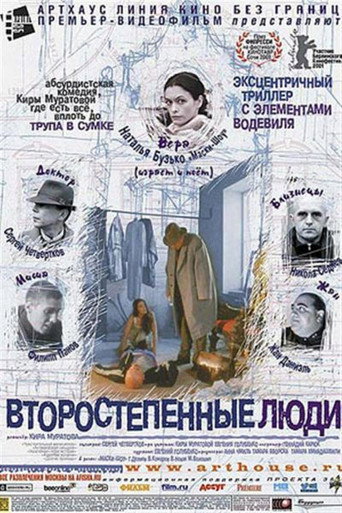
Second Class Citizens
The movie examines the lives of the not-so-fortunate dregs of society through absurdist comedy. The unfortunates of the title are mentally challenged people, some of whom could be termed insane - or merely inane.
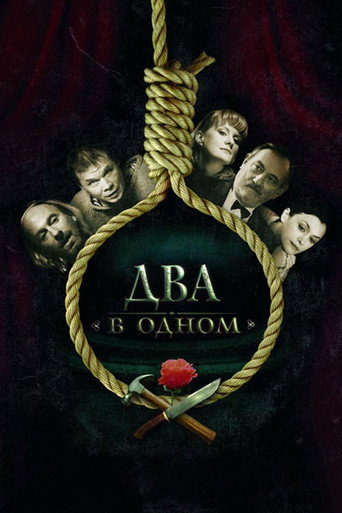
Two in One
This celebrated director's "exquisite cruelty" appears front and center when the death of a stage actor turns a theatrical drama into a real one. Two in One's two parts, "Stagehands" and "Woman of a Lifetime," celebrate the psychological richness that lurks just beneath the surface of banal reality - if murderous stagehands, lascivious fathers and vengeful daughters can be described as banal.
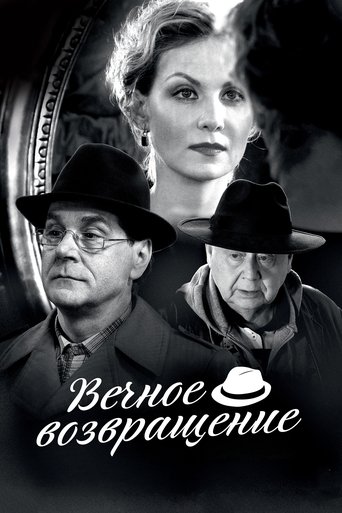
Eternal Homecoming
A woman is paid a surprise visit by her long-forgotten classmate, who needs her advice: should he choose a wife or a lover? An outrageously burlesque mise-en-scène is repeated many times but each time in a different place and performed by new actors. Why?
Gallery