Karl Freund Movies, TV Shows, and Filmography
Karl Freund
Camera
Biography
From Wikipedia, the free encyclopedia. Karl W. Freund, A.S.C. (January 16, 1890-May 3, 1969) was a cinematographer and film director. Born in Dvůr Králové (Königinhof), Bohemia, his career began in 1905 when, at age 15, he got a job as an assistant projectionist for a film company in Berlin where his family moved in 1901. He worked as a cinematographer on over 100 films, including the German Expressionist films The Golem (1920), The Last Laugh (1924) and Metropolis (1927). Freund emigrated to the United States in 1929 where he continued to shoot well remembered films such as Dracula (1931) and Key Largo (1948). He won an Academy Award for Best Cinematography for The Good Earth (1937). In 1937, he went to Germany to bring his only daughter, Gerda Maria Freund, back to the United States, saving her from almost certain death in the concentration camps. Karl's ex-wife, Susette Freund (née Liepmannssohn), remained in Germany where she was interned at the Ravensbrück concentration camp and eventually taken in March, 1942 to Bernburg Euthanasia Center where she was murdered. Between 1921 and 1935, Freund also directed ten films, of which the best known are probably The Mummy (1932) starring Boris Karloff, and his last film as director, Mad Love (1935) starring Peter Lorre. Freund's only known film as an actor is Carl Dreyer's Michael (1924) in which he has a cameo as a sycophantic art dealer who saves the tobacco ashes dropped by a famous painter. At the beginning of the 1950s, he was persuaded by Desi Arnaz at Desilu to be the cinematographer in 1951 for the televisions series I Love Lucy. Critics have credited Freund for the show's lustrous black and white cinematography, but more importantly, Freund designed the "flat lighting" system for shooting sitcoms that is still in use today. This system covers the set in light, thus eliminating shadows and allowing the use of three moving cameras without having to modify the lighting in-between shots. And where Freund did not invent the three camera shooting system, he did perfect it for use with film cameras in front of a live audience. Freund and his production team also worked on other sitcoms produced at/through Desilu such as "Our Miss Brooks". Description above from the Wikipedia article Karl Freund, licensed under CC-BY-SA, full list of contributors on Wikipedia.
Filmography Movies
Acting
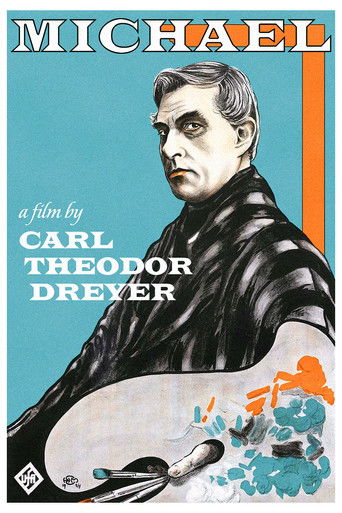
Michael
A mature and visually elegant period romance that remains one of the earliest and most compassionate overtly gay-themed films in movie history. Based upon Herman Bang's 1902 novel, Dreyer's Michael refashions the classical Greek myth of Jupiter and Ganymede into a love triangle between an aging artist, Zoret, his protagonist Michael, and Princess Zamikoff, an aristocratic femme fatale as entranced by Michael’s youthful beauty as Zoret is.
You Can't Fool a Camera
This short starts out as a documentary. In a dramatization, Eadward Muybridge's photographic experiments prove that when a horse gallops, there are times when all four of the animal's feet are off the ground. We are then brought to the present, where MGM directors and their cinematographers are shown working on current productions. The film closes with closeups of the studio's major stars and a tribute to the studio's actors who have joined the armed forces.
Production
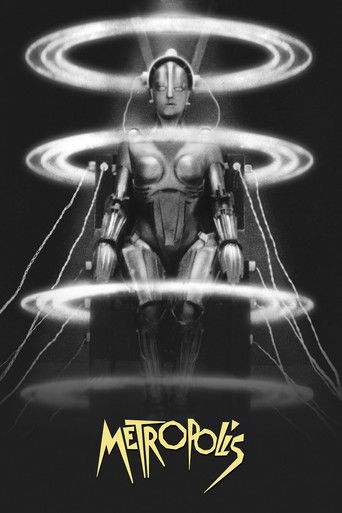
Metropolis
In a futuristic city sharply divided between the rich and the poor, the son of the city's mastermind meets a prophet who predicts the coming of a savior to mediate their differences.
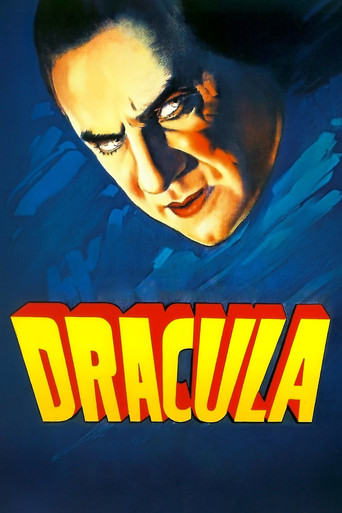
Dracula
A British estate agent travels to Transylvania to meet the mysterious Count Dracula, who is interested in leasing a London castle. After Dracula enslaves the agent and drives him to insanity, the pair return to London together, where Dracula, a secret bloodsucker, begins preying on socialites.
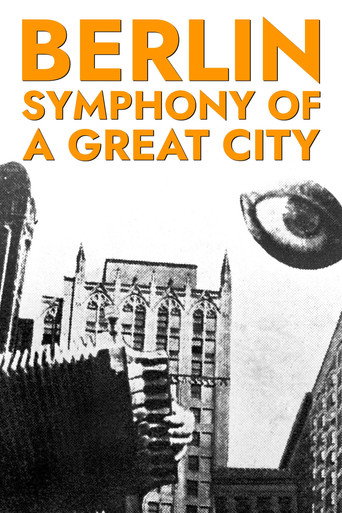
Berlin: Symphony of a Great City
A day in the city of Berlin, which experienced an industrial boom in the 1920s, and still provides an insight into the living and working conditions at that time. Germany had just recovered a little from the worst consequences of the First World War, the great economic crisis was still a few years away and Hitler was not yet an issue at the time.
Berlin: Symphony of a Great City
A day in the city of Berlin, which experienced an industrial boom in the 1920s, and still provides an insight into the living and working conditions at that time. Germany had just recovered a little from the worst consequences of the First World War, the great economic crisis was still a few years away and Hitler was not yet an issue at the time.
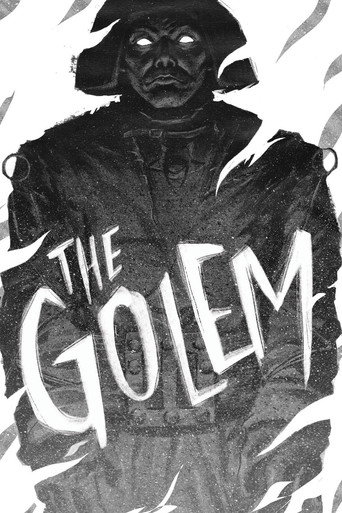
The Golem: How He Came into the World
In 16th-century Prague, a rabbi creates the Golem - a giant creature made of clay. Using sorcery, he brings the creature to life in order to protect the Jews of Prague from persecution.
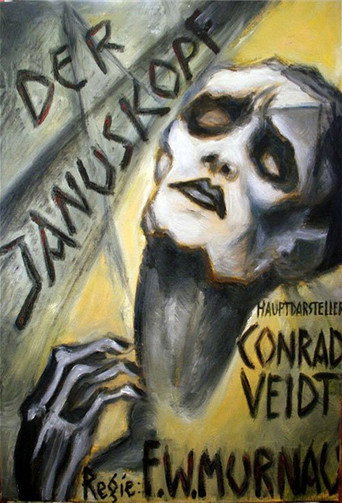
The Head of Janus
Two opposing characters are hidden in the person of the inconspicuous London gentleman Dr. Warren and Janus. Lost film.
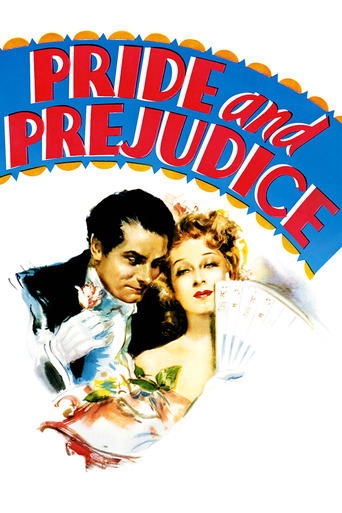
Pride and Prejudice
In early 19th century England, Mr and Mrs Bennet's five unmarried daughters vie for the affections of rich and eligible Mr Bingley and his status-conscious friend, Mr Darcy, who have moved into their neighbourhood. While Bingley takes an immediate liking to eldest daughter Jane, Darcy has difficulty adapting to local society and repeatedly clashes with second-eldest Elizabeth.
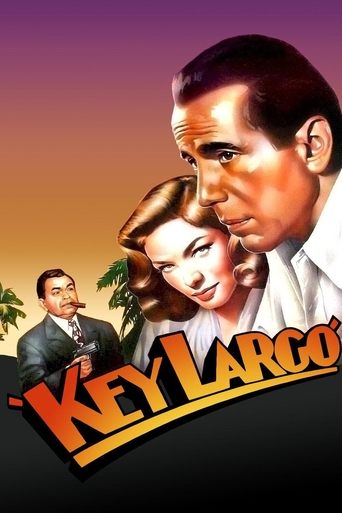
Key Largo
A hurricane swells outside, but it's nothing compared to the storm within the hotel at Key Largo. There, sadistic mobster Johnny Rocco holes up - and holds at gunpoint hotel owner James Temple, his widowed daughter-in-law Nora, and ex-GI Frank McCloud.
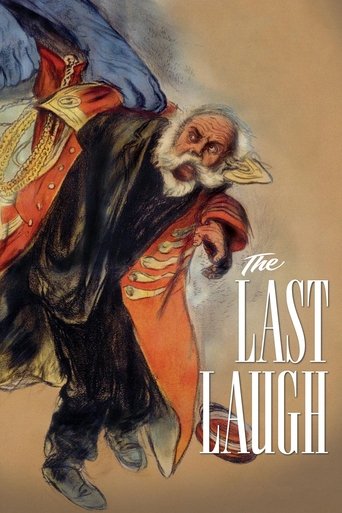
The Last Laugh
An aging doorman, after being fired from his prestigious job at a luxurious hotel, is forced to face the scorn of his friends, neighbours and society.
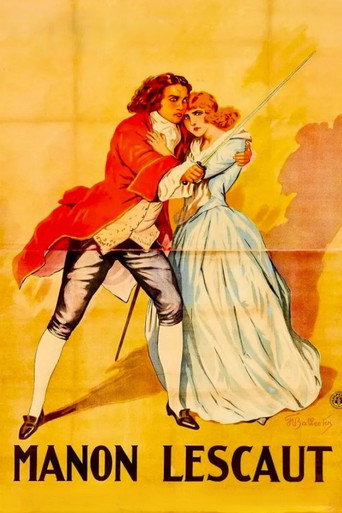
Manon Lescaut
A French adventurer fights to save a woman in the life of prostitution.