Directing
No biography available.
The film presents artists from the Sinti and Roma minority who shape the trauma of persecution and very personal experiences in their works.
Oral witnesses tell about their work in the Austrian underground movement against the national socialist regime. Agnes Primoschitz, Johanna Sadolschek-Zala, Rosl Grossmann-Breuer and Anni Haider talk about helping concenreation camp prisoners escape, fighting with the partisans and imprisonment, and about various experiences which bring back happy and sad memories. Many of their friends and relatives did not survive the terrible time. Some of the oral witnesses hadn't counted on surviving the prisons and concentration camps.
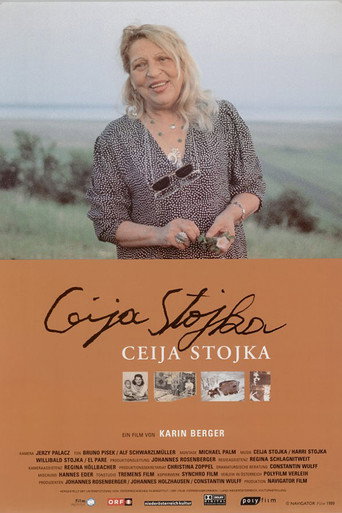
"Ceija Stojka" is a portrait of 64-year-old Austrian Rom Ceija Stojka, who, after a nomadic childhood, settled in Vienna many years ago. In the recent past, Ceija Stojka’s fame as an author, painter and singer has spread outside Austria. She represents the opening of Rom and Sinti society to the world of the "gadje." This process and all the difficulties it involves is unique in the history of the Rom in Central Europe. The central theme of this documentary is the fusion of two extremely different worlds in this fascinating woman. Beginning with Ceija Stojka’s present life, her biography is reconstructed in this film portrait. At the same time, a critical chronology of images portrays the common associations with the "gypsy," examples of which pervade Ceija Stojka’s life. A comprehensive consideration of the gypsy’s image, from romanticized projections to images of exclusion, discrimination and destruction, and finally the present ambivalent relationship between Rom and non-Rom.
Several of the recordings made during the shooting of Karin Berger’s film Ceija Stojka (1999) show Karl Stojka emotionally telling of the life of the Roma in national socialist Vienna and in the Wankostättn camp. In a present day when the last contemporary witnesses are dying, the filmmaker takes a stand against the impending silence and demonstrates one of cinema’s essential functions.
Widerstandsmomente (Moments of Resistance) carries voices, writings, and objects from the anti-Nazi resistance into the present. Politically engaged women of today respond to historical resistance and make links to current events. A line is drawn from what was before and what is today to what might be: a society based on solidarity without discrimination or exclusion.