Directing
Julien Hequembourg Bryan was an American photographer, filmmaker, and documentarian. He is best known for documenting the daily life in Poland, Soviet Union, and Nazi Germany between 1935 and 1939.
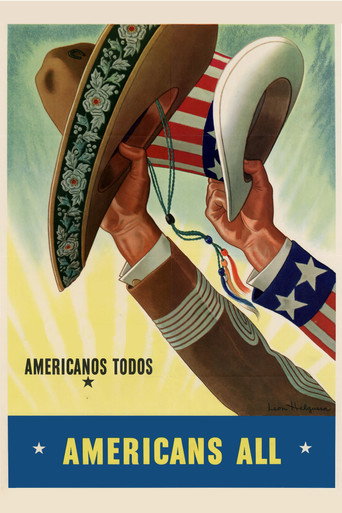
A film sponsored by the U.S. Office of the Coordinator of Inter-American Affairs to promote friendly relations with American countries just before World War II. Stresses the importance of the Good Neighbor Policy and Western Hemisphere cooperation in the face of Europe's disintegration. The first half is an historical summary of the American continent. Postulating that youth will build a new world, the last half considers youth at work, youth at school, health conditions, defense, and ends with a plea for American solidarity.
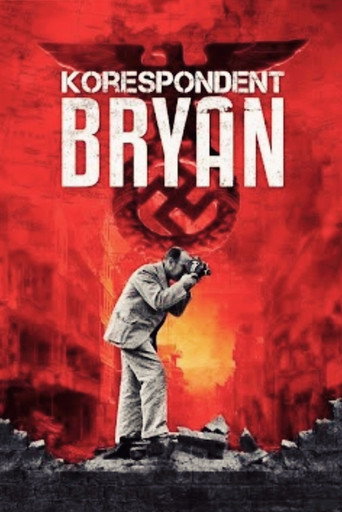
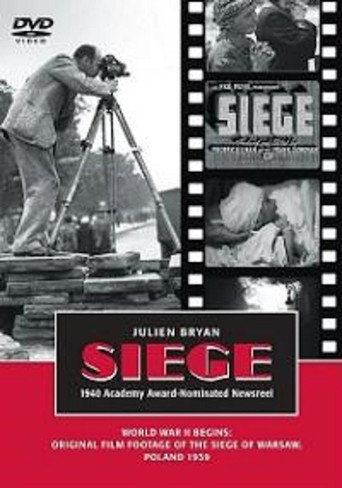
The film is based solely on footage shot in Warsaw in 1939 by Julien Hequembourg Bryan. This American filmmaker and photographer documented life in Poland, the Soviet Union and Nazi Germany between 1935 and 1939. Following the outbreak of the Second World War, he arrived in Warsaw, where he shot a number of films documenting the city under siege, and is said to be the only foreign correspondent in the Polish capital at the time. Bryan also took the first colour photographs of wartime Warsaw.
Siege is a 1940 documentary short about the Siege of Warsaw by the Wehrmacht at the start of World War II. It was shot by Julien Bryan, a Pennsylvanian photographer and cameraman who later established the International Film Foundation. Siege was nominated for an Oscar for Best One-reel Short at the 13th Academy Awards in 1941, and in 2006, it was named to the National Film Registry by the Librarian of Congress as "a unique, horrifying record of the dreadful brutality of war."
One of the first American film introductions to Israel, this vitally interesting country - both objective and thought-provoking. Philip Stapp's animation carries us back 3000 years into Biblical times. Modern photography takes us into Israel, facing its new challenges, through 1964, as seen through the daily lives of several Israeli families.
A film about life on the small island of Likiep in the Marshall Islands in Micronesia.
A film shot in the early 1930s and revised in 1952 which covers Moscow, the tribal areas of the Caucasus Mountains, avant-garde and Jewish theatre preformances, dance festivals, the newly established U.S. Embassy, as well as local daily life.
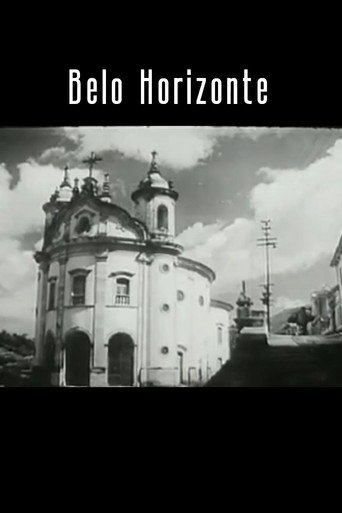
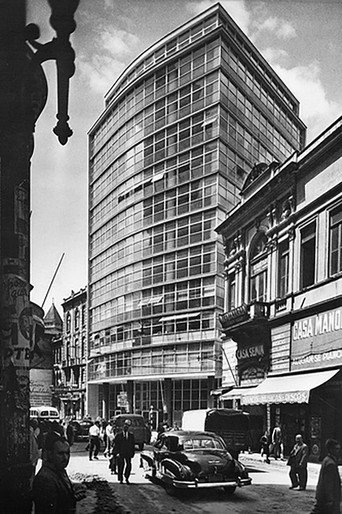
A film about the planned city of Belo Horizonte in Brazil.
Documentary featuring the lives of 'ordinary' Russians prior to World War 2
Focuses on the life of the Guarditas family as representatives of Uruguay's middle class. Shows their house; the father, Manuel, leaving for his work as a woolbroker; the boy at school; the girl doing her homework; the maid cleaning the house; and the mother working in the garden. Gives a very good impression of what middle-class life was like in Montevideo in the 1940's. (Jane M. Loy, Latin American Research Review, vol.12 no.3, 1977)
A film sponsored by the U.S. Office of the Coordinator of Inter-American Affairs to promote friendly relations with South American countries just before World War II.
An educational documentary film detailing the role of the Christian church in communities across the globe, including West Germany, Russia, Syria, India, the Philippines, and South Korea.