Julie Engelbrecht Movies, TV Shows, and Filmography

Julie Engelbrecht
Acting
Biography
From Wikipedia, the free encyclopedia Early life Engelbrecht was born in Paris. She is the daughter of the actress Constanze Engelbrecht,[1] and made her acting debut at 12 years old, appearing with her mother in the 1996 TV film Adieu, mon ami.[2] From 2004 to 2007, she attended Hochschule für Musik und Theater Hamburg.[3] Career Engelbrecht gained recognition for her role as Valerie Ulmendorff in the 2005–2006 miniseries Mutig in die neuen Zeiten, for which she received a 2007 Undine Award nomination for "Best Young Actress in a TV film|".[2] In 2008, she played Johanna Palmquist in the TV movie Rasmus and Johanna, based on the Inga Lindström series,[2] and Ilse in the 2008 film The Red Baron.[4] In 2009, she appeared as the high jumper Elisabeth 'Lilly' Vogt in Kaspar Heidelbach's film Berlin 36,[2] and also in 2009, she starred as Müllerstochter Lisa in the ARD adaptation Rumpelstilzchen alongside Robert Stadlober.[5][6] In 2011, she played Maren Elkberg in the TV film Die Hochzeit meines Mannes, also based on the Inga Lindström series,[7] and followed with her role as the young ballerina Anna Castell in the film Die Tänzerin – Lebe deinen Traum.[1][8] In 2015, she played the lead role in the video for Anna Naklab and Alle Farben's single "Supergirl".[9]
Filmography Movies
Acting

Schief gewickelt
Mona is fed up: while she keeps herself and her baby Bobby afloat with mini-jobs, Bobby's father celebrates his new girlfriend at every party in town. When Eddy announces his wedding, Mona sends him a smelly diaper - anonymously. Eddy catches on and sets off in search of the sender.

The Red Baron
Richthofen goes off to war like thousands of other men. As fighter pilots, they become cult heroes for the soldiers on the battlefields. Marked by sportsmanlike conduct, technical exactitude and knightly propriety, they have their own code of honour. Before long he begins to understand that his hero status is deceptive. His love for Kate, a nurse, opens his eyes to the brutality of war.

False Freedom
The name "Voss" is given to a high-ranking Nazi criminal who flees from Germany to South America after the end of the Second World War, like hundreds of thousands of other people. The escape route leads across the Alps and South Tyrol to Genoa and from there by ship to a supposedly better world in South America. Most of these refugees were "displaced persons", i.e. people who had become homeless. Many Nazi criminals also used the same escape route to reach safety. The film depicts the conflicts that arise during the flight, but also in South America, where perpetrators and victims meet again. The main characters of the film, he a murderer, she a survivor of Nazi terror, help each other on the run and experience for the first time what it means to love. Only gradually does it become clear who has which past and whether their love can still endure.

Berlin '36
Berlin 36 is a 2009 German film telling the fate of Jewish athlete Gretel Bergmann in the 1936 Summer Olympics. She was replaced by the Nazi regime by an athlete later discovered to be a man. The film is based on a true story and was released in Germany on September 10, 2009. Reporters at Der Spiegel challenged the historical basis for many of the events in the film, pointing to arrest records and medical examinations indicating German authorities did not learn Dora Ratjen was male until 1938.

Es liegt mir auf der Zunge
On February 20, 1953, the Nordwestdeutsche Rundfunk broadcast the first cooking show of German post-war television. Clemens Carl Hahn became the TV chef Clemens Wilmenrod. When the "request in ten minutes to table" on the screens flickered, went for the presenter of the show a dream come true: He had designed the cooking show not only the first TV format that was aimed at women, but also a new self invented.
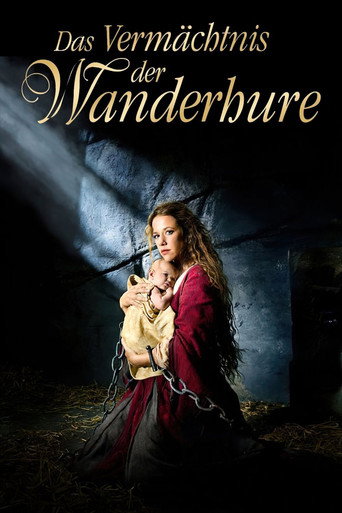
The Legacy of the Siren
Michel must go to dangerous lengths to save his wife and newborn child from the intrigues of the king’s mistress in this historical drama.
Mutig in die neuen Zeiten - Im Reich der Reblaus
Austria in the mid-1950s. Seamstress Elfi Redlich and her two children are about to emigrate to America with occupation officer Hal when her husband, missing for eleven years, returns home from Siberia. Factory owner Ulmendorff is deported to Russia on his way to his niece Valerie's wedding as a result of an intrigue by his employee Hasak. Hasak's joy is short-lived, as the Jewish owner of the factory asserts his ownership.
Mutig in die neuen Zeiten – Nur keine Wellen
October 1960. Nineteen-year-old Charlie tries his luck as a rock 'n' roll musician on the Reeperbahn. His mother Elfi has her hands full with her sick mother, her unstable husband Viktor, daughter Moni, who finally wants to stand on her own two feet, and her job as a tailor. The Berkowitz family factory is thriving, and even the Ulmendorff sawmill in Salzburg has something to say about the emerging economic miracle. Ferencz dies in a car accident. His wife Valerie is pregnant by her lover, the painter Ramsacher. And the cunning Hasak continues to devise intrigues for his own benefit, which even in the 1960s does not seem to be the case.

The Last Witch Hunter
The modern world holds many secrets, but by far the most astounding is that witches still live among us; vicious supernatural creatures intent on unleashing the Black Death upon the world and putting an end to the human race once and for all. Armies of witch hunters have battled this unnatural enemy for centuries, including Kaulder, a valiant warrior who many years ago slayed the all-powerful Witch Queen, decimating her followers in the process. In the moments right before her death, the Queen cursed Kaulder with immortality, forever separating him from his beloved wife and daughter. Today, Kaulder is the last living hunter who has spent his immortal life tracking down rogue witches, all the while yearning for his long-lost family.

Die Mamba
"Die Mamba" is a top international terrorist. A deadly hand-to-hand fighter, sniper, explosives expert and master of masks and deception. Hossein Sarivi is a good husband and sound designer in a cookie factory. The two look very much alike, but their lives have had no points of contact. Until now...
Gallery