Directing
No biography available.
Edgar Anstey and Arthur Elton’s sponsored documentary on Britain’s malnutrition crisis, blending expert testimony (Julian Huxley, J. B. Orr, A. V. Hill/Gowland Hopkins) with school-meal scenes and simple charts to link low income to poor diets and argue for “protective” foods and public provision. Commissioned by the gas industry, it plays like a brisk scientific lecture-film that helped push nutrition into public debate.
An exposure of the fallacy of race myths; Nazi and Japanese theories about pure blood and master races are contrasted with scientific facts of mixed origins to prove that no nation or race can be considered inferior or superior.
A study of heredity in man, showing how both good and bad characteristics are passed on from one generation to the next.
Film of the weekly radio programme devised by Howard Thomas, which began on 1st January 1941 and soon had an estimated regular audience of ten million who listened as the panel answered, unrehearsed, questions sent in by the public.
The film sequences were represented by the premiere of the now thought lost short 'Cover To Cover' directed by Paul Rotha. This short film illustrated the production of a book. Added comments from such luminaries as Julian Huntley and TS. Eliot added class.
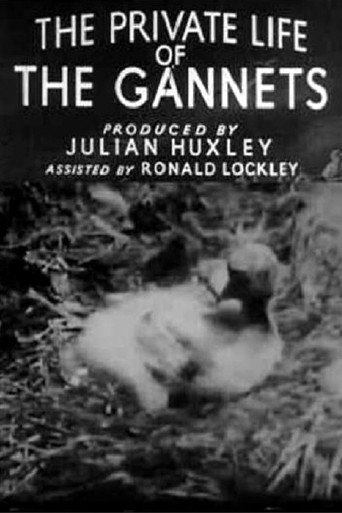
A 1934 GB production that was picked up in 1937 by Educational for 20th Century Fox distribution about the gannet, a beautiful white and exceedingly graceful bird deemed the best fisherman in the world, that inhabits a small rocky island off the coast of Wales. The film won the 1938 Academy Award for Best Short Subject (One-Reel).
Not by any means a truly comprehensive scientific study, this film nevertheless conveys in a popular fashion facts as to the development and habits of various types of apes. Skillful direction and interesting commentary almost succeed in transforming the film into an “entertainment” piece.
A playful and affectionate look at London Zoo and the people and animals who make up its daily life.