Julia Migenes Movies, TV Shows, and Filmography

Julia Migenes
Acting
Biography
Julia Migenes (born March 13, 1949) is an American soprano working primarily in musical theatre repertoire. She was born on the Lower East Side of Manhattan to Juan and Julia Migenes, parents of Puerto Rican and Irish descent, respectively. (Her stepfather, Costas Makis, was of Greek descent.) She is sometimes credited as Julia Migenes-Johnson. She attended The High School of Music & Art in New York City. Migenes played Tevye's second daughter, Hodel, in the original Broadway production of the long-running musical Fiddler on the Roof. She played Ciboletta in the 1973 film Eine Nacht in Venedig (re-released 2008). She also starred in the 1984 film of Carmen. Migenes' year of birth has been disputed with the years 1943 (supported by the 1950 United States census and by the plausibility of known milestones in her career), 1945, 1948 (which she has used), and 1949 (used in most reference sources) all being cited. As a child, Migenes performed the role of "Ngana" in the first national tour of the Rodgers and Hammerstein musical South Pacific; she alternated in the role with her sister Maria. Also in the cast were her brother, John (1940-1993), in the role of Jerome, and her half-sister, Jeanette (1926-2003), as Bloody Mary's assistant (and understudy to Bloody Mary). Reportedly, the siblings made enough money from the tour to buy their family a small house in the Bronx. She made her Broadway debut in the musical Carnival! She was a replacement understudy for the lead role of ‘Lili.’ Migenes performed the role from April 2 to April 14, 1962, when lead actress Anna Maria Alberghetti took vacation. Migenes then took on the leading role of ‘Maria’ in the 1964 Broadway revival of West Side Story which played a limited run from April 8 to May 2, 1964, at City Center. Migenes created the role of "Hodel", the second oldest of Tevye’s daughters in the original Broadway cast of Fiddler on the Roof. While the production ran for almost eight years (lasting over 3,200 performances and winning nine Tony Awards), Migenes’ tenure extended from the production’s first preview on September 17, 1964, through April 1, 1967. Mimi Turque succeeded her in the role of Hodel. Migenes has been married four times. The first time was in 1962 as a teenager to William L. Dean Jr., a singer with Coral Records Company and the Fred Waring Orchestra; the union was annulled in 1963. Her second marriage to Danjo Hotnik ended in divorce, but brought Migenes her first daughter, Martina Michaela (born 1974). In 1979, Migenes married Jervis Johnson, with whom she had a second daughter, Jessica Allegra (born 1981). She married Hungarian film director Peter Medak in 1988; they divorced in 2003. Source: Article "Julia Migenes" from Wikipedia in English, licensed under CC-BY-SA.
Filmography Movies
Acting

Carmen
In the early 19th century, in Seville and the surrounding area, Carmen seduces the sergeant Don José, who deserts the army to be with her. But the beautiful gypsy falls in love with the bullfighter Escamillo, much to Don José’s despair.
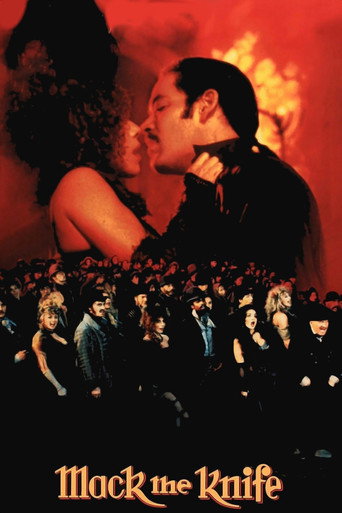
Mack the Knife
In 19th century London, a young girl falls for a womanizing criminal and they decide to wed. Her family strongly disapproves so her father, 'the king of thieves', gets the gangster arrested.
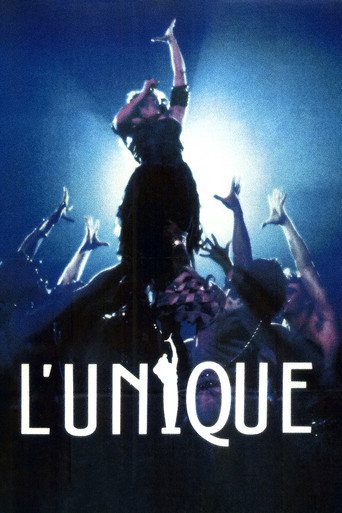
L'Unique
A famous rock singer is being overtaken. Vox, the album and live producer of the singer, prepares a real revolution with the help of a scientist. With holography, they would like to create the perfect copy of the star.

Berlin Blues
In Cold War-era West Berlin, Lola (Julia Migenes-Johnson), an American blues singer with a nightclub band, falls for the piano player, David (Jose Coronado). Their romance is cut short when David must return to his native East, and Lola soon begins an affair with Huessler (Keith Baxter), the bandleader. But any guilt Lola may feel for betraying David is assuaged when Huessler saves her from unexpected misfortune.

Orientation: A Scientology Information Film
An introduction and overview to Scientology.

The Human Voice
La Voix Humaine is a concerto for soprano and orchestra, centering on the break-up of a relationship by telephone. It represents one side of a conversation between a young woman (sung by American soprano, Julia Migenes) and her lover, who has jilted her. In a 1930s, Parisian apartment, a woman is seen making for the door. As she passes the telephone, it rings. From now on she sings, sitting, standing, on her knees, pacing up and down the room, pulling at the telephone cord, going through every emotion until ultimately, in despair, she takes her own life. Jean Cocteau wrote, it is not just that the telephone is sometimes more dangerous than the revolver but that its tangled cord drains us of our strength, while giving us nothing in return.
Madame Pompadour

Angels in America
Peter Eötvös's operatic adaptation of Tony Kushner's "Angels in America."

Euro Disney Noël
Celebrate Christmas with Disney and discover its European influences.
Gallery