Production
No biography available.
Burdened with debt trauma, Mermans is murdered as the wife of Dingenen, a tired, unemployed man in his forties. All suspicions fall on him, but ultimately everything works out in this film adaptation of Aster Berkhof's novel of the same name.
A 40-year-old mother struggles to deal with the anxiety of growing older after her eldest daughter moves out and the youngest distances herself.
Jan Decorte's second feature film is an adaptation of the play Hedda Gabler by Norwegian playwright Henrik Ibsen. Decorte moved the locus of action of Ibsen's realistic play from 1890 to 1950, twenty-eight years earlier than when the film was shot. The story begins when Hedda returns home from an overly long honeymoon with her newly wed but colourless husband Tesman. She is pregnant and will be courted by the writer Eljert Lövbor, an old lover who is about to break through with an exceptional novel of autobiographical quality [Avila].
An actor pretends to be a writer. He sits in his office, reflects and puts words to paper, which are then performed by Jan Decorte. The text influences the situations shown and vice versa [Avila].
Pierre lives with his mother in an antiquated house in a run-down working-class area. Every morning, Pierre takes the tram to his job at the town hall, where he listens to his colleagues' jokes over the lunch break. His only hope of banishing his boredom and frustration is a girl from the gymnastics club. One evening, when his mother is out of the house, he decides to invite her into his home [Avila].
This heimat-movie after a novel by Felix Timmermans is about the at first sight idyllic, but actually tragical life of Wortel, a peasant in a pre-war Belgian village, who has a hard time accepting the curate’s assurance it’s all part of God’s grand plan when his loved ones keep coming to harm.
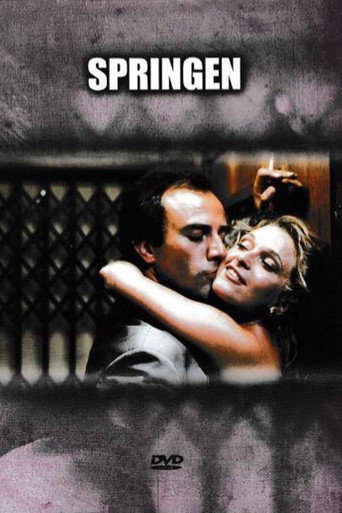
Springen (Jumping) is an absurdist comedy set inside 'Sempa Vivax', an exclusive and highly unusual retirement home housed in a castle.The facility caters specifically to wealthy elderly residents, offering them the unique opportunity to fully realize their wildest, final fantasies and unfulfilled dreams. Under the guidance of the home's eccentric staff, the residents engage in bizarre and extravagant activities, which range from reenacting passionate past romances to staging a simulated atomic war for entertainment.The narrative unfolds through the various subplots of these residents as they navigate their surreal daily lives, attempting to escape the realities of old age and mortality through illusion and play. The story explores the chaotic dynamics between the elderly elite, their families, and the staff members who facilitate their increasingly elaborate delusions.
An Antwerp journalist finds his daily life increasingly disrupted by unexplained phenomena, such as an authentic letter from 1919 that refers to an event taking place at a much later date. Because these disturbances are consistently linked to the name “Joachim Stiller,” the journalist becomes obsessed with it. The resolution, which is closely tied to his traumatic experiences from the Second World War, takes place with a psychiatrist—and later at an abandoned railway station in an Antwerp suburb. Interwoven with this is a subplot about an Antwerp art dealer who believes he can become rich through a new form of painting. To achieve this, he takes a mentally disabled artist hostage. The narrative also follows various romantic entanglements involving the journalist, which ultimately lead to his happy experience of fatherhood.