Camera
No biography available.
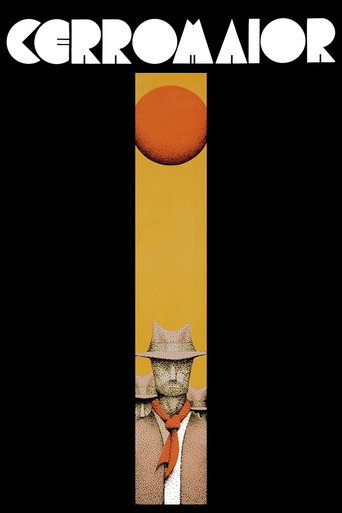
The Soares are a bourgeois couple, living in a good neighbourhood of Lisbon, but João, their son, is not integrating well in that pattern. He attends more political meetings than classes at the Faculty of Economy, and gets a job but that's short lived because his female boss makes him her lover. He longs for the coffee shops, and the companions of old, but he doesn't get true love from anyone.
Analysis of the history and memory of the Romani community that has lived for centuries in Portugal.
Based on an Eça de Queiroz incursion into fantastic literature.
The film is inspired by the Mário de Sá-Carneiro short story, where the narration is made by Professor Antena's assistant who walks by his side when he is run over in a perhaps enigmatic way.
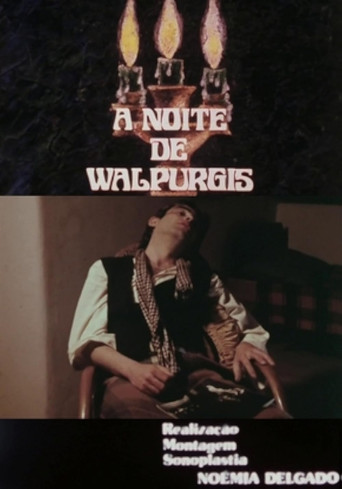
A Noite de Walpurgis is a fantastic tale by Hugo Rocha, admittedly inspired by Goethe's Faust. The narrator-protagonist reveals a story told to him by a third person. Here the third person is an old peasant woman that the protagonist finds in a walk through the mountains, and that tells a story that in turn would have been told to her by the grandmother.
Siren's Song is inspired on a story by Júlio Dinis, in an place populated by characters taken from Greek mythology.
A documentary following the process of sculpting in stone, from the creation to the final work of art.
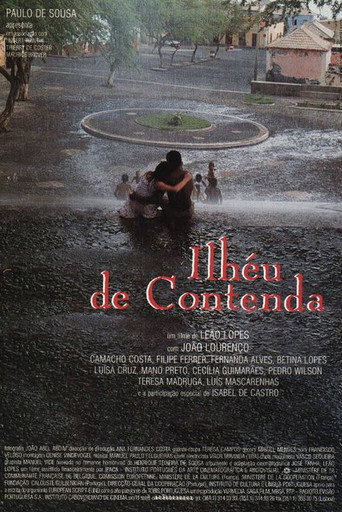
Cape Verde, 1964. At the feet of a mighty volcano, the traditional Cape Verdean society is undergoing a steady change. The old land-owning aristocracy is disintegrating. A class of "mulattos" begins to emerge, with a trade-based financial power that threatens the landlords. A new identity arises, a mix of old and new, of African and Portuguese culture, sensual and dynamic. The songs of Cesária Évora follow this inevitable transformation. From the novel by Henrique Teixeira de Sousa.
After failing in his attempt to escape, a teenager is taken back to his family.
For a 13-year-old boy like Filipe, the prospect of a summer vacation in the Azores with his father is like a dream come true. But dreams are sometimes just a way to avoid facing reality.
Dina (Maria Santiago) is a teenager brought up by her grandmother, employed as a housekeeper for a fairly well-off family. Since Dina only has her grandmother, she spends her time fantasizing about her life and reading comic-book love stories -- activities that do nothing to improve her dim perspective of reality. Due to these handicaps and her own inexperience, she gets involved with Django (Luis Lucas), a shady character who decides to use her as bait to attract men and then rob them. One day when both are in a taxi with robbery in mind, the driver gets suspicious so Django shoots him, and so does Dina. She escapes and runs away -- though it seems like she has learned too little too late. This story unfolds against a time of upheaval in Portugal (mid-1970s) when the military government is formulating a constitution and social changes are happening everywhere.