Jindřich Heidelberg Movies, TV Shows, and Filmography
Jindřich Heidelberg
Acting
Biography
No biography available.
Filmography Movies
Acting
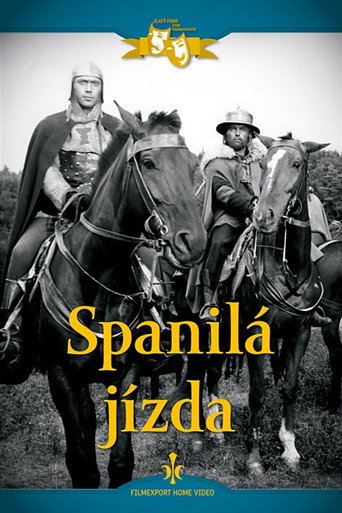
Spanilá jízda
In the Hussite times, religious truth was sifted even on the tips of weapons. When in 1430 the Hussites set out on a raid to Nuremberg, the so-called Spanila Cavalry, to defend their doctrine, the young commander of the cavalry, the landowner Keřský, whose bride had once been kidnapped by a vicious crusader, saw it as an opportunity for personal revenge. Although Oldřich Daněk has tried to establish a distinctive interpretation of historical events, he reflects on where the blinded desire to punish a bad deed with further cruelty leads, but his version seems too thesis-like and lifeless, it does not rise above the descriptively illustrated scenes from old Czech chronicles...

Loves of a Blonde
Andula, an innocent Czech girl from a factory town, is desperately in search of love. She believes she's found it when she beds Milda, a charming young musician visiting from Prague. Milda, however, is only looking for a casual encounter, and leaves town assuming he'll never see Andula again. But when Andula doesn't hear from him, she packs up and heads to Prague, to the surprise of Milda and his parents.
Flám
A comedy about a charismatic man who lacks the confidence of his surroundings. However, he was not completely satisfied with the original script and invited Jiří Mucha to adapt Otto Zelenka's script, which gave the film the final form of a bitter conversational comedy. It is also worth noting that the big beat band Olympic appeared in the film in its early days with the song "Dangerous Figure".
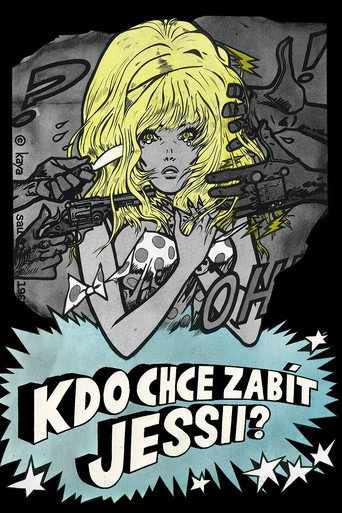
Who Wants to Kill Jessie?
In this zany Czechoslovakian comedy, a scientist invents a machine that projects a sleeping person's dream on a screen; disaster soon follows when the machine malfunctions and the cartoon-like dream characters become very real!
Looking Back
Young script-writer Frantisek (Petr Cepek) is hired to write a film script based on the successful novel Looking Back. He meets with the novel's female author, a University professor and writer named Olga Machová (Jirina Trebická), approximately ten-years-older than him. In the beginning, they do not understand each other at all. Frantisek is a skeptic experiencing a moral crisis, unsatisfied with both his work and his private life - he lives separated from his wife and has no deeper feelings for his numerous lovers. He even gets drunk from time to time and breaks the public peace. Olga is lonesome, too, but considers her life fulfilled.
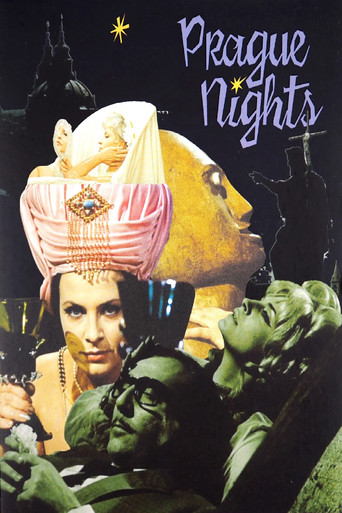
Prague Nights
A stuffy middle-aged foreigner, a businessman named Fabricius, lonely and looking for a night's diversion, finds it in the form of a mysterious blonde. In an abandoned cemetery, she tells him three tales involving black magic and erotic obsession. In "The Last Golem," a young rabbi struggles to fashion a massive, silent giant out of living clay — until he's distracted by a mute servant girl. In the second episode, "Bread Slippers," an 18th-century countess indulges her passion for sweet cakes, adulterous affairs, and secret kisses with pretty maids until a mysterious visitor whisks her away to an abandoned mansion, where Fate has a different kind of dance in store for her. And in the final story, "Poisoned Poisoner," a ravishing murderess in the Middle Ages dispatches lecherous merchants to the tune of upbeat '60s Czech pop songs.
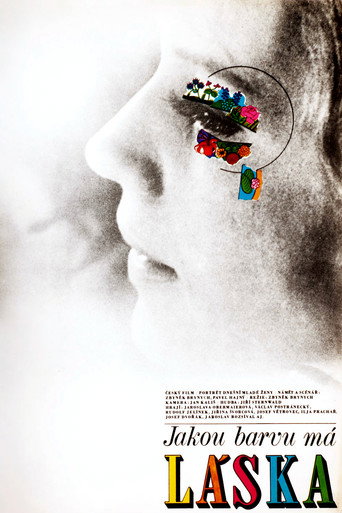
Jakou barvu má láska
Cyril Dadák (Václav Postránecký), a TV reporter falls in love at first sight with a young engineer Milena (Jaroslava Obermaierová) while he makes a reportage in a chemical factory. Milena has been dating for several years with a test driver Pavel (Rudolf Jelínek), however when she meets Cyril she feels that he might be the Mr Right. She accepts Cyril's invitation for a date and she spends a night with him. In the morning she finds in her flat Pavel. She wants to explain to him everything but Pavel makes coffee with a smile and gives her back the keys from the flat.
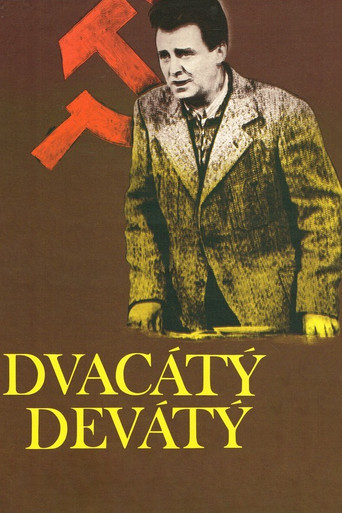
Dvacátý devátý
In the era of normalisation, a number of (pseudo)historical films were made, even described as reconstructions, which glorified the world-building mission of the Communist Party and attributed to it exclusively humanitarian intentions ("Days of Betrayal", "Sokolovo", "Liberation of Prague", "The Victorious People"). In 1929, when its fifth congress met, Klement Gottwald, who had taken the line of the Russian Bolsheviks, took over the leadership of the Communists...
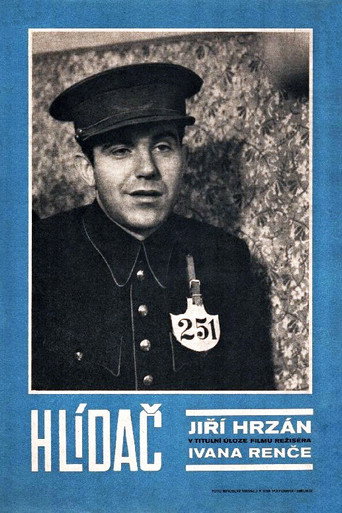
The Guard
Even in 1970, films were made, prepared in previous years and expressing the poetics of that time. Ivan Renč created an almost protocol parable, deliberately set outside time and space, playing out a supremely model situation. In a somewhat rambling and not always convincing story, it tells the story of a young prison guard who dreams of living on a lonely lighthouse. He is ridiculous in his own way, with a distorted character, he hardly finds any satisfaction in his job, he cannot command the slightest respect from the prisoners - and the hero then takes out his excess pressure by abusing a defenseless dog. And one day there will be a short circuit meeting.
Bitva o Hedviku
In the early 1970s, the class struggle flared up in full force on the big screen - the hero of this film, set in the interwar period, is a staunch communist journalist who arrives in the Ostrava region during the economic crisis to instigate a strike. The impoverishment and hopelessness of the miners had exceeded all limits...